Learn astronomy
White dwarf vs neutron star vs black hole
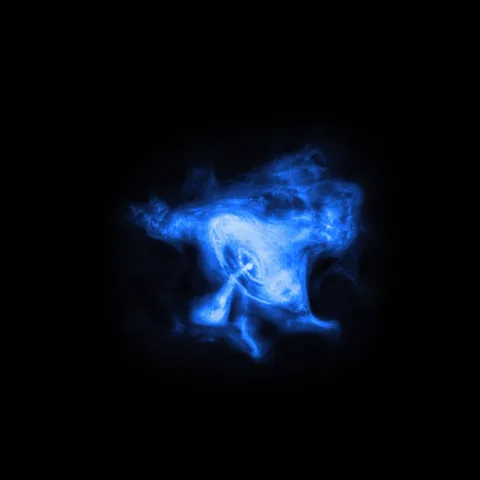
A white dwarf is a dense core about the size of Earth. A neutron star packs more mass into a much smaller body. A black hole is bounded by an event horizon.
Beginner4 min

104 resources
A white dwarf is a dense core about the size of Earth. A neutron star packs more mass into a much smaller body. A black hole is bounded by an event horizon.
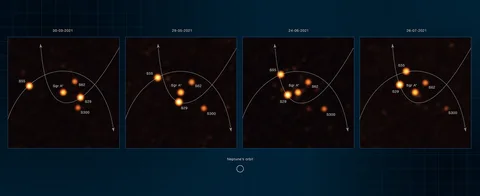
Astronomers measure how nearby stars or gas move under a black hole’s gravity. The size and speed of an orbit reveal how much mass is concentrated inside it.
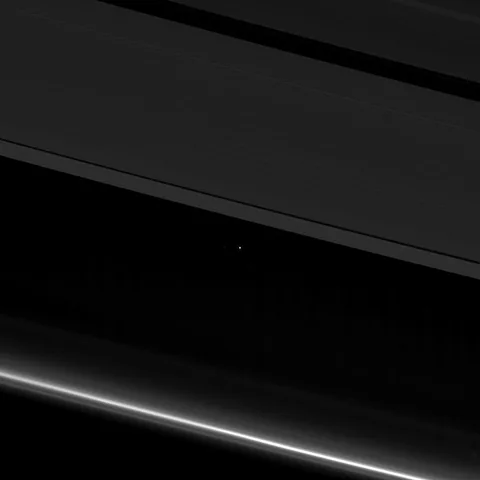
An astronomical unit suits distances within the Solar System. A light-year is the distance light travels in a year. A parsec is tied to a tiny angle called parallax. All three measure distance.
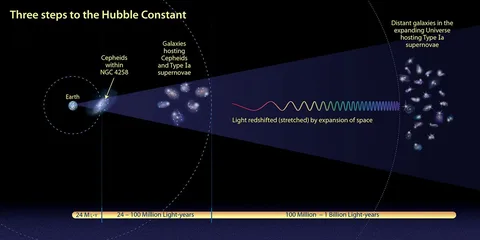
Astronomers use measured distances to nearby objects to calibrate stars and supernovae of known brightness. Those calibrated objects can then be used to estimate distances to galaxies much farther away.
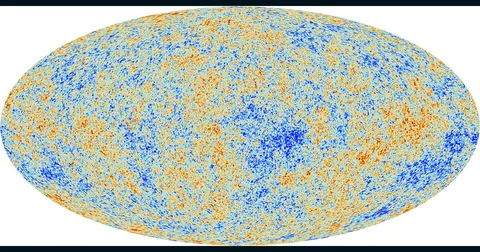
The universe is about 13.8 billion years old in the standard cosmological model. Astronomers fit an expansion history to data including the cosmic microwave background, then calculate how long that history took.
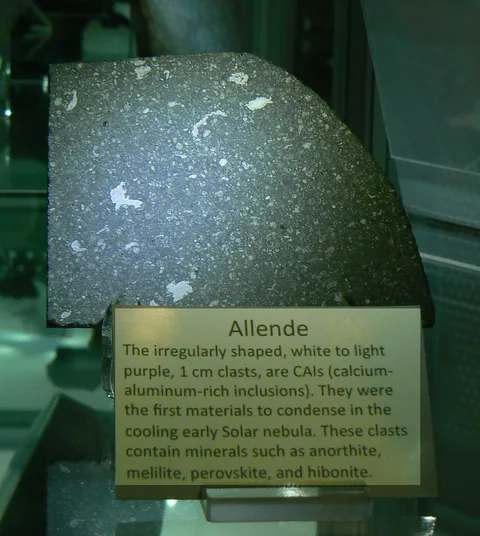
The Solar System formed about 4.57 billion years ago. Scientists estimate the date by measuring radioactive decay in some of the oldest solid material preserved in meteorites.
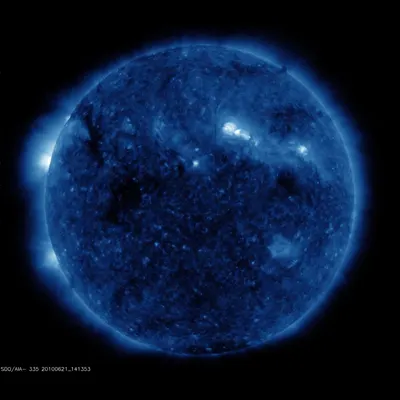
Follow energy from nuclear reactions in the core to the light leaving the Sun.
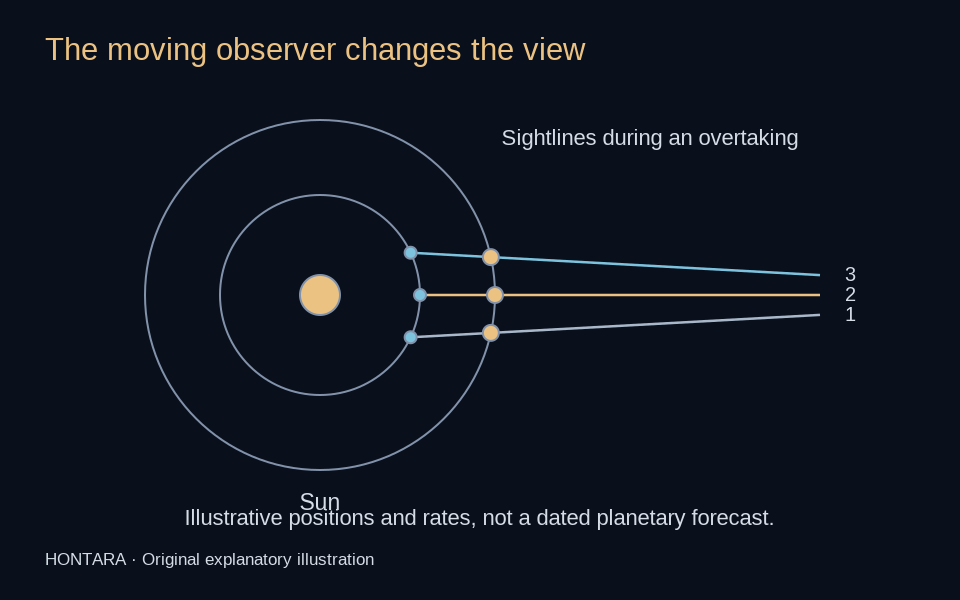
Use changing sightlines to explain a planet’s temporary reversal against the background stars.
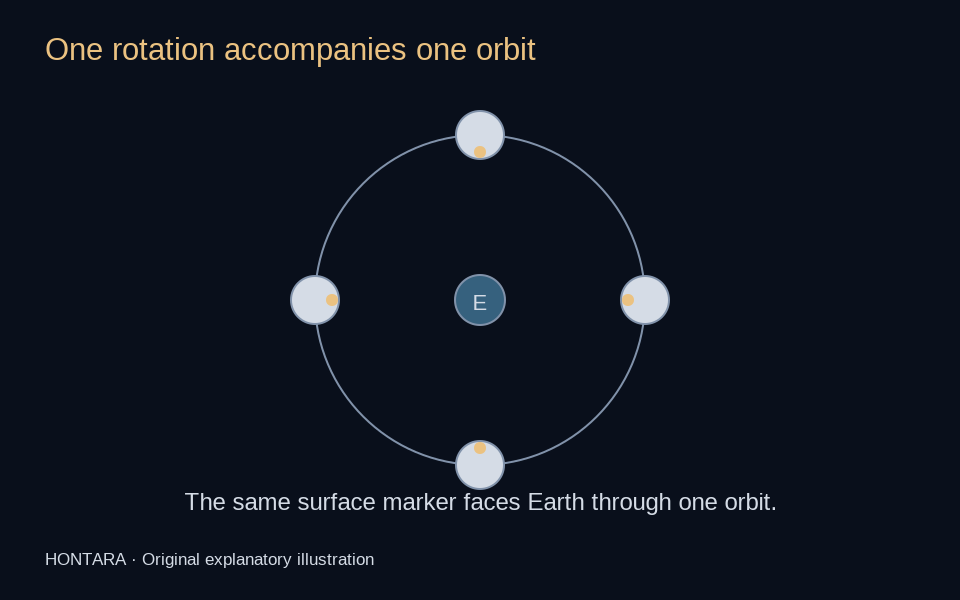
Separate synchronous rotation from the mistaken idea that the Moon never turns.
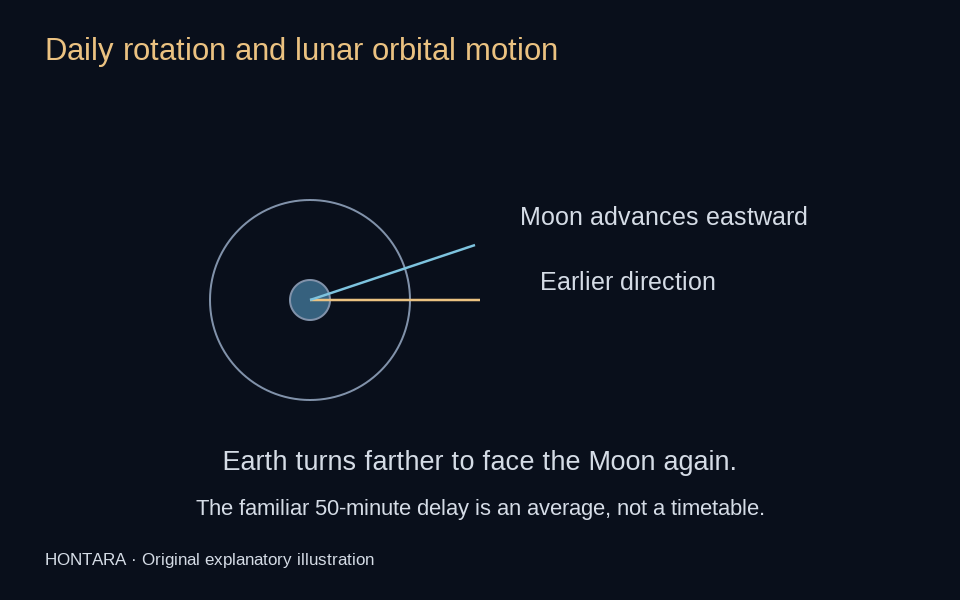
The Moon rises about 50 minutes later each day on average. See calculated moonrise times for Honavar and why a calendar day can have no moonrise.
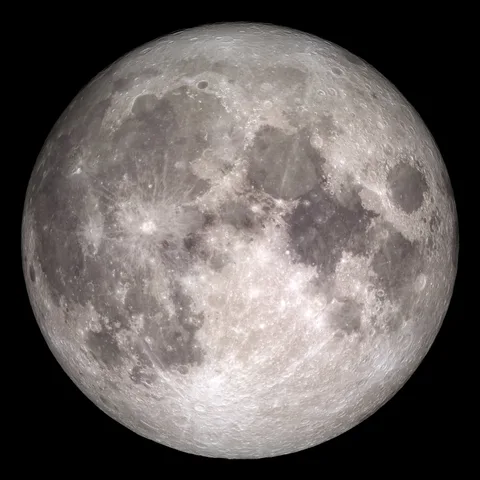
Read a lunar landscape using shape, texture, lighting and a properly labelled image.
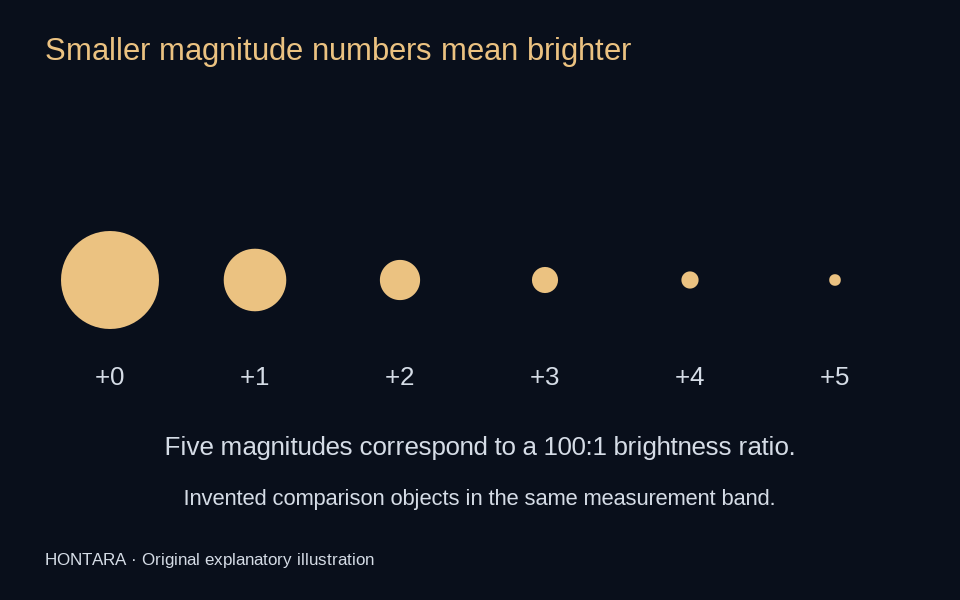
Read the brightness scale correctly and work through a comparison without confusing appearance with luminosity.
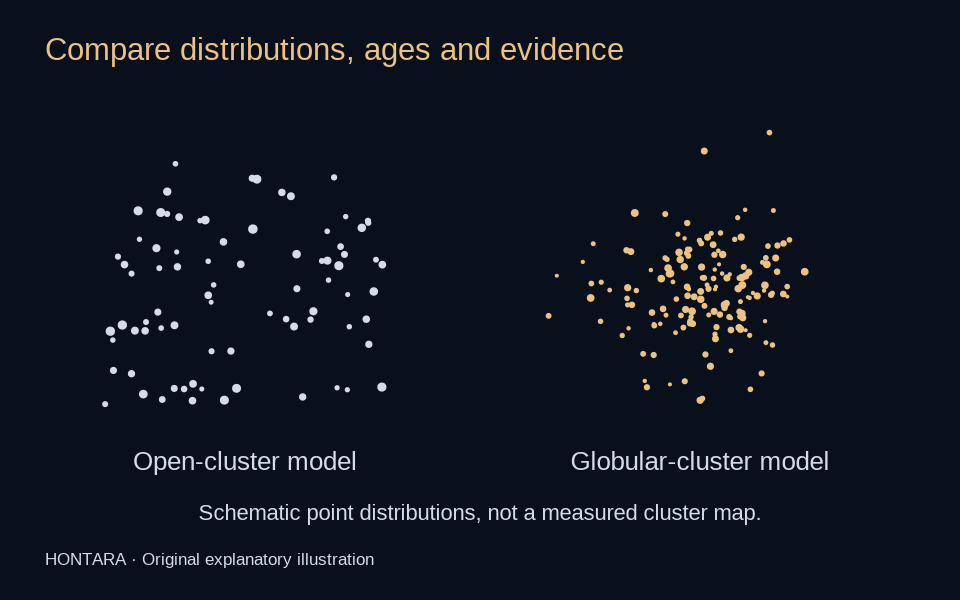
Compare two kinds of stellar group without treating every patch of stars as the same object.
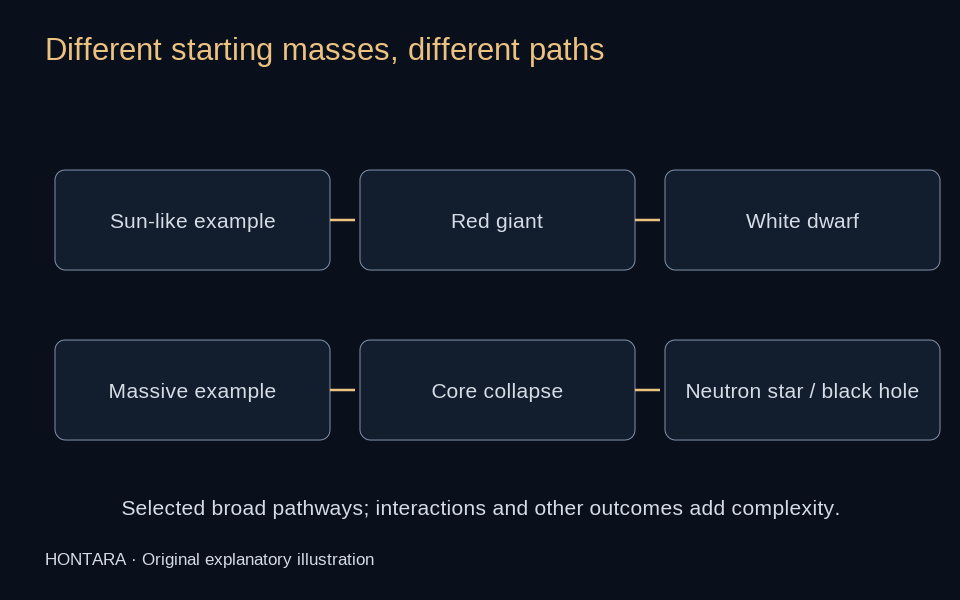
Follow different stellar pathways and see why starting mass matters more than a single universal life-cycle picture.
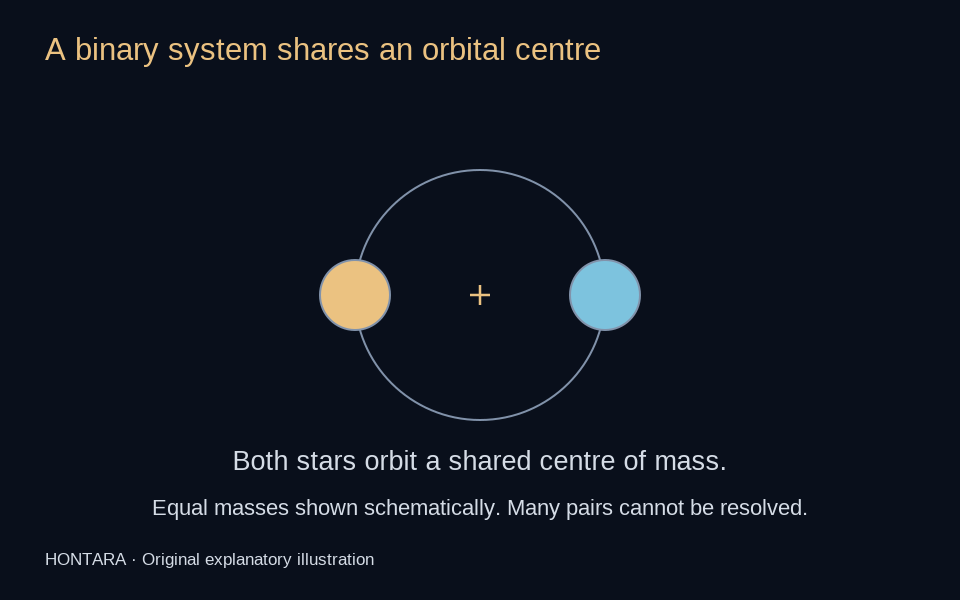
Read several kinds of binary-star evidence and distinguish a physical pair from a chance alignment.
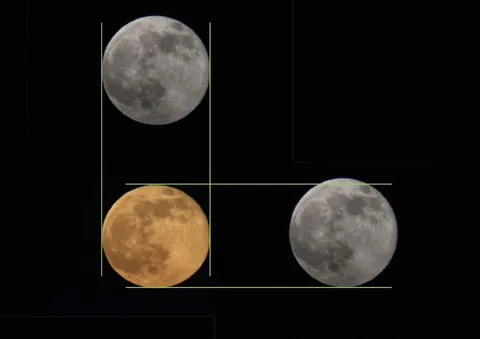
The Moon illusion makes a low Moon appear larger to our eyes. Two photos taken with the same zoom show nearly the same width near the horizon and higher in the sky.
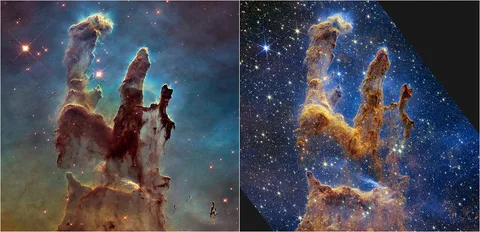
Hubble specialises in ultraviolet and visible light and can observe some near-infrared. Webb specialises in infrared light. Looking at the same object at different wavelengths gives astronomers different evidence.
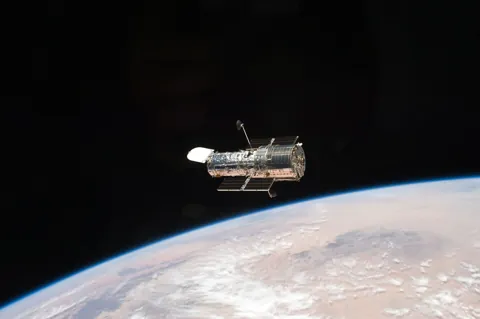
Ground-based telescopes look through Earth’s atmosphere. Space telescopes avoid blurring from moving air and can detect wavelengths the atmosphere blocks.
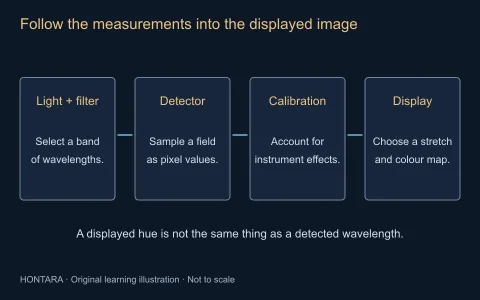
Follow light through filters, detector measurements, calibration and a display without confusing pixels with tiny coloured stars.
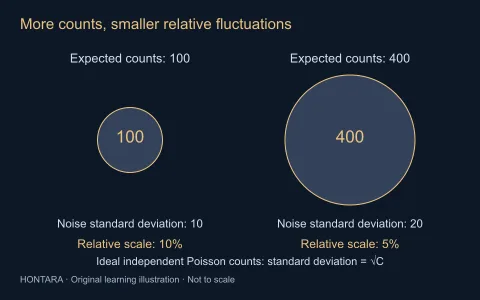
Use an ideal photon-counting model to distinguish expected signal, fluctuations and the benefit of more exposure.
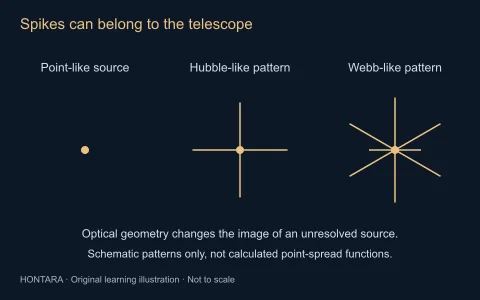
Read diffraction patterns as information about the telescope rather than the shape of a distant star.
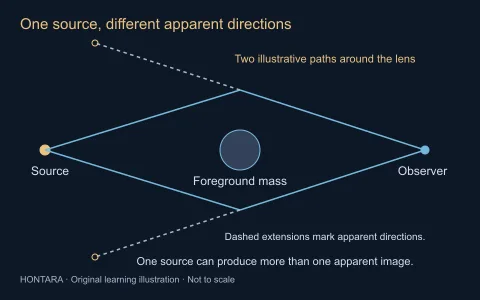
Follow the foreground mass, background source and observer while distinguishing distorted images from extra physical galaxies.
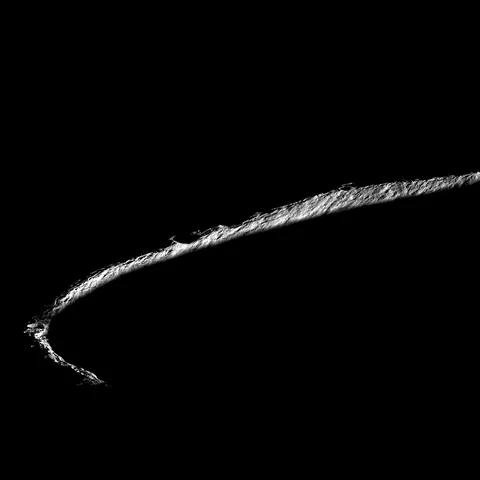
Some crater floors near the lunar south pole stay in shadow because the Sun remains low on the horizon. These cold traps can hold ice while nearby terrain receives sunlight.
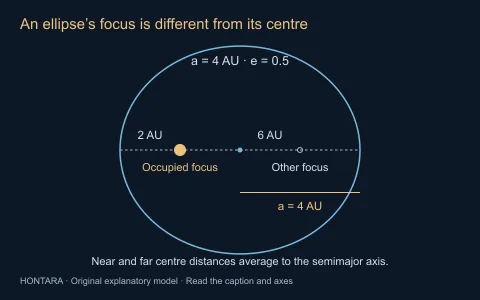
Connect ellipse shape, changing speed and orbital period without confusing a semimajor axis with a momentary distance.
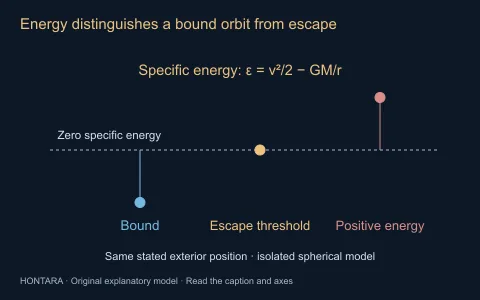
Compare circular motion and escape at one radius while keeping thrust, atmosphere and reference frame outside the simple model.
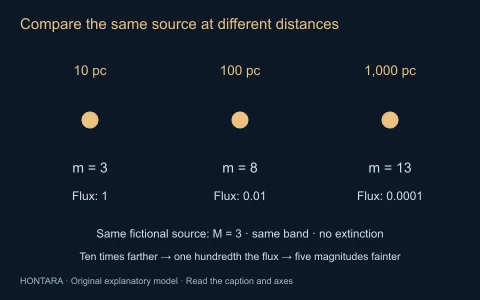
Use the 10-parsec reference and distance modulus while matching wavelength bands and accounting for extinction.
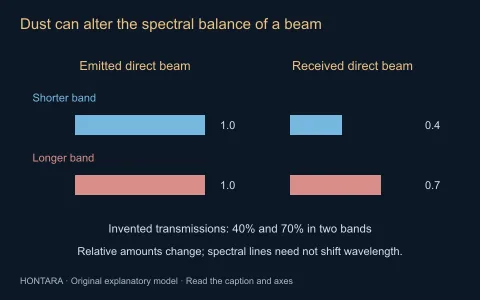
Distinguish wavelength-dependent extinction from a star cooling down or a spectral line shifting in wavelength.
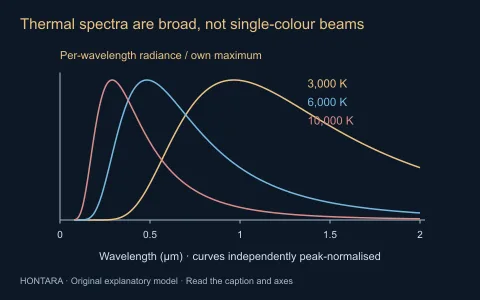
Explore Wien’s law, broad thermal emission and the difference between plotting energy per wavelength and per frequency.
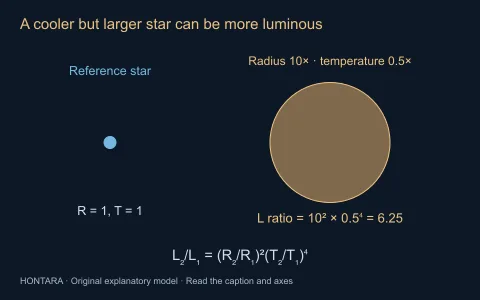
Use the Stefan–Boltzmann relationship to see why a cool giant can outshine a smaller hot star.
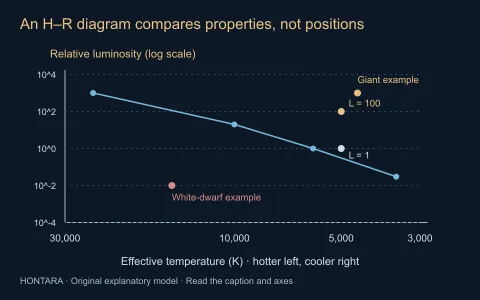
Locate stellar populations using luminosity and effective temperature while keeping the diagram separate from a map of space.
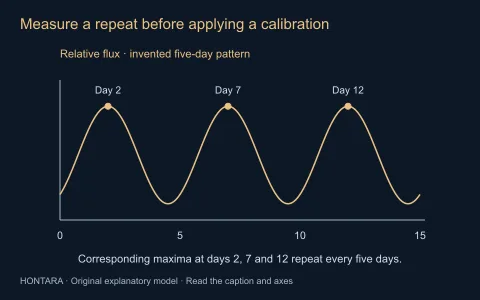
Connect pulsation period, calibrated luminosity and received brightness without assuming all variable stars share one relation.
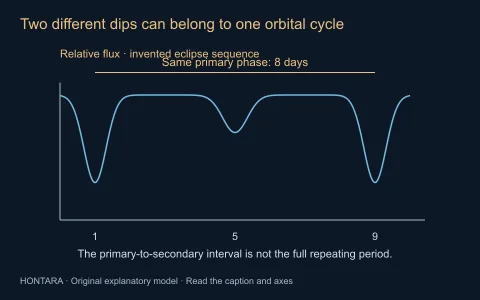
Use repeated brightness dips to constrain a binary system’s geometry while distinguishing light-curve features from unique stellar properties.
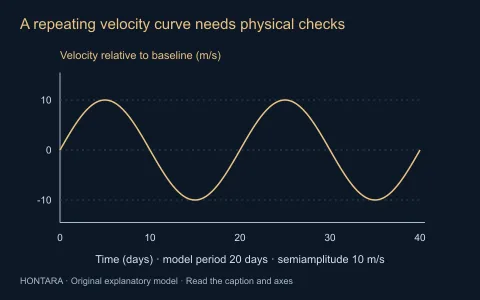
Follow the stellar reflex motion, Doppler signal and inclination limit behind a planet’s minimum-mass estimate.
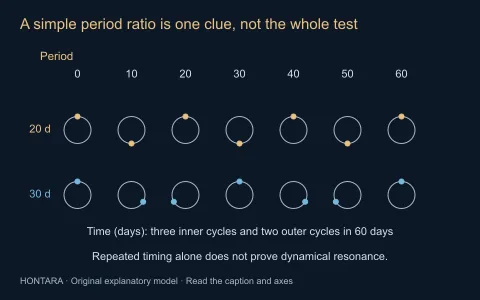
Connect changing orbital size with angular-momentum exchange and repeated gravitational timing without assuming one history for every system.
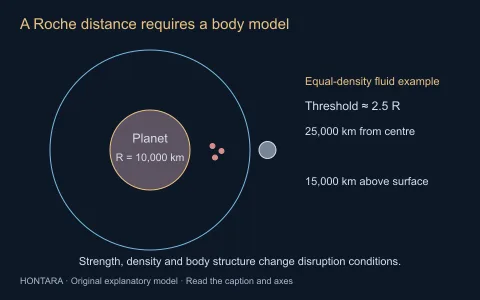
Compare tidal disruption with self-gravity while keeping material strength, orbital radius and ring origins distinct.
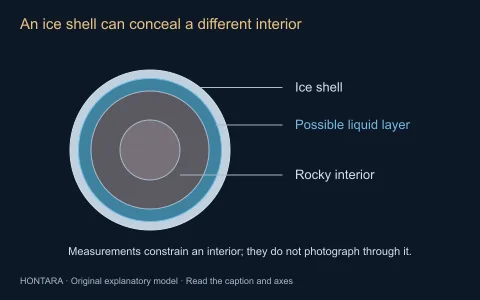
Combine magnetic, geological and plume evidence without confusing a habitable environment with a detection of life.
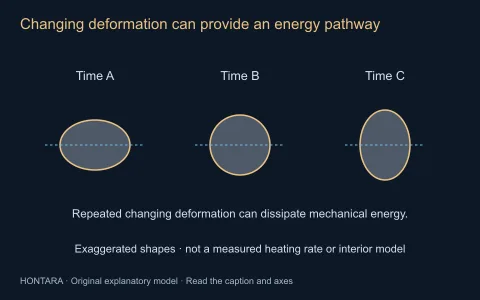
Trace orbital energy into repeated deformation while distinguishing a time-varying tide from a permanent bulge.
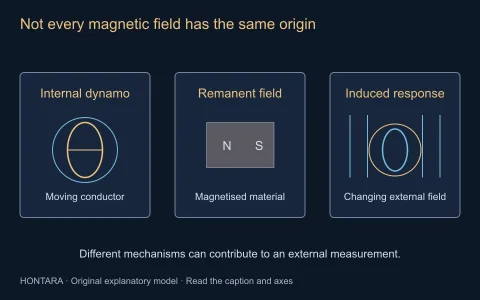
Distinguish a dynamo, remanent magnetism and an induced magnetic response without picturing a permanent bar magnet inside every planet.
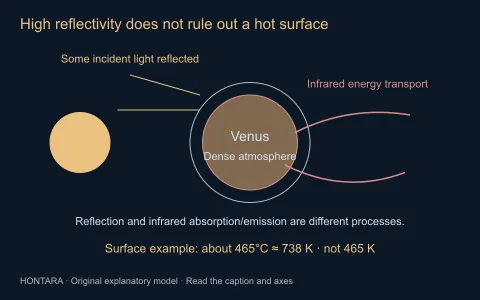
Use absorbed sunlight and escaping infrared radiation to understand a surface temperature that distance alone cannot explain.
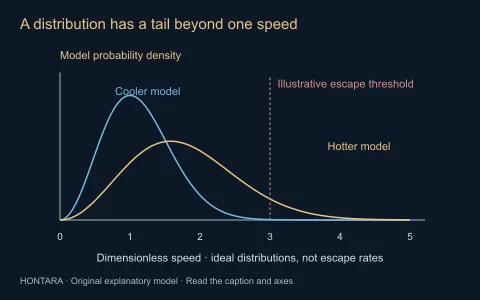
Atmospheric escape happens when gas particles leave a planet for space. Explore the role of heat and how NASA’s MAVEN mission measured another route at Mars.
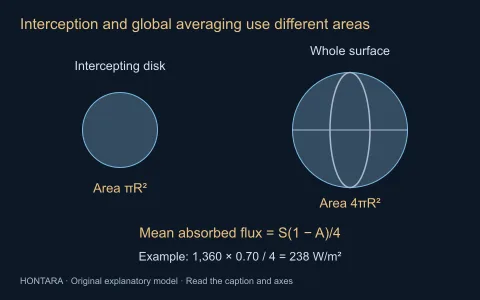
Use a simple equilibrium model without mistaking effective radiating temperature for surface climate.
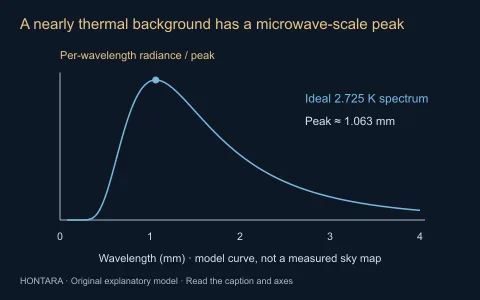
Distinguish a thermal spectrum, tiny sky variations and a model-dependent reconstruction of early conditions.
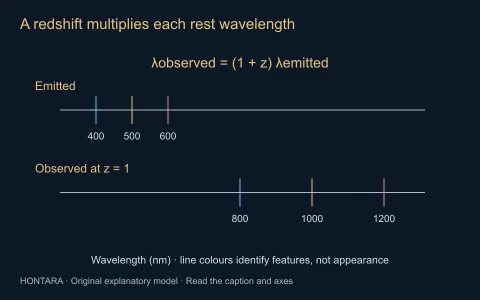
Use 1+z to connect emitted and observed wavelengths without treating every redshift as a simple speed or distance.
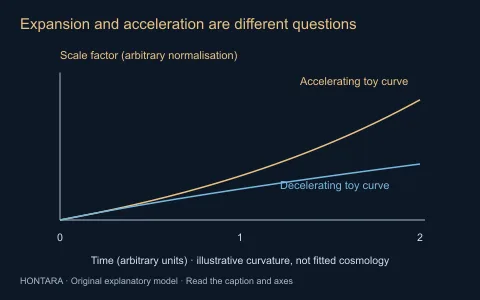
Follow the comparison of distances and redshifts while keeping a cosmological label separate from a known microscopic substance.
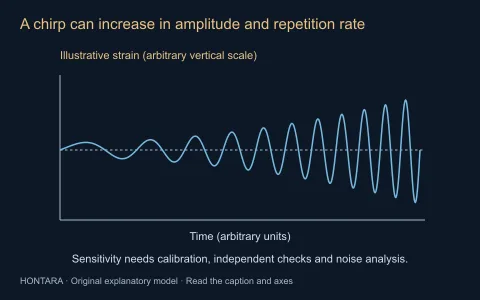
Connect strain, interferometry and independent detectors without confusing the signal with ordinary sound travelling through space.
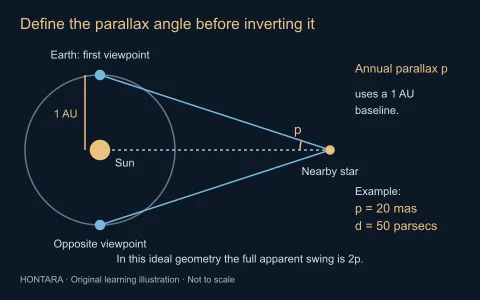
Connect a tiny annual positional shift with the parsec and learn when a reciprocal distance becomes unreliable.
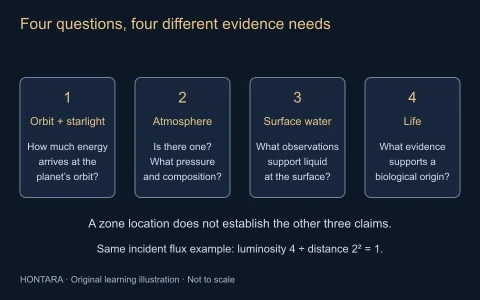
Separate a planet’s received starlight from evidence for an atmosphere, liquid water or life.
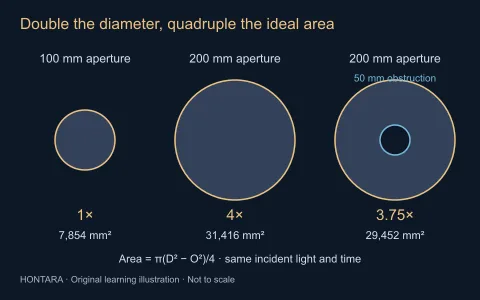
Use circle area to compare apertures while keeping collection, magnification and image brightness distinct.
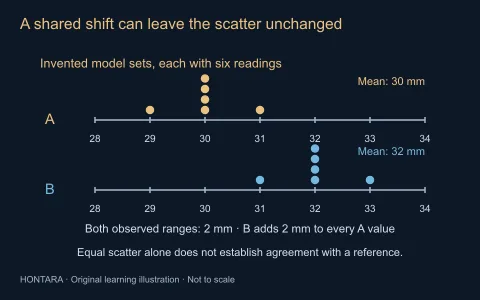
Distinguish repeated scatter, systematic effects and an uncertainty statement before comparing astronomical results.
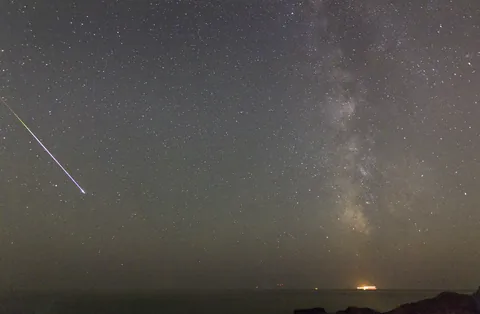
A fireball is an unusually bright meteor, about as bright as Venus or brighter. Learn how to recognise one and what to record if you see it.
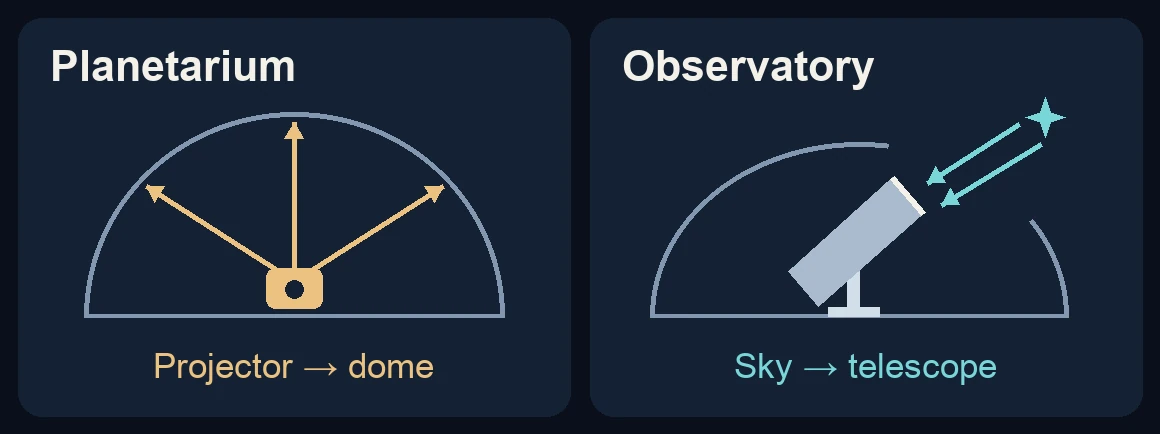
A planetarium shows a simulated sky indoors. An observatory uses telescopes or other instruments to study the real sky.
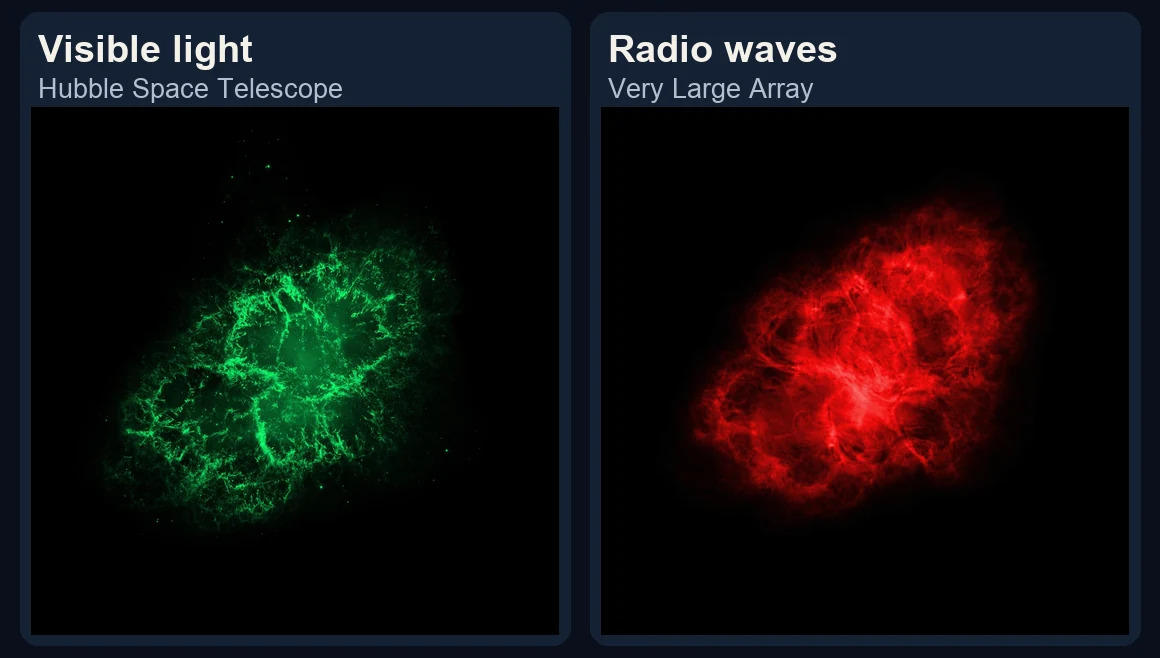
An optical observatory collects visible light. A radio observatory uses antennas to measure longer radio waves from space.
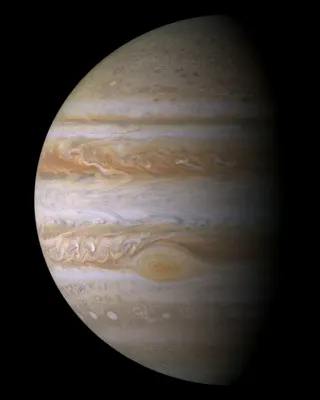
Jupiter spins once in about 9 hours 54 minutes. Venus takes about 243 Earth days to spin once, while Mercury has the longest noon-to-noon day at about 176 Earth days.
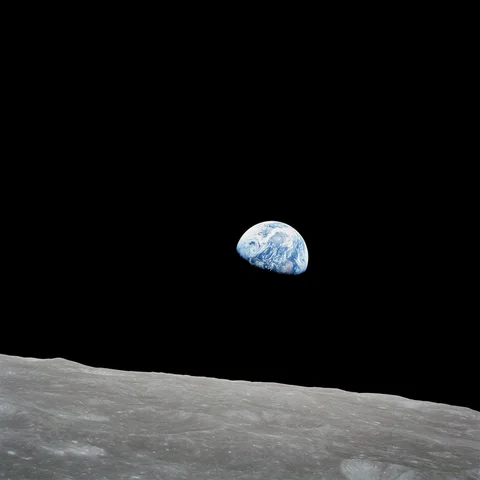
Earth stays in roughly the same part of the sky from most of the Moon’s near side. It shows phases that are roughly opposite to the Moon phases we see from Earth.
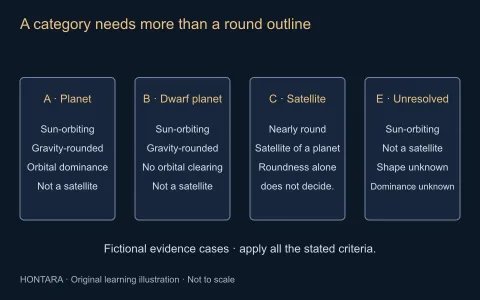
Use the Solar System classification criteria without treating size, roundness or a crossing orbit as the whole answer.
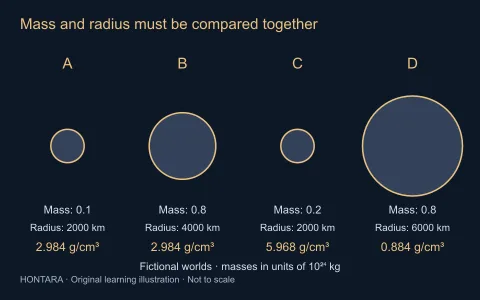
Relate mass to volume while keeping bulk density separate from a unique composition or a local interior measurement.
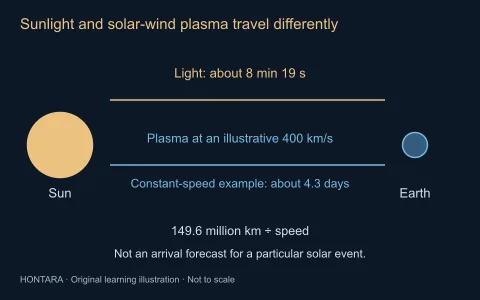
Distinguish the Sun’s outward-flowing plasma from sunlight, an eruption and an Earth-like breeze.
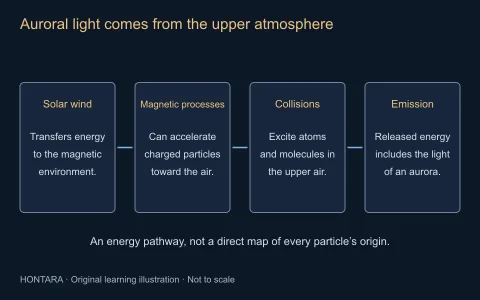
Connect Earth’s magnetic environment, energetic particles and atmospheric emissions without promising a local display.
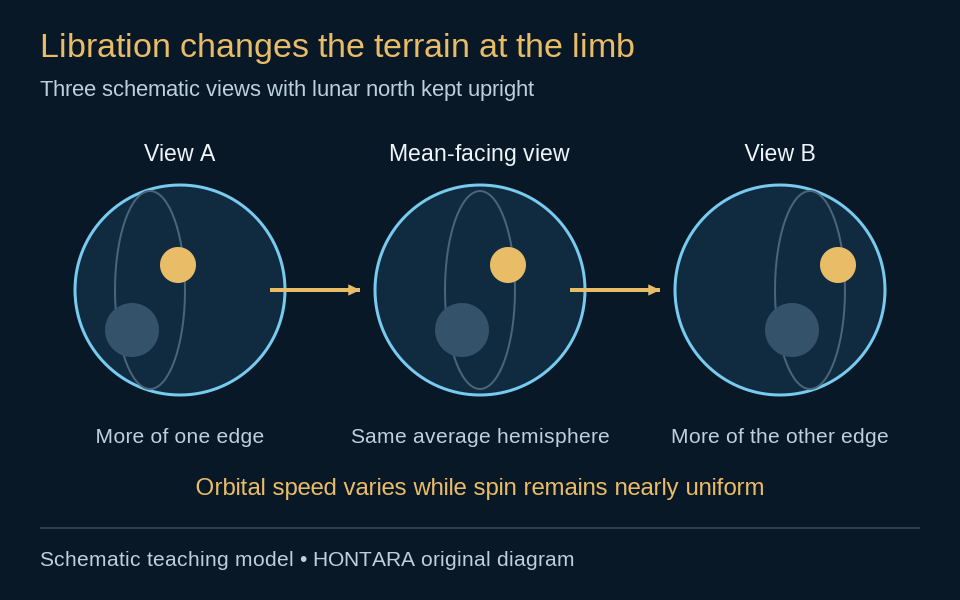
Explain why a synchronously rotating Moon reveals changing strips around its edges.
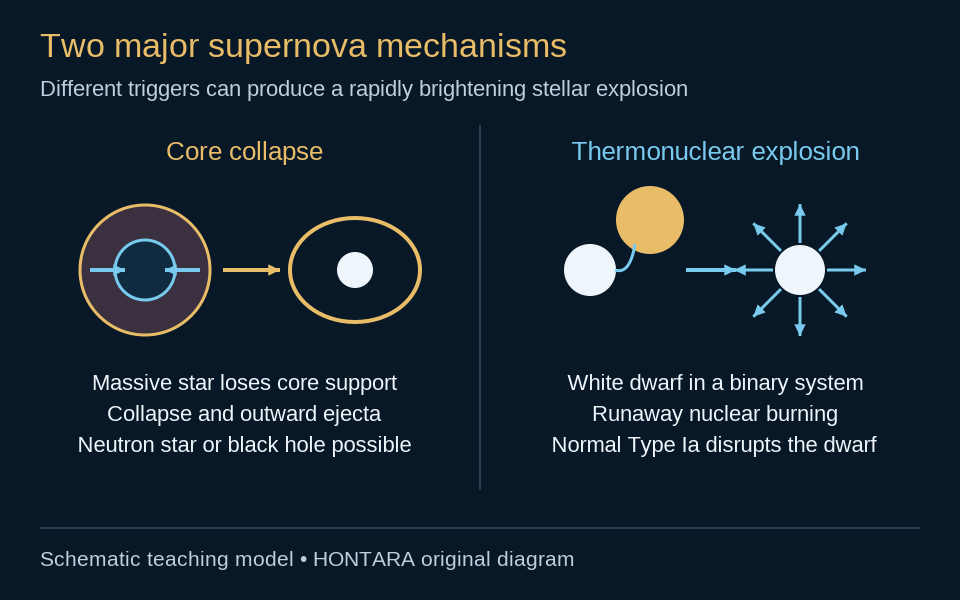
Compare core collapse with thermonuclear explosions and read the evidence they leave.
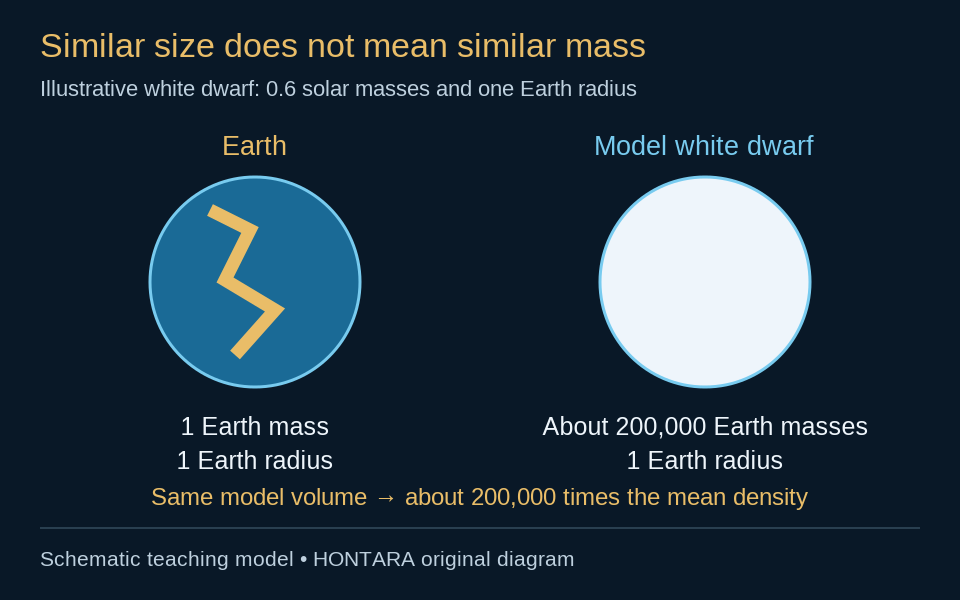
Meet a compact stellar remnant whose support comes from quantum physics.
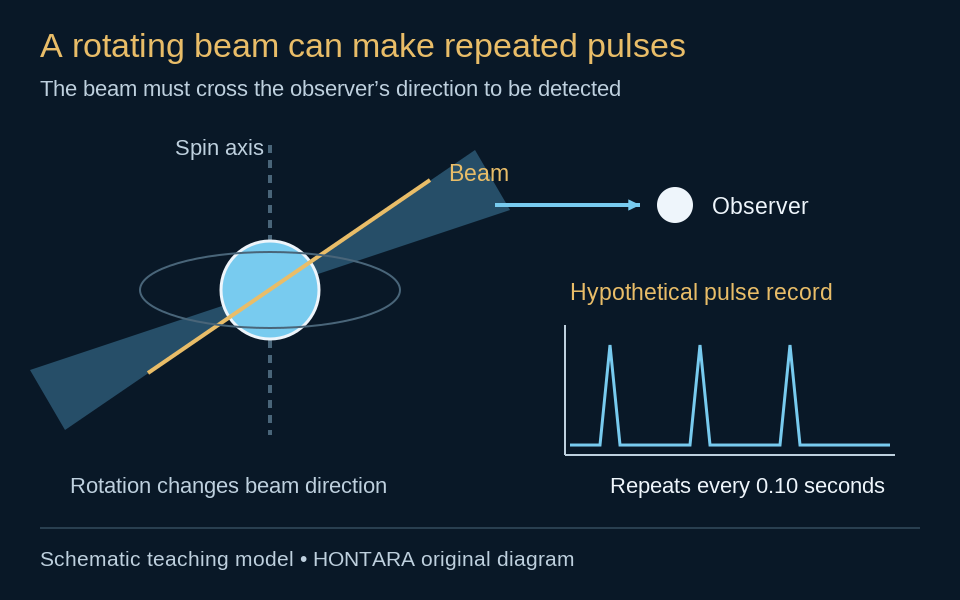
Connect compact remnants with rotation, beams and precisely timed pulses.
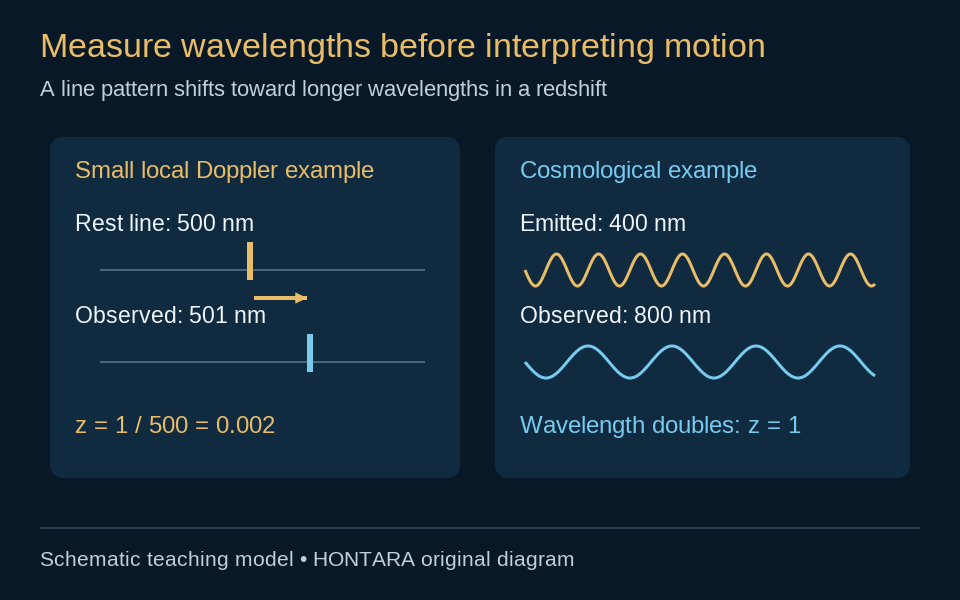
Measure a shifted spectral line and distinguish local motion from cosmic expansion.
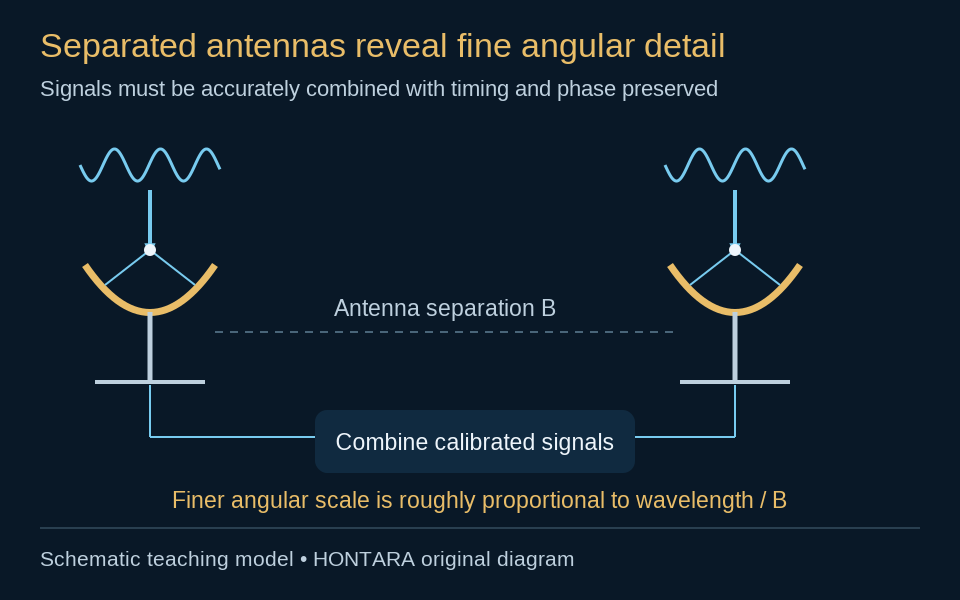
Follow natural radio emission from a cosmic source to an astronomical measurement.
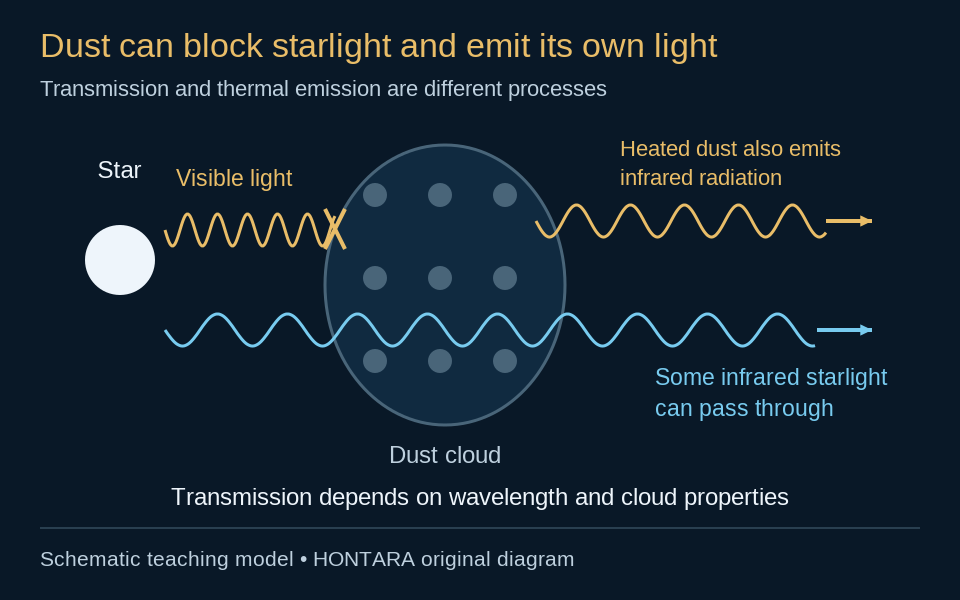
Explore cool material, dusty regions and redshifted light with realistic instrument limits.
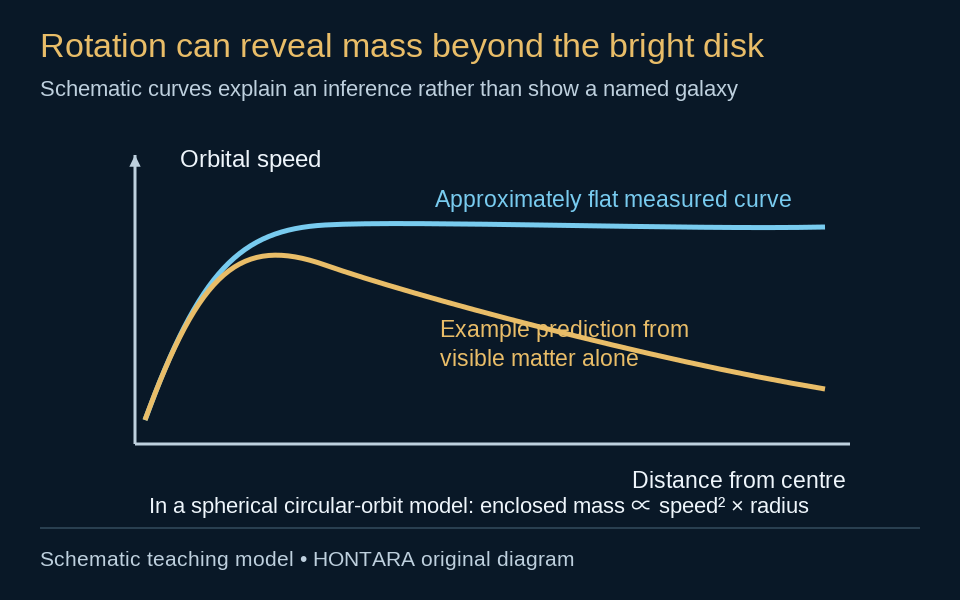
Follow gravitational evidence while separating an inferred component from its unknown identity.
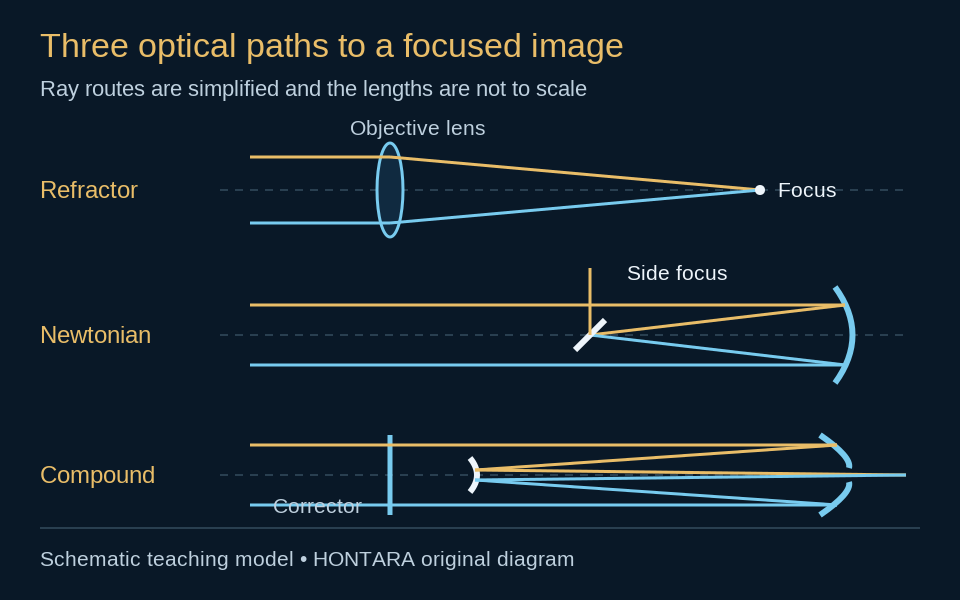
Trace light through lenses, mirrors and folded optical systems.
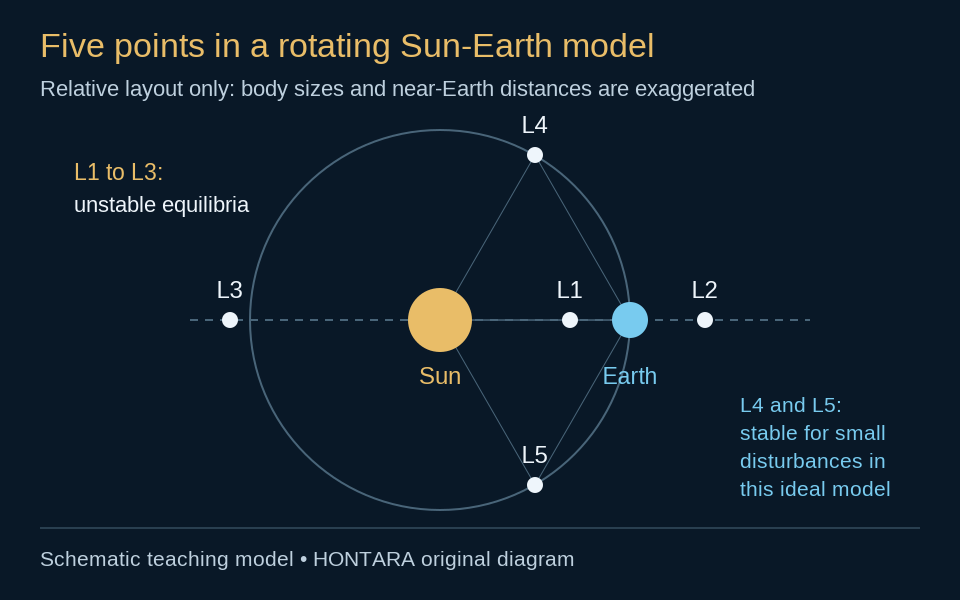
Understand five special positions in a rotating model and why real spacecraft still need corrections.
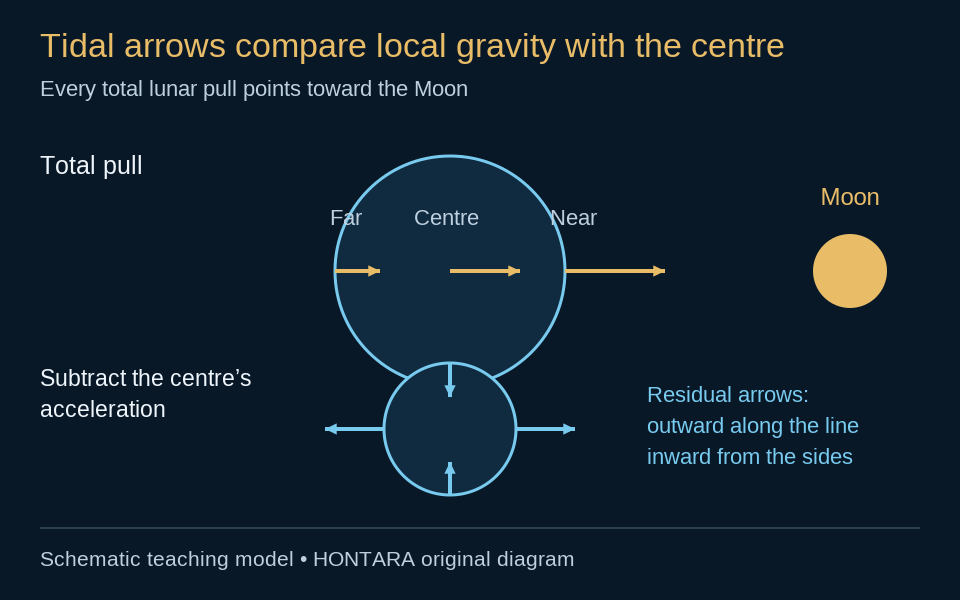
Use differential gravity to explain the driving forces without predicting a real coast from a sketch.
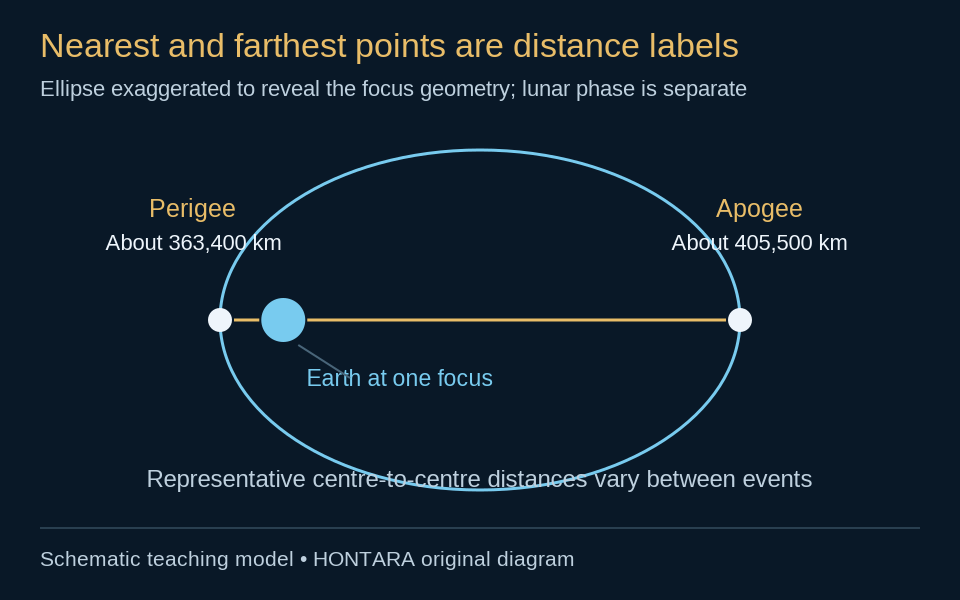
Separate nearest and farthest orbital positions from the lunar phase cycle.
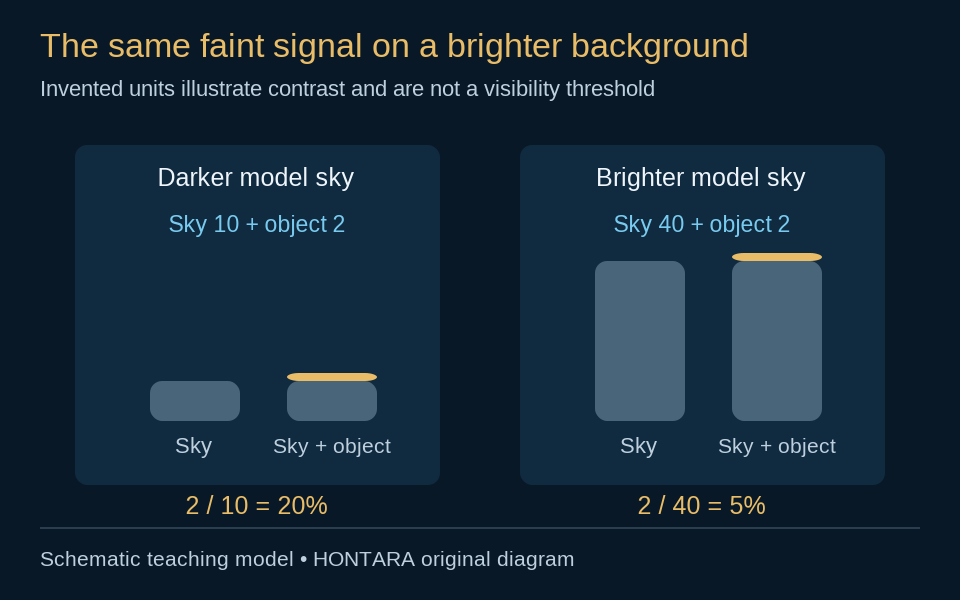
Understand sky background, scattering and the difference between total brightness and visibility.
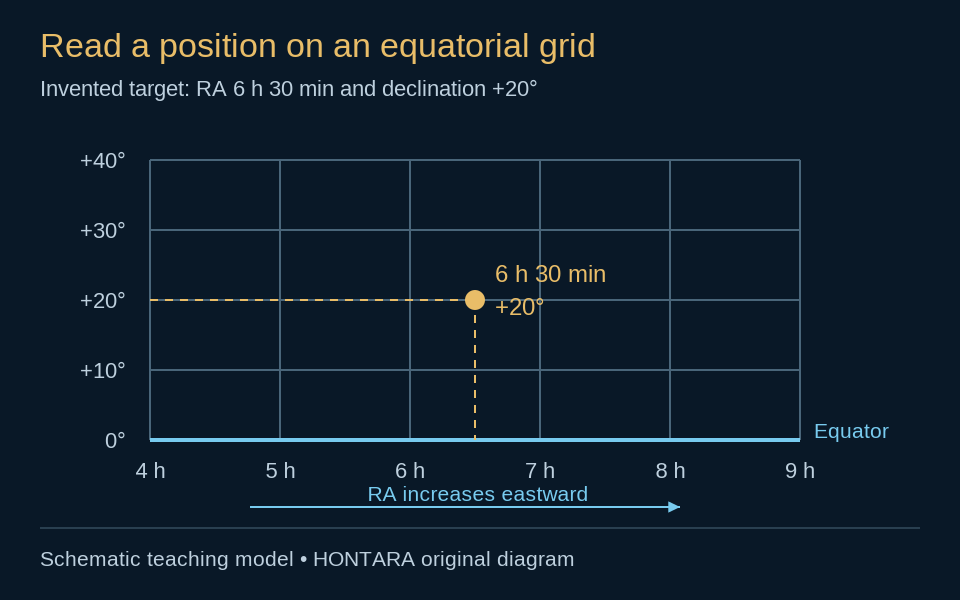
Read equatorial coordinates while keeping their reference frame and date explicit.
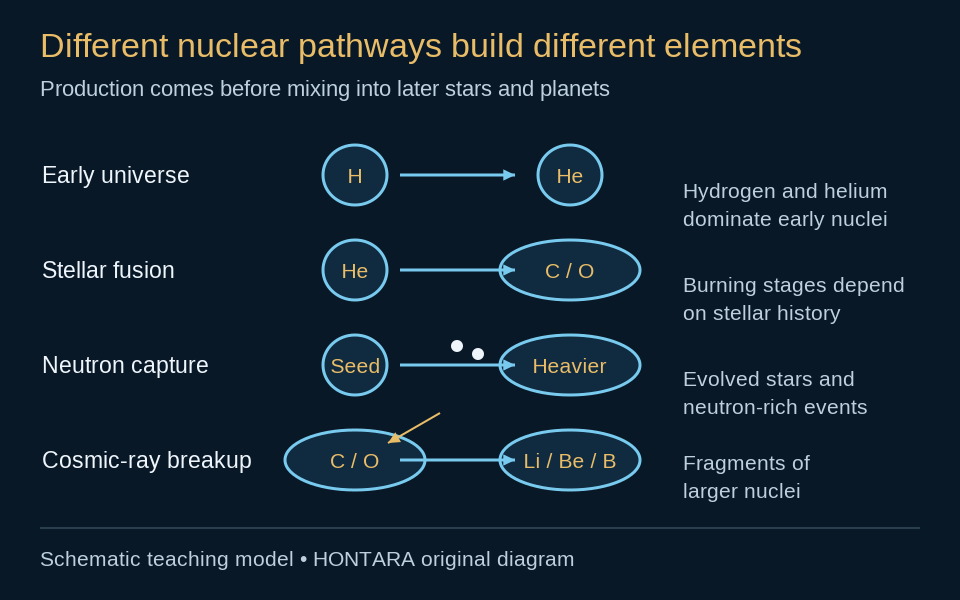
Distinguish early-universe nuclei, stellar burning and neutron-capture pathways.
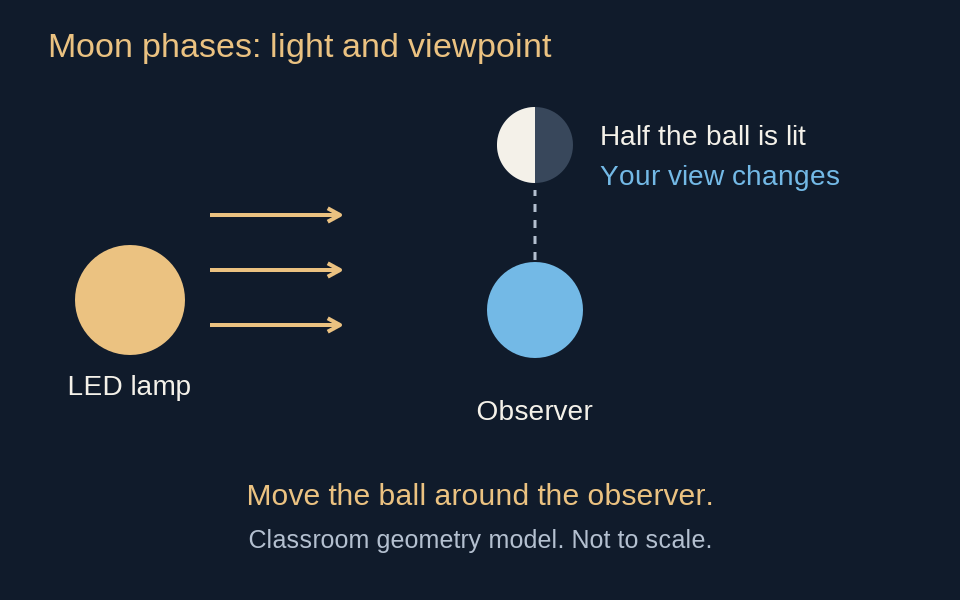
Understand lunar phases by following sunlight and the Moon’s orbit.
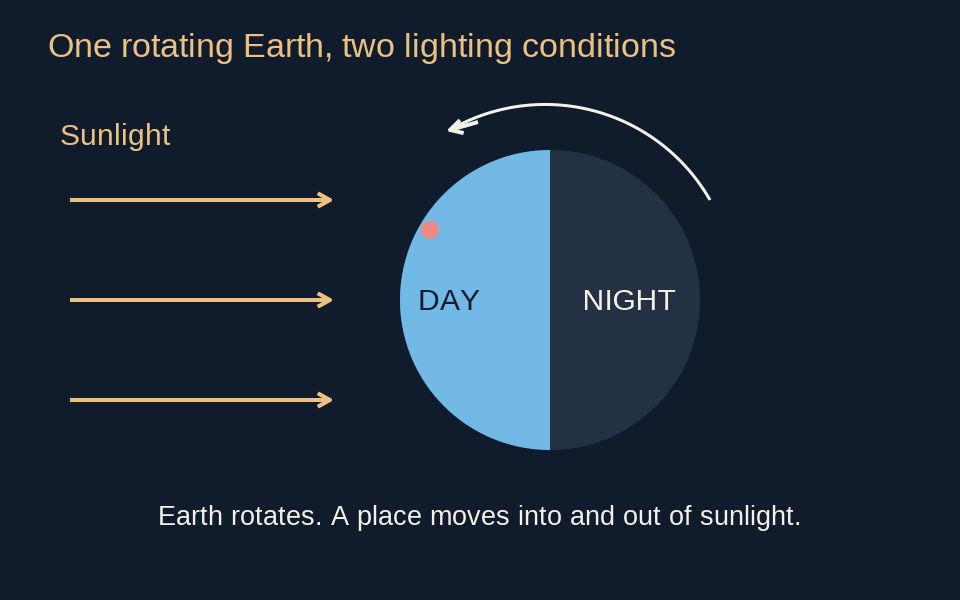
Use Earth’s rotation to explain sunrise, sunset and the changing sky.
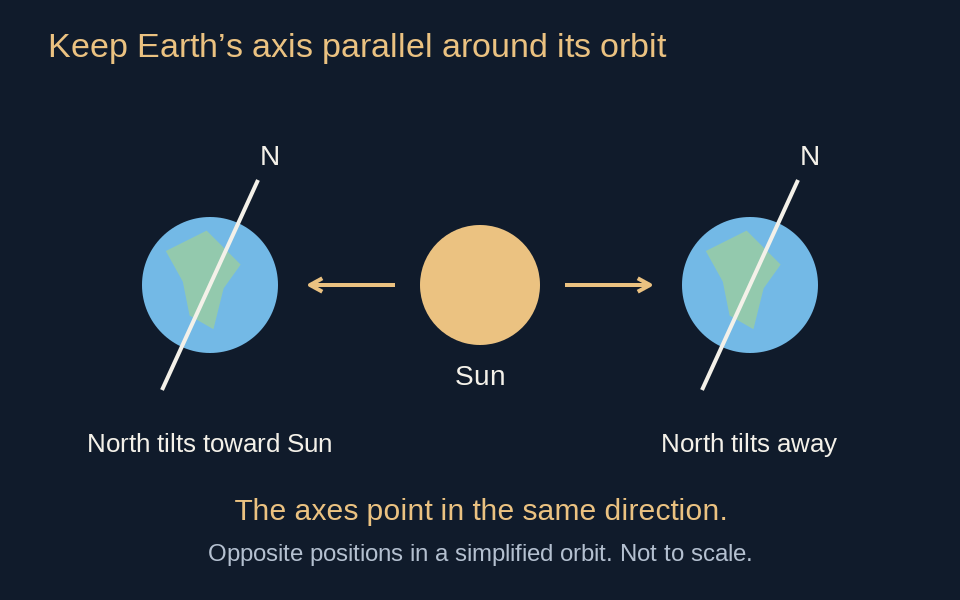
Discover how axial tilt changes sunlight and daylight across the year.
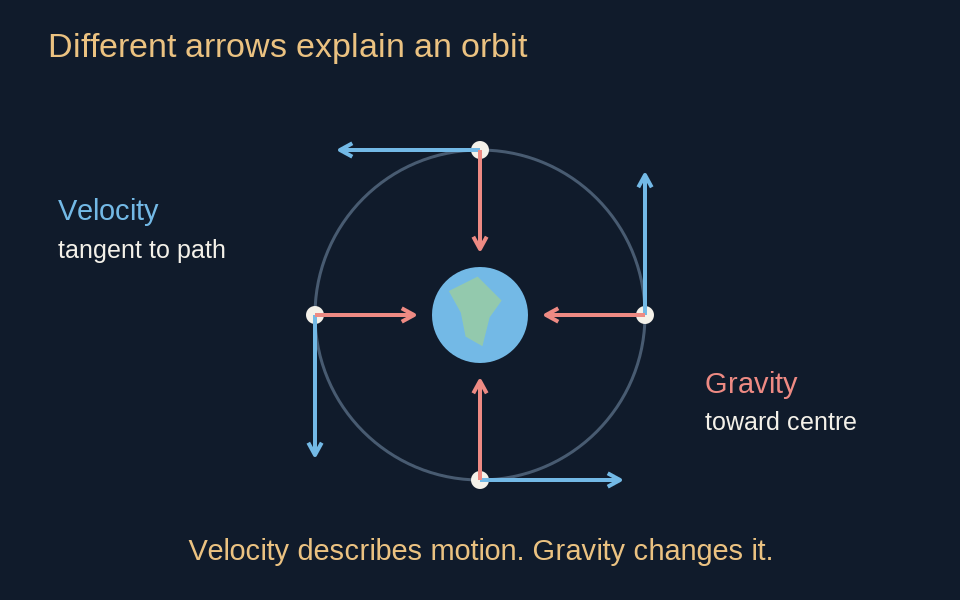
Connect falling objects, planetary motion and weightlessness using gravity.
See why a satellite can keep falling without reaching the ground.
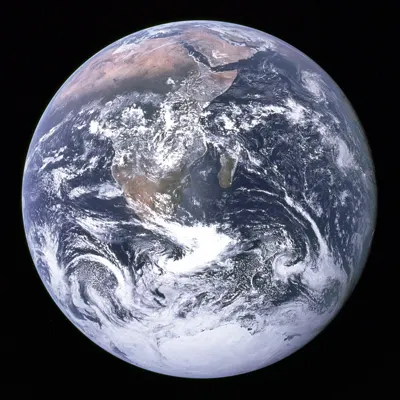
Meet the Sun, planets and smaller worlds as one connected system.
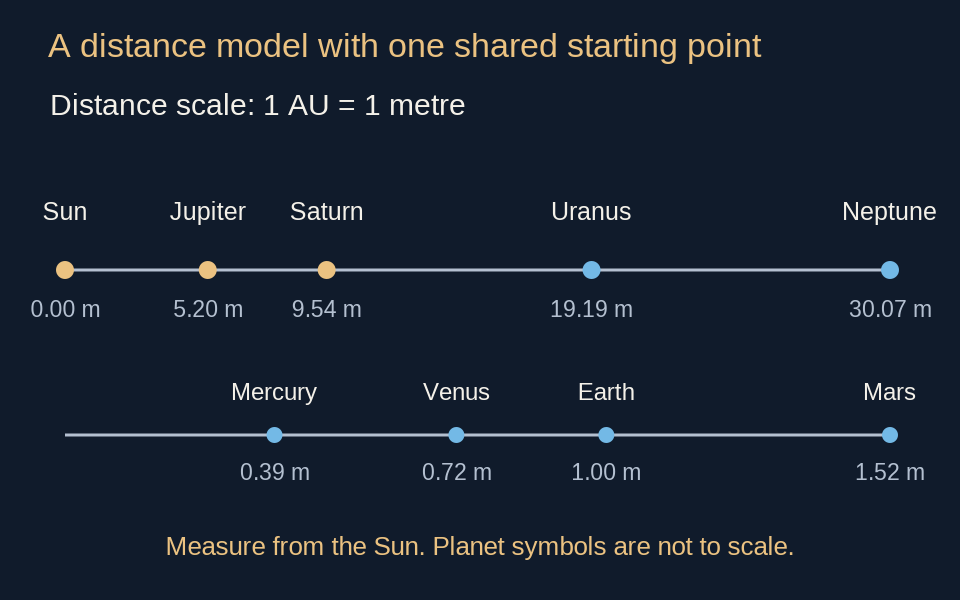
Build an intuition for planetary distances without confusing size and spacing.
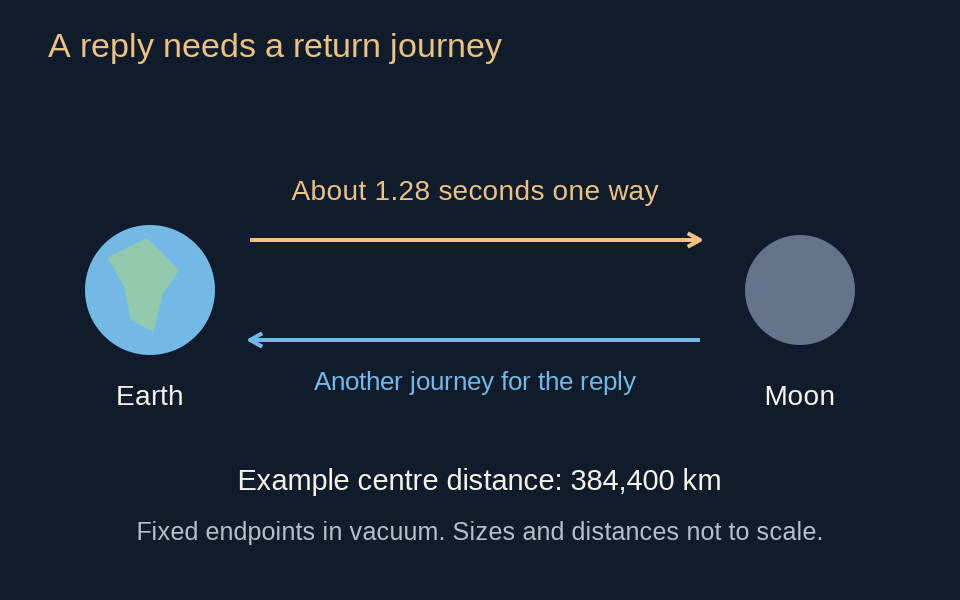
Understand why a unit named after a year measures distance.
Explore how gravity and nuclear fusion make stars shine.
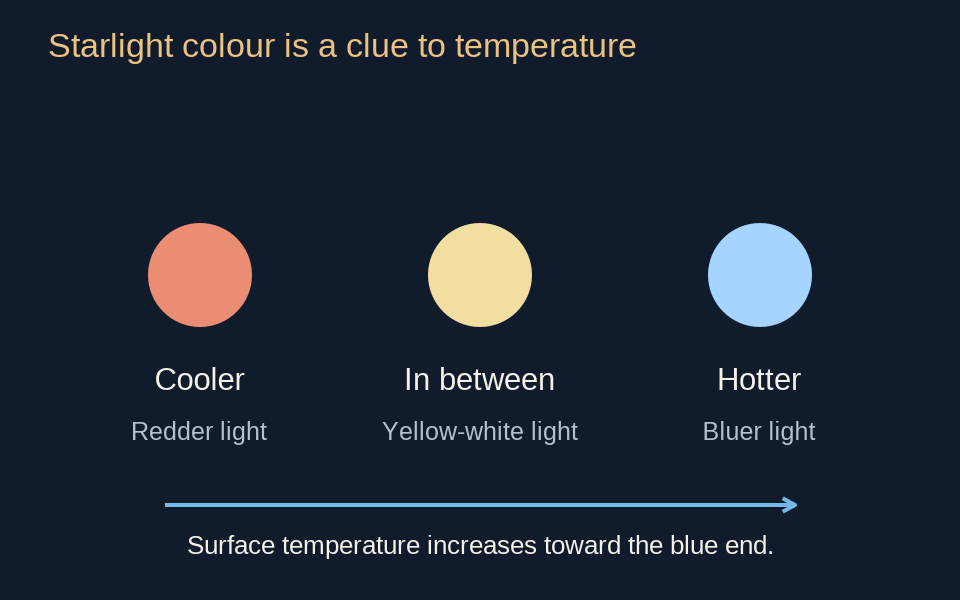
Use stellar colour as a clue to temperature rather than distance.
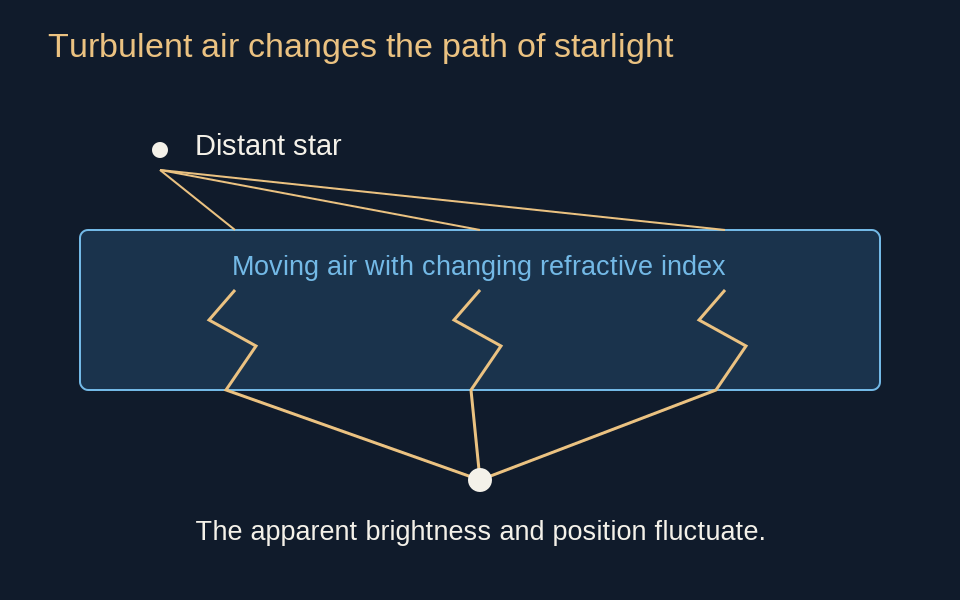
Trace a star’s light through Earth’s restless atmosphere.
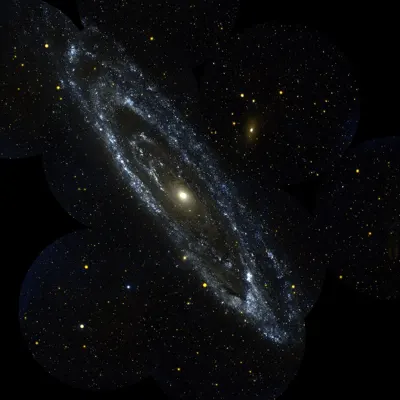
Understand the large systems that contain stars, gas, dust and dark matter.
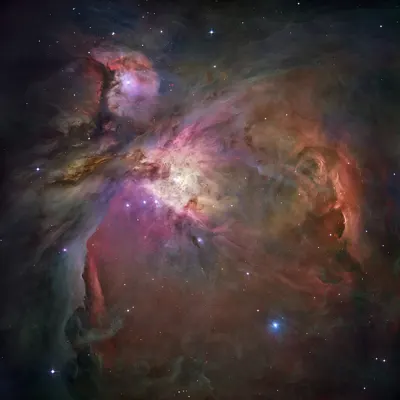
Discover why clouds in space can mark both the birth and death of stars.
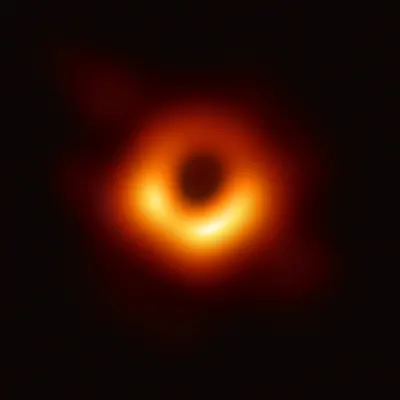
A black hole is a region that light cannot escape. Learn how black holes form, what an event horizon is and how astronomers detect them.
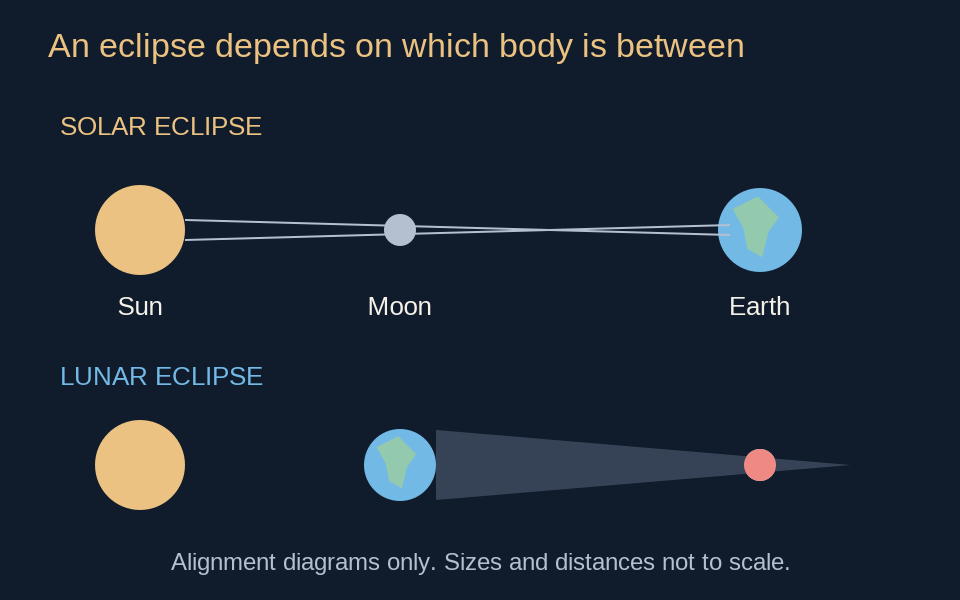
Use alignment and shadows to understand two very different events.
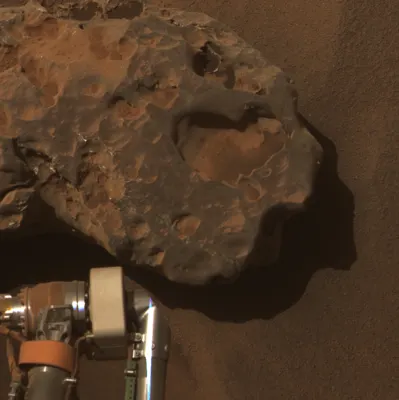
A meteoroid is a small object in space. A meteor is the streak it makes in the atmosphere. A meteorite is a piece that reaches the ground.
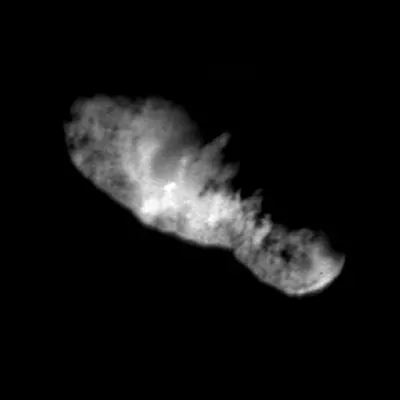
Follow an icy body as sunlight transforms its appearance.
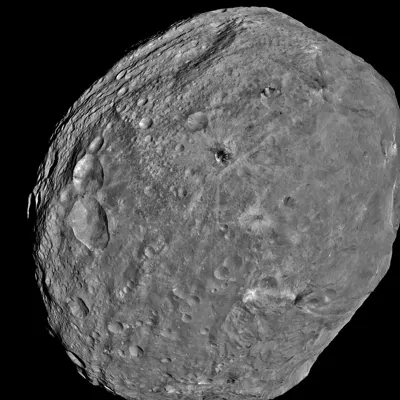
Explore small rocky worlds without the crowded-belt picture from films.
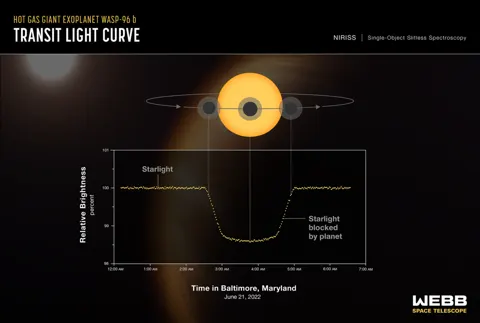
Discover how tiny changes in starlight can reveal worlds around other stars.
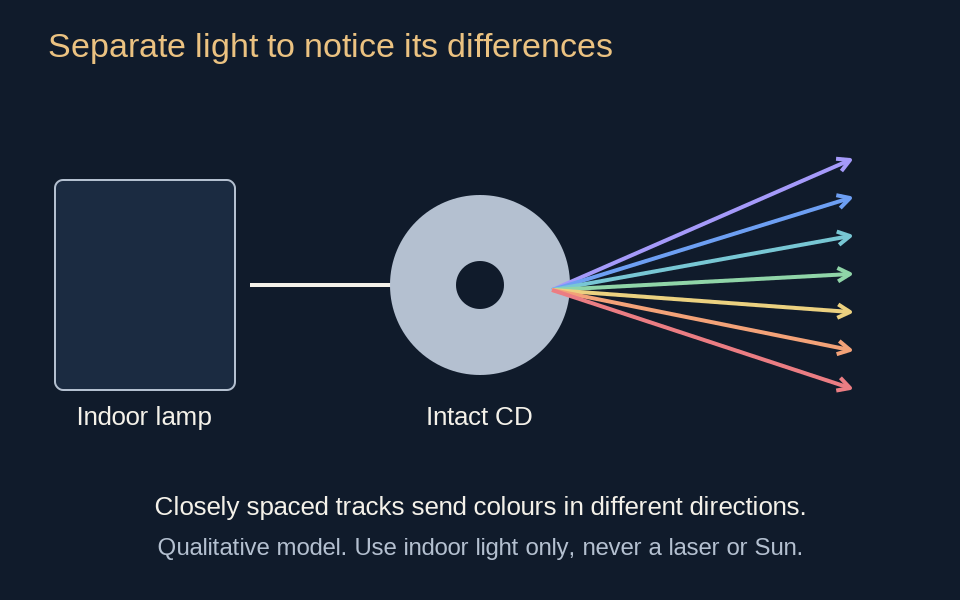
Read a spectrum as evidence of composition, temperature and motion.
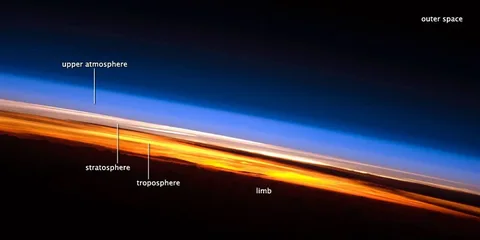
Air molecules scatter blue light more strongly than red light. During the day that scattered blue light reaches you from across the sky. Near sunset, sunlight travels through more air and the direct light looks warmer.
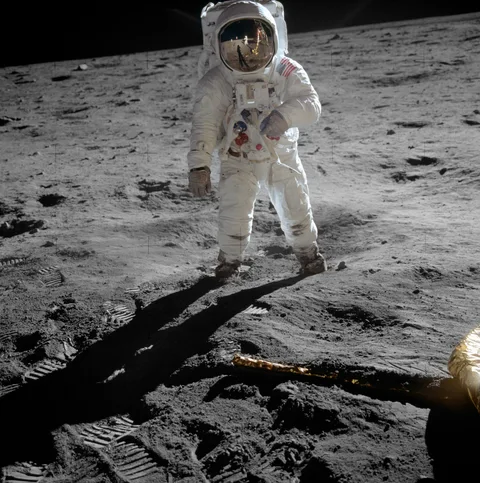
The Apollo surface cameras were exposed for bright sunlit ground and spacesuits. Most stars were too faint to register clearly at those settings, even against the black lunar sky.
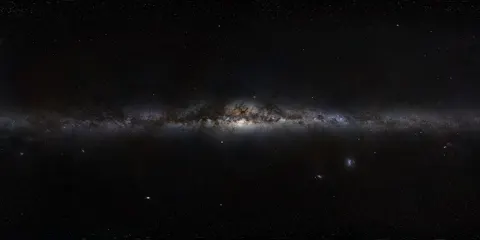
The universe has a finite history, so only light from a limited part of it has had time to reach us. Expansion also stretches and dims distant light. Together these effects help explain why the sky does not shine brightly in every direction.
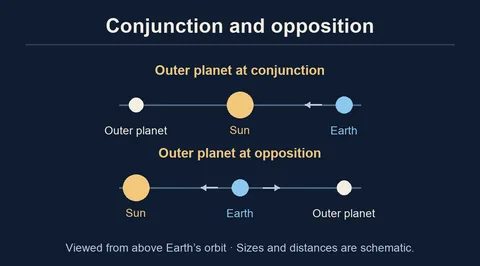
A planet at solar conjunction appears in nearly the same direction as the Sun. At opposition an outer planet appears on the opposite side of the sky and is usually visible for much of the night.
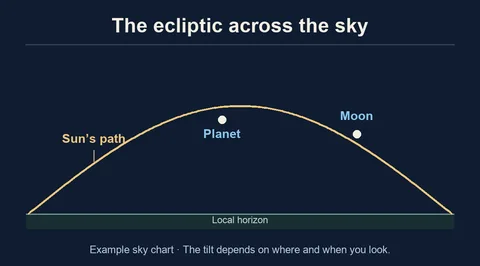
The ecliptic is the Sun’s apparent path among the stars over a year. The Moon and planets usually appear near it because their orbits lie close to the plane of Earth’s orbit.
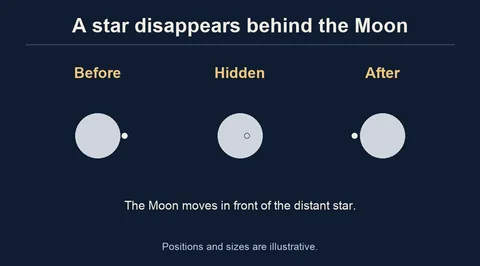
An eclipse involves shadow or blocked light. A transit shows a smaller object crossing a larger disc. In an occultation a nearer object hides the more distant target from view.
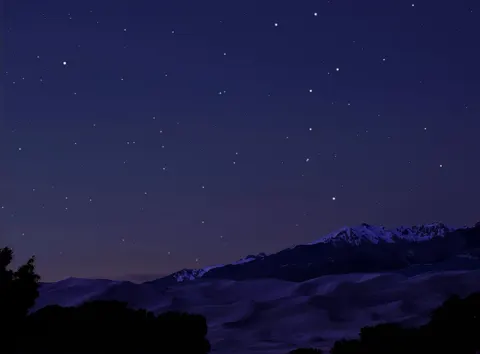
A constellation is one of 88 formally defined areas of sky. An asterism is a recognisable star pattern that can sit inside one constellation or stretch across several.
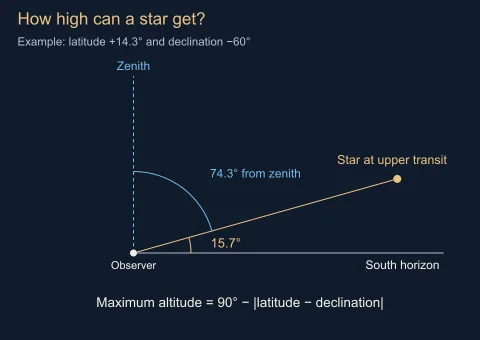
Use latitude and declination to calculate a star’s upper-transit altitude, then test whether it clears a local obstacle.
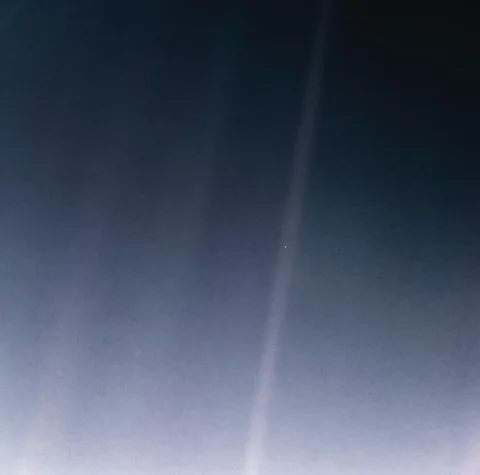
One light-day is the distance light travels in 24 hours, about 25.9 billion kilometres. Voyager 1 reached that distance from Earth on 18 November 2026.
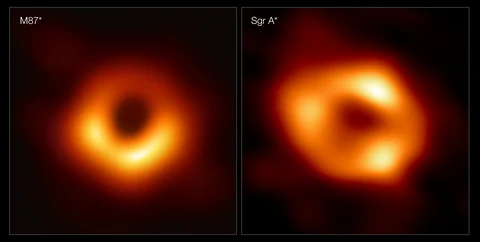
See the real images of M87* and Sagittarius A* side by side. Learn what the bright rings and dark centres show and how radio telescopes captured them.
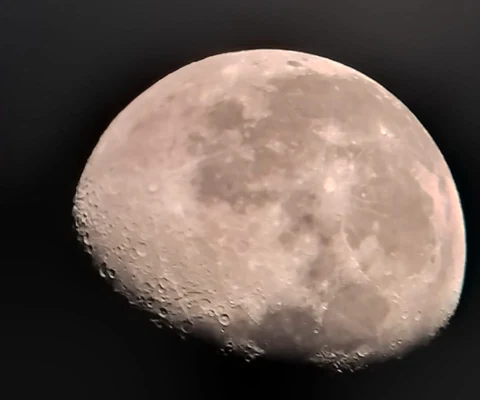
See real telescope views of the Moon, Jupiter and Saturn. Learn what to look for at the eyepiece and how to plan a first stargazing visit to HONTARA.
No resources match that search. Try fewer words or clear the filters.