On this page
One object from space to the ground
Imagine a small rock travelling through space toward Earth. Its name depends on what you’re describing at each stage.
- Meteoroid in space. This is the rock before it reaches the atmosphere.
- Meteor in the sky. This is the streak of light during entry, sometimes called a shooting star.
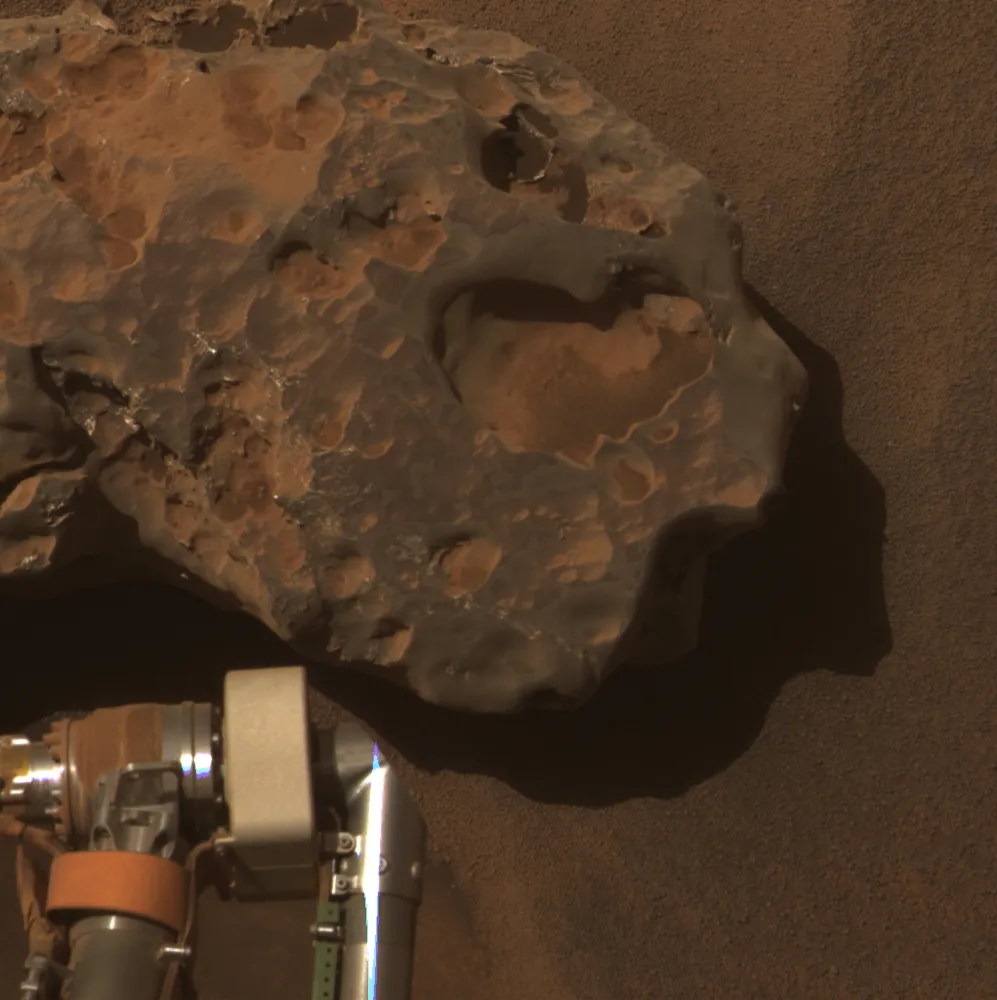
- Meteorite on the ground. This is any part of the rock left after it hits the surface.
THE BIG IDEAS
- A meteor is a light phenomenon rather than the surviving rock.
- Showers occur when Earth encounters streams of debris.
- Ideal observing rates differ from real local counts.
Why the trail shines
An incoming object interacts intensely with atmospheric gas. High-speed entry heats the material and surrounding gas, producing light as the object loses mass and energy. Many particles are destroyed before reaching the surface. The visible streak can be much larger than the original particle. Brightness therefore does not let an observer estimate the object’s size simply by comparing the trail with the apparent size of a planet or star.
Where meteor showers come from
A meteor shower occurs when Earth crosses a stream of debris. The Geminids are associated with the rocky object 3200 Phaethon. The trails appear to fan out from Gemini because the particles approach Earth on broadly similar paths. That direction is called the radiant.
The trails can appear far from Gemini. For the Geminids or any other shower, choose a spot where you can see a wide area of sky.
Watching with realistic expectations
A dark location with an open sky usually helps more than magnification because meteors can appear over a wide area. Binoculars and telescopes show too little sky for general shower watching. Allow time for your eyes to adjust and record cloud cover, Moon conditions and the length of your observing session. Published ideal rates are not promises of what one person will see from a bright or cloudy site.
A possible meteorite needs evidence
Most unusual rocks found on the ground are ordinary terrestrial rocks. Appearance alone is not a reliable identification and a black surface or attraction to a magnet is not proof. If you find something interesting, record where it was found and seek advice from an appropriate geological or scientific institution. Meteorites can provide valuable information about early Solar System material when their identity and context are established carefully.
PAUSE AND THINK
What should you call a fragment collected on the ground after a verified atmospheric fall?
Explore the answer
A meteorite. The luminous streak during entry was the meteor and the object before entry was a meteoroid.