On this page
Fireball, bolide and meteorite
A small object entering the atmosphere at high speed produces a luminous trail as it heats the air and loses material. The American Meteor Society generally calls a meteor brighter than magnitude −4 a fireball. Lower magnitudes mean greater brightness, so a magnitude −6 meteor is brighter than one at −4.
Observers sometimes call a fireball that ends in a strong flash a bolide. The flash can happen when the object fragments. How bright the trail looks also depends on distance, speed and the viewing angle. Brightness alone tells you little about where any fragments might have landed.
What to look for in a moving light
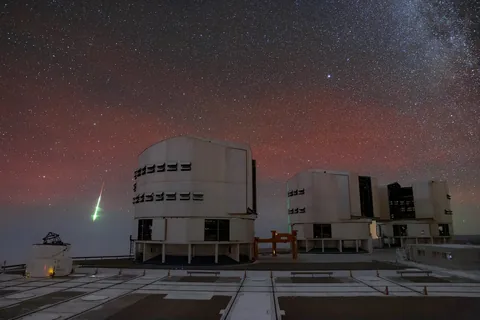
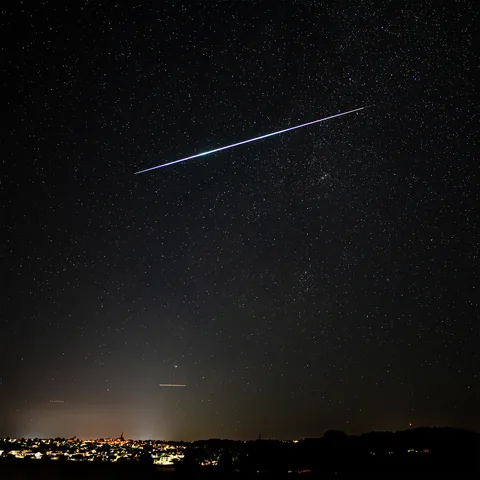
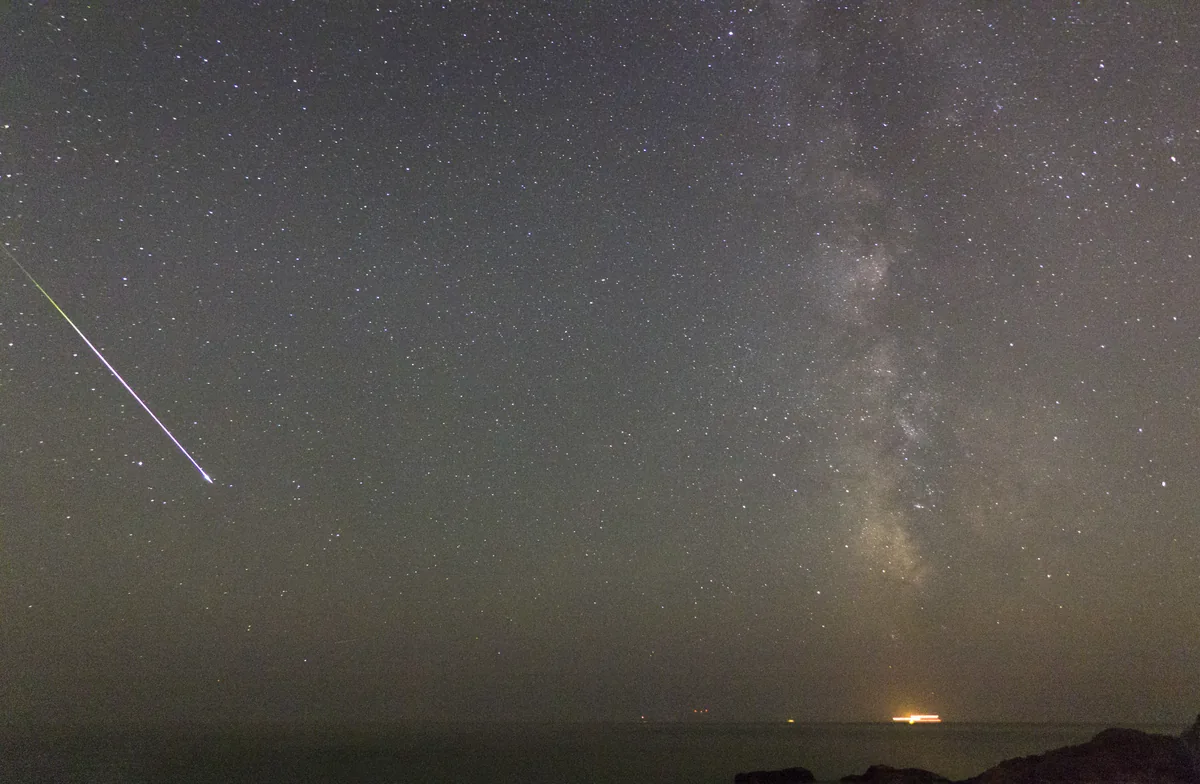
A meteor usually crosses a section of sky in seconds. It can brighten or fade quickly and can leave a faint glowing train after the main object disappears. The train may drift and change shape. A line of moving fragments over a much longer period can be space debris re-entering, while steady or regularly blinking lights often come from satellites or aircraft.
Colour is a useful detail to note. Its appearance can depend on the object, the atmosphere and the camera. A green trail by itself cannot identify what the object was made of.
Write down these details while they are fresh
Independent reports from different viewing locations can help observers reconstruct a path through the atmosphere. If you saw the fireball with friends, ask each person to write their own description before comparing notes.
- Time and date. Include the time zone or give the time in IST. Save the original time shown by your phone or camera.
- Observing place. Note the nearest town and your viewing location, ideally with coordinates.
- Path and duration. Record where the streak began and ended with compass directions and approximate angles above the horizon. An outstretched fist is about 10°.
- Brightness and behaviour. Mention a flash, breaks into fragments, a lingering train or sound after the event. Keep the original photograph or video if you have one.