On this page
Earth has a leading side as it orbits
Imagine walking through falling snow. More flakes reach the front of your coat than the back as you move. Earth is moving too. The side facing forward along its orbit tends to encounter more meteoroids, the small pieces of rock or dust that can make a streak of light in the atmosphere.
As Earth spins, a place on the evening side moves around to the morning side. The difference is easiest to think about for sporadic meteors, which occur on any clear night and can come from several directions. At dawn the leading direction is high in the sky, but brightening twilight soon makes the fainter streaks impossible to see.
A shower adds a direction of its own
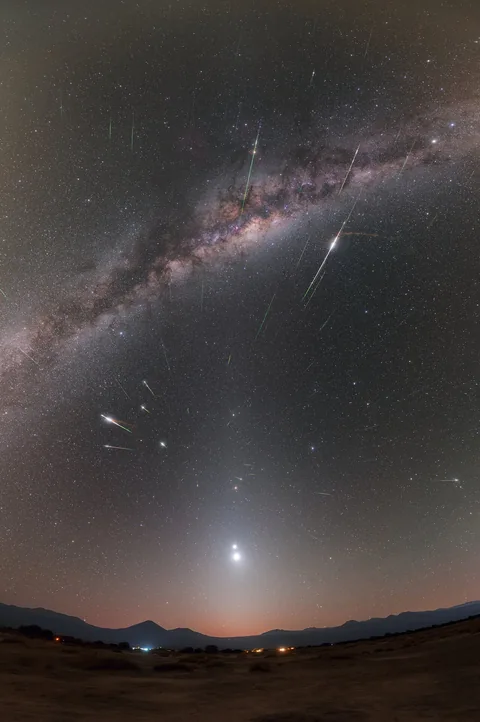
Meteoroids in a shower arrive along similar paths. Seen from Earth, the streaks seem to spread from one spot called the radiant. The radiant rises and sets along with the stars around it. If it is low, you have a much smaller chance of seeing the shower than when it is high. A meteor can still appear far away from that point.
The Geminids can be worth watching before midnight when Gemini has risen and the Moon has set. The Eta Aquarid radiant near Aquarius is better placed before dawn for India. Use the viewing window for the shower you want to see.
Pick a dark hour that you can actually use
For a casual watch on an ordinary night, try the last fully dark hour before dawn if the weather is clear and the Moon is down. During the rainy season or when the sky is hazy, a clear evening is a better choice than a clouded pre-dawn window.
Give your eyes time to adjust and look high in the darkest open area. To compare early and late counts, use the same spot and equal lengths of time. Record coverage by clouds and the Moon so you can tell whether the viewing conditions changed.