On this page
Why look inside meteorites?
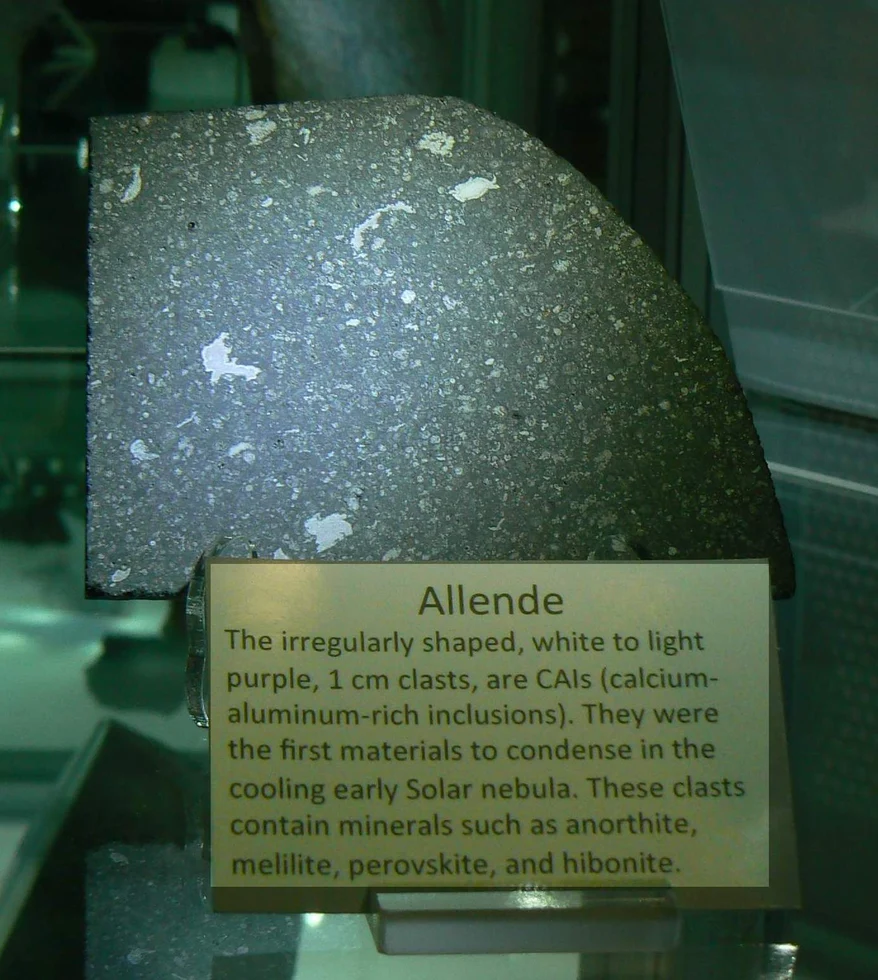
Some meteorites were once part of small bodies that formed while the young Sun was surrounded by a disc of gas and dust. Primitive samples can preserve calcium- and aluminium-rich inclusions. These are among the earliest solids known to have formed in the disc.
A whole meteorite can contain grains from several stages of the Solar System’s history. Researchers select and date particular inclusions. Otherwise an age could refer to a later heating event or to the formation of different material.
How radioactive decay gives a clock
Some uranium isotopes decay through a series of steps into stable lead isotopes. The decay rates are measured. The proportions of lead isotopes in a mineral carry a record of how long that process has been running since the relevant material formed or last stopped exchanging those elements with its surroundings.
Scientists check whether a sample was altered, compare mineral portions and account for lead that was already present. Those checks matter because later heating or chemical changes can disturb the isotope ratios.
What a published age dates
A 2012 study by Connelly and colleagues estimated an age of about 4,567.3 million years for a set of early inclusions. That is about 4.57 billion years. It dates the formation of those solids and provides a reference point for the beginning of Solar System history.
The planets took time to assemble from the surrounding material. An age for the earliest solids helps place later events in order, such as the formation of different grains and the growth of small bodies. It gives an approximate starting date for the system rather than a shared birthday for every planet.