On this page
A system centred on a star
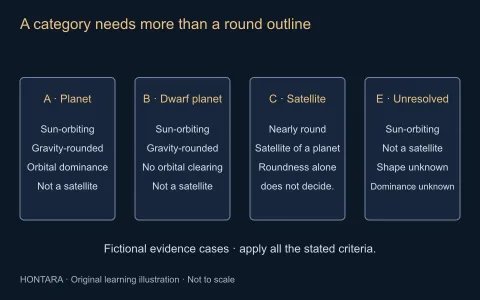
The Solar System includes the Sun and the objects gravitationally associated with it. The Sun contains almost all of the system’s mass and supplies the light that makes planets visible. Eight planets follow orbits around it, accompanied by moons, dwarf planets, asteroids, comets and dust. These categories describe different properties. A moon orbits another larger body, while a planet’s definition includes its relationship with the Sun and its orbital neighbourhood.
THE BIG IDEAS
- The Sun is the Solar System’s central star.
- Rocky planets and giant planets have different structures.
- A useful diagram identifies what is and is not to scale.
The inner rocky worlds
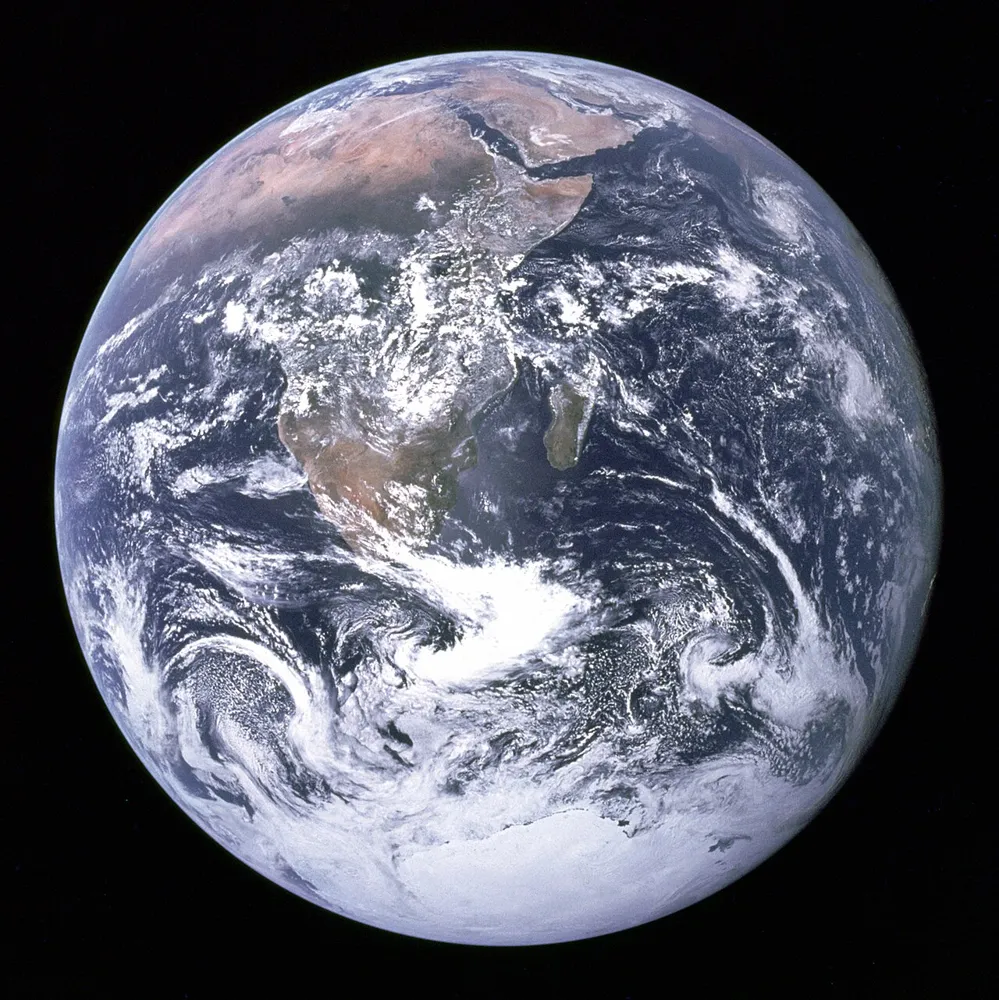
Mercury, Venus, Earth and Mars are the inner terrestrial planets. They have solid surfaces, but that does not make their environments alike. Venus has a thick atmosphere while Mercury has only a very thin exosphere. Earth has surface oceans and Mars preserves extensive evidence of past water-related activity. Comparing the planets is more useful than memorising a row of names because it reveals how size, atmosphere and solar heating shape a world.
The outer giants
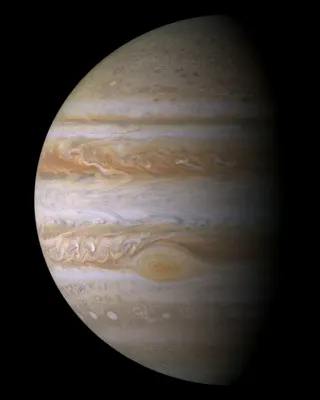
Jupiter and Saturn are gas giants, dominated by hydrogen and helium. Uranus and Neptune are described as ice giants because their interiors contain larger proportions of heavier substances, although the word ice does not mean they are ordinary frozen balls. All four giant planets have rings. Saturn’s rings are simply the most conspicuous. Their many moons form varied systems that include volcanism, ice-covered surfaces and evidence for subsurface oceans.
Small worlds carry important clues
Most main-belt asteroids orbit between Mars and Jupiter. Beyond Neptune, the Kuiper Belt contains icy bodies including Pluto. Comets can arrive from this region or from a much more distant reservoir called the Oort Cloud, inferred from their orbits. Small does not mean scientifically unimportant: these bodies preserve clues to the material from which planets formed. Dwarf planets are worlds in their own right rather than failed classroom answers.
Make room for the empty space
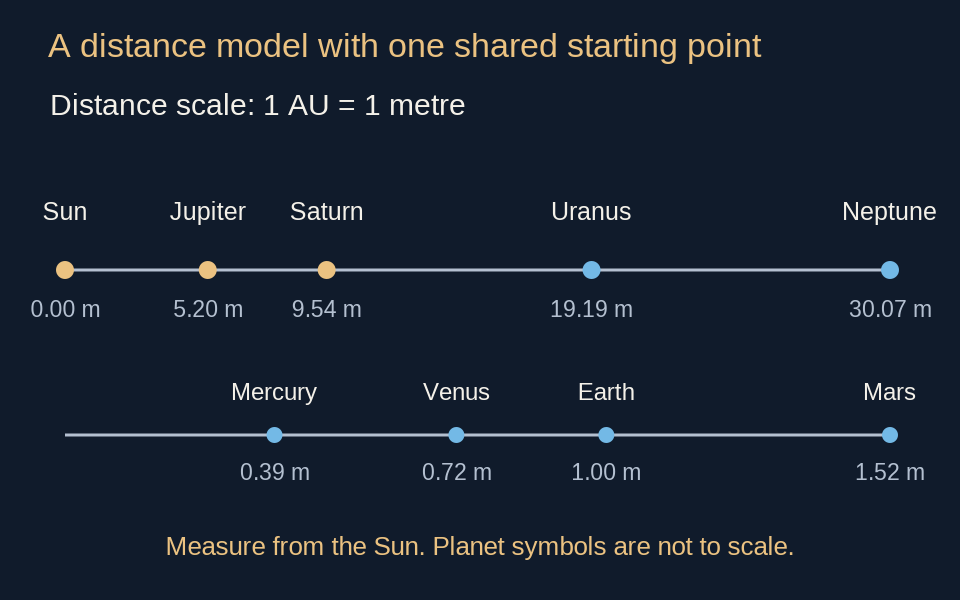
Most classroom diagrams compress the distances drastically. If every planet is drawn large enough to recognise on a single page, its orbit cannot usually share the same scale. Separate size and distance models make this explicit. The spacing grows enormously toward the outer planets and the Solar System has no single solid edge. The Sun’s particle environment, distant small bodies and gravitational influence lead to different useful boundary descriptions.
PAUSE AND THINK
Are Saturn’s the only planetary rings in the Solar System?
Explore the answer
No. Jupiter, Uranus and Neptune also have rings, although they are much less conspicuous than Saturn’s.