On this page
A familiar face with moving edges
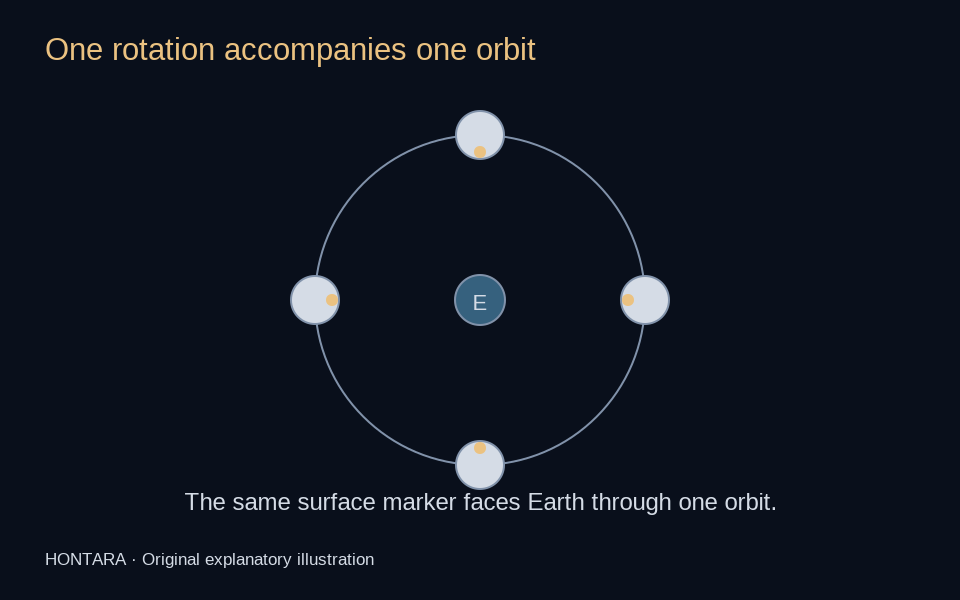
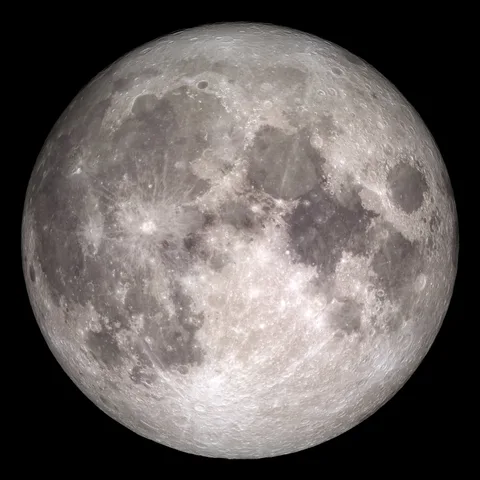
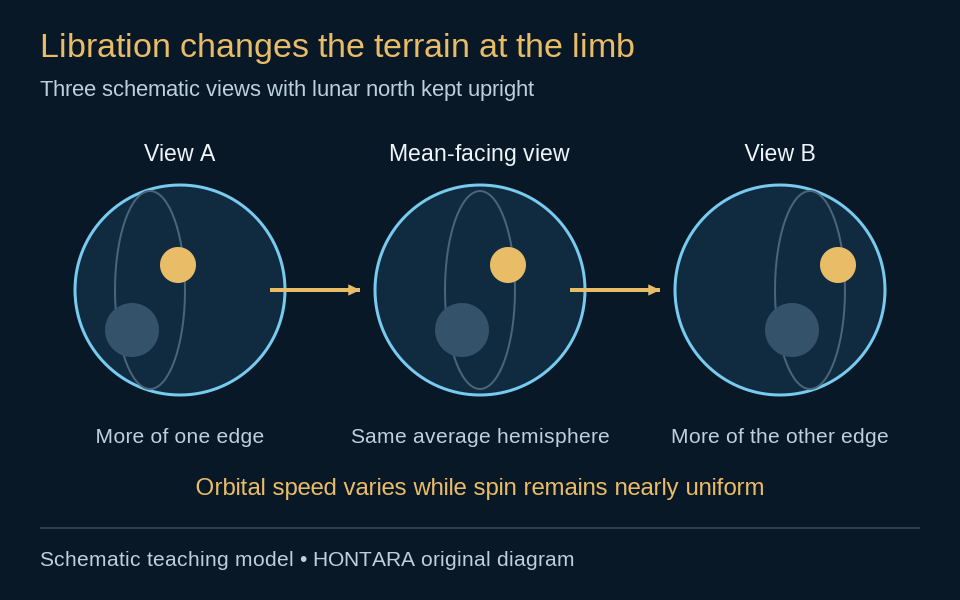
The Moon rotates once in about the same time that it completes an orbit relative to distant stars. That synchronous rotation keeps approximately the same hemisphere facing Earth. Yet a sequence of photographs shows familiar markings shifting sideways or up and down. The apparent rocking is called libration. Over time we can see roughly 59 percent of the lunar surface from Earth rather than exactly one half.
That figure describes the accumulated area visible across many viewpoints. It does not mean that 59 percent appears in a single photograph. At any instant an observer sees approximately one hemisphere. The extra terrain lies mainly in narrow strips around the limb, the apparent edge of the lunar disk.
THE BIG IDEAS
- Synchronous rotation keeps approximately the same lunar hemisphere facing Earth.
- Changing orbital speed produces most longitude libration.
- The 59 percent figure accumulates views over time.
Why longitude libration happens
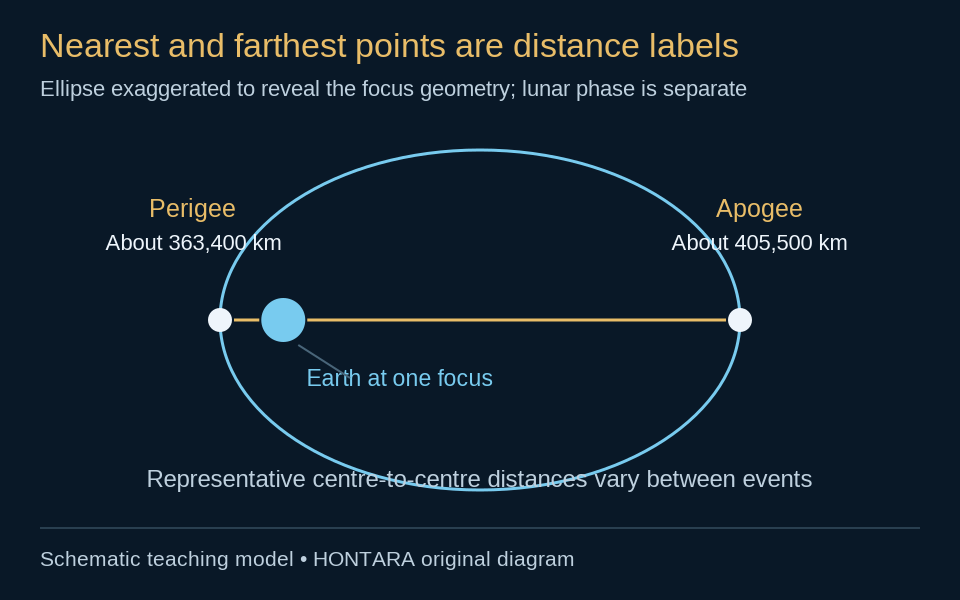
The dominant sideways effect comes from a mismatch between nearly uniform spin and changing orbital speed. The Moon follows an elliptical orbit. It travels faster near perigee and slower near apogee. Its rotation does not speed up and slow down by the same amount. Our viewing direction therefore gets ahead of or falls behind the direction expected for a circular orbit.
Imagine a marked ball turning steadily while someone carries it around you. Ask the carrier to move quickly along one part of the path and slowly along another while keeping the spin steady. The mark will appear to drift across the visible face. This demonstrates changing perspective; it does not reproduce lunar gravity or predict the exact libration angle.
A separate north-south effect
Libration in latitude lets us peek alternately over the north and south polar regions. The Moon’s spin axis is tilted relative to the perpendicular to its orbital plane. Earth consequently lies above or below the lunar equator during different parts of the orbit. Do not explain this effect using only the Moon’s five-degree orbital tilt relative to Earth’s orbital plane.
An observer also changes viewpoint as Earth rotates. This produces a smaller daily or diurnal libration. There are small physical oscillations in the Moon’s actual rotation as well. The simple steady-spin model isolates the main optical effect and deliberately leaves these refinements out. A changing orientation against the local horizon adds another apparent rotation to photographs.
Compare images fairly
Choose two dated NASA lunar visualisations and locate the same recognisable dark marking near an edge. Rotate the frames so lunar north points the same way. Compare the marking’s distance from the limb as a fraction of the disk diameter. A change in this fraction is more useful than comparing raw pixel distances in differently sized images.
Record the dates, image orientation and which edge reveals more terrain. Keep phase separate from libration: phase changes the illuminated fraction while libration changes the terrain presented toward Earth. Similar phases can have different libration. A dark patch becoming harder to see near the terminator is not by itself evidence that the Moon has turned it away.
PAUSE AND THINK
Can one photograph show 59 percent of the Moon’s surface?
Explore the answer
No. Roughly 59 percent becomes accessible over time as changing viewpoints reveal strips beyond the average visible hemisphere.