On this page
Start with a distance measured from geometry
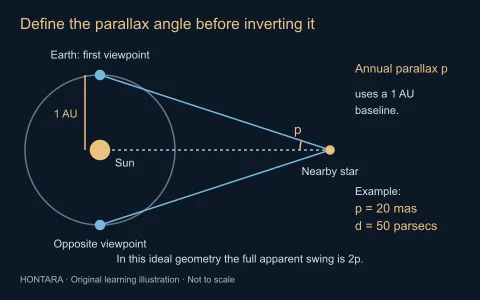
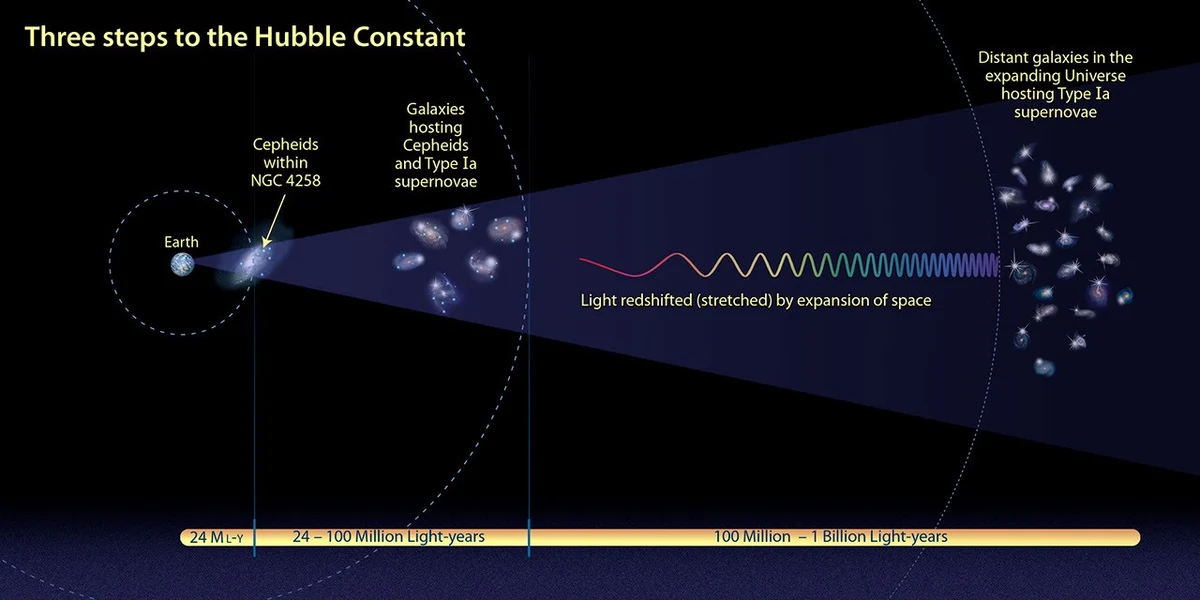
For nearby stars, compare their apparent positions from different parts of Earth’s orbit. The amount of parallax gives the distance. Other geometric anchors can extend the calibration. For example, the motions and positions of radio-emitting gas around the centre of NGC 4258 give an independent distance to that galaxy.
A geometric distance to a star or galaxy is useful when you can identify another object there and measure its brightness. With the distance already in hand, you can infer how much light that object is actually emitting.
Use an overlap between neighbouring steps
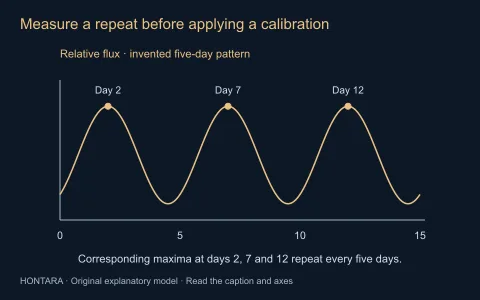
Cepheid variable stars brighten and fade in a regular cycle. Measuring the period gives a way to infer luminosity after calibration with objects at known distances. If you can measure a Cepheid in another galaxy, you can estimate that galaxy’s distance.
Some of those galaxies also hosted a Type Ia supernova. Astronomers use the known galaxy distance to calibrate the supernova’s brightness after accounting for the shape and colour of its light curve. Because supernovae are bright, the calibrated measurements can reach much farther than individual Cepheids.
Turn a brightness ratio into a distance ratio
Suppose two calibrated sources have the same luminosity after corrections. In a nearby-universe example, if the second looks one ninth as bright, it is about three times as far away. Light spreads over an area that grows with the square of the distance.
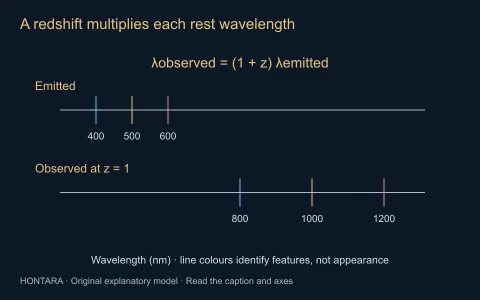
Real measurements account for dust, overlapping stars in images and uncertainty from earlier steps. Other techniques such as using the brightest red giants offer checks on the distance scale. At much larger redshifts, astronomers also need a model of the expanding universe to interpret distance.