On this page
At a glance
| Feature | Ground-based | In space |
|---|---|---|
| Light | Visible light, many radio bands and some infrared | Can detect X-rays and other wavelengths blocked by air. |
| Image sharpness | Moving air blurs images. Adaptive optics can reduce the blur. | Images are free of atmospheric blur. |
| Size | Can use very large mirrors or antennas spread over kilometres. | Must fit within the rocket’s payload size and weight limits. |
| Upkeep | Technicians can service and upgrade instruments on site. | Repairs in space are difficult and rare. |
Why put a telescope in space?
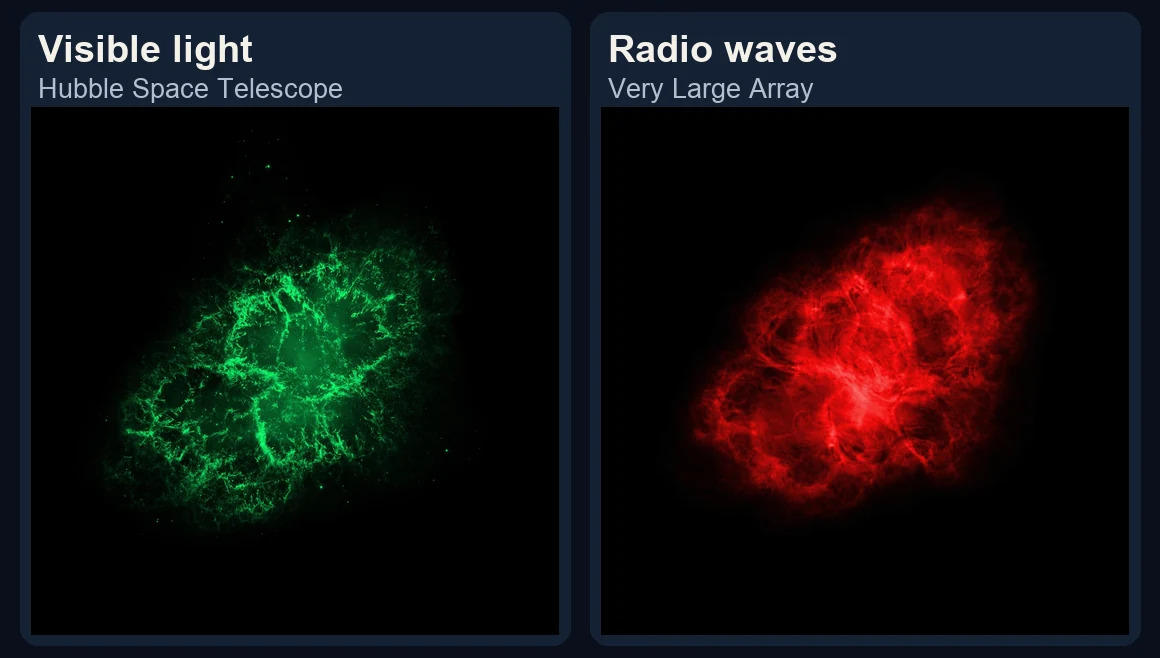
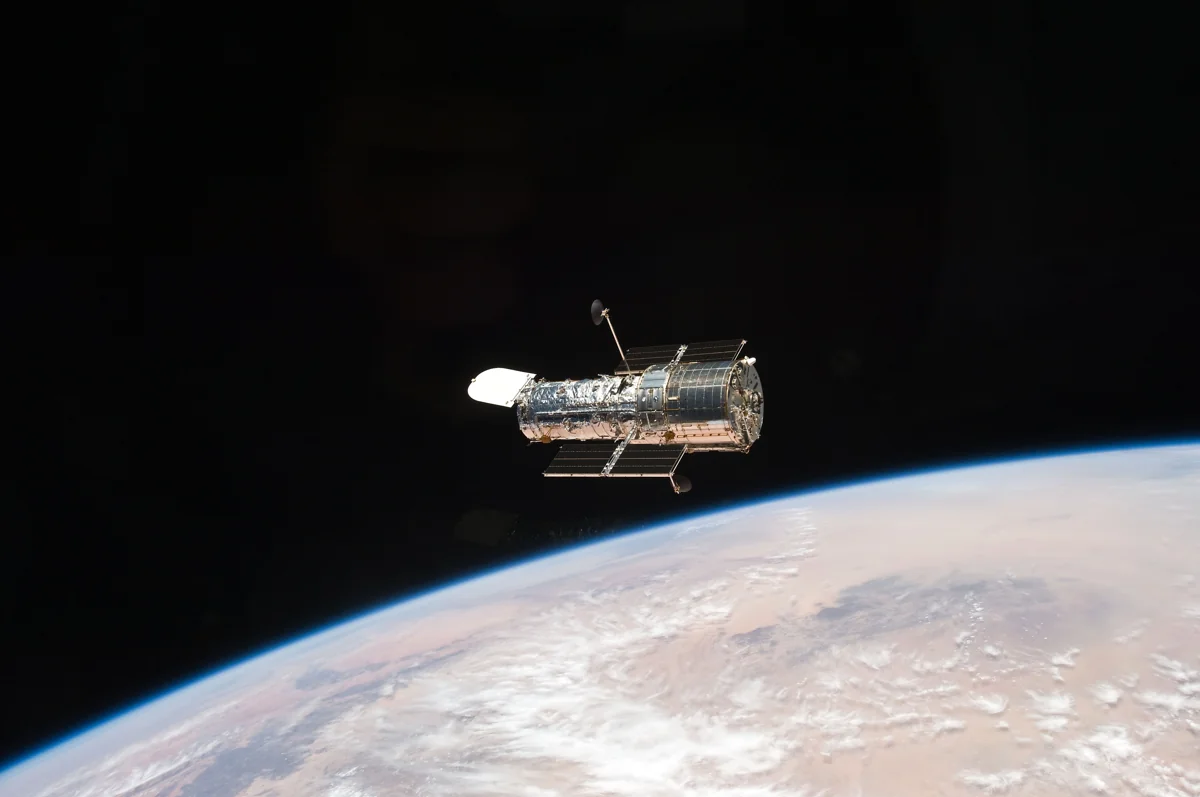
Earth’s atmosphere lets much visible light and many radio waves through, but it absorbs most ultraviolet light and X-rays from space. Water vapour also absorbs much of the infrared. At high, dry sites, ground telescopes can measure some infrared bands through thinner, drier air.
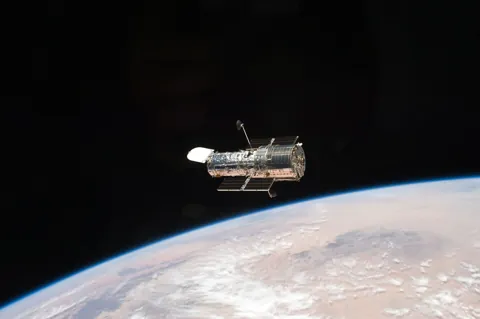
Space missions carry instruments chosen for specific wavelengths. Hubble observes visible and ultraviolet light as well as some near-infrared. Webb observes mainly in the infrared, which can reveal stars forming inside dusty clouds. India’s AstroSat can observe ultraviolet light and X-rays at the same time to study the same source in both bands.
What ground telescopes do well
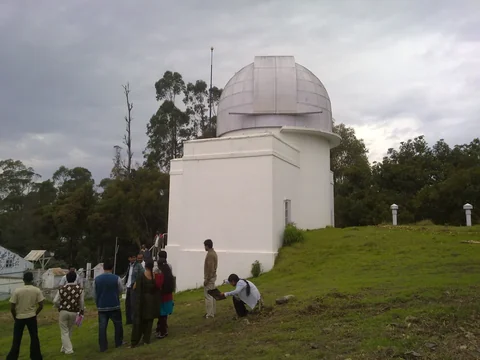
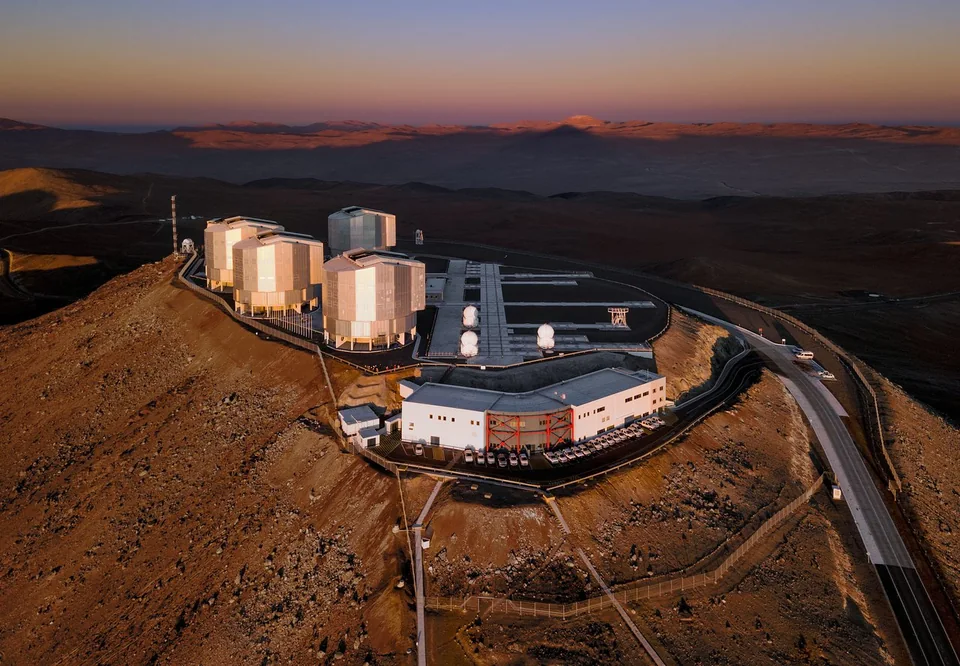
Each of the four main telescopes at the Very Large Telescope in Chile uses an 8.2-metre mirror to collect light. On the ground, observatories can also combine signals from multiple telescopes and replace instruments as technology improves.
Moving air bends light unevenly, which makes stars twinkle and blurs telescope images. With adaptive optics, a computer rapidly reshapes a mirror to correct some of that distortion. This can sharpen an image in wavelengths that reach the telescope. Light absorbed by the atmosphere never reaches the mirror.
How both helped find seven planets
A ground telescope in Chile called TRAPPIST-South detected small dips in the brightness of a star called TRAPPIST-1. A dip can happen when a planet passes in front of its star and blocks a little of its light. Astronomers call this a transit.
NASA’s Spitzer Space Telescope watched the star in infrared light almost continuously for about 500 hours. Ground telescopes, including the Very Large Telescope, added their own measurements. The combined observations revealed seven Earth-sized planets. Timing the repeated dips helped astronomers work out how long each planet takes to orbit the star.