On this page
THE BIG IDEAS
- AstroSat was designed for multiwavelength astronomy.
- Simultaneous observations help separate change over time from wavelength differences.
- Images, spectra and timing data carry different information.
An observatory above the atmosphere
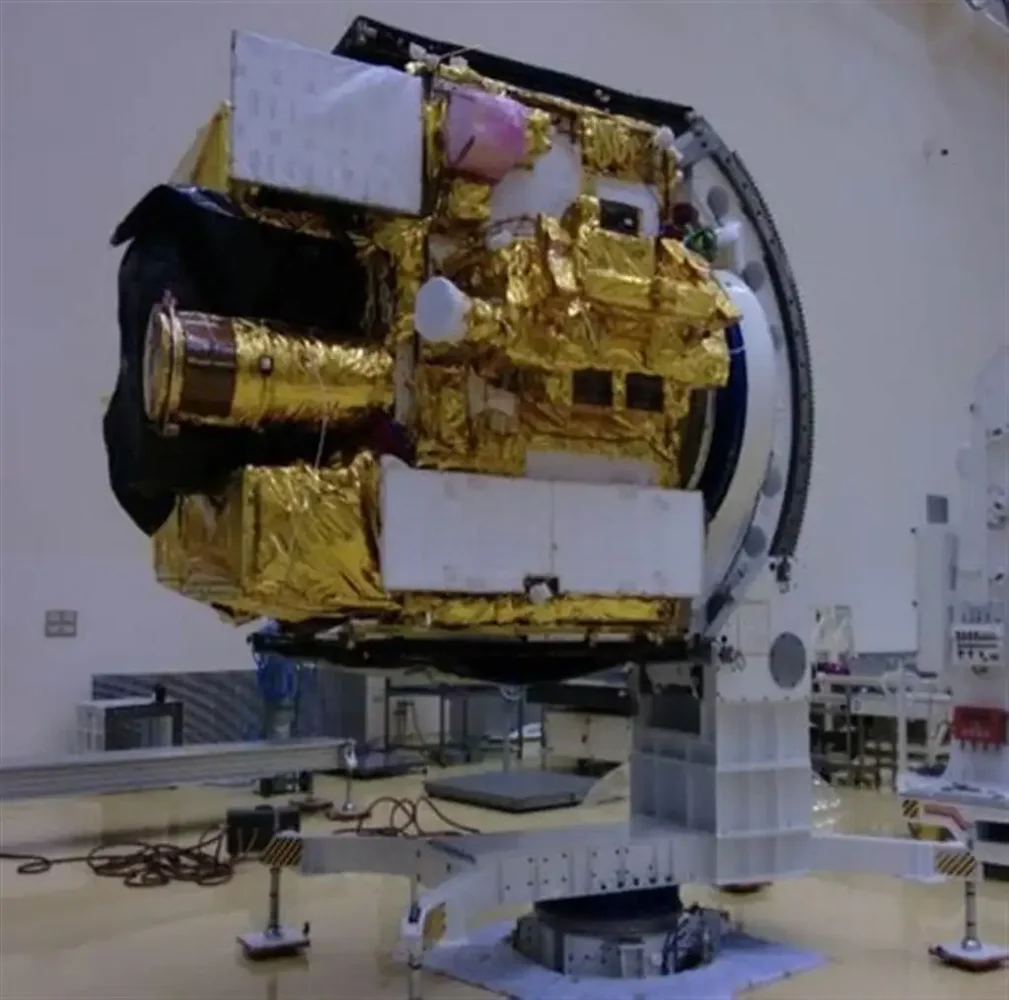
AstroSat launched on 28 September 2015 as India’s first dedicated astronomy satellite. Its instruments were designed to observe celestial sources across ultraviolet, optical and X-ray bands. Earth’s atmosphere blocks much of the radiation in some of these ranges, so a space observatory can access information unavailable to ordinary ground-based telescopes. This expands the kinds of physical processes astronomers can investigate rather than merely making familiar visible-light pictures larger.
One object can have many appearances
A system containing a star and a compact companion may emit visible light from one region and X-rays from very hot material elsewhere. Star-forming regions can also look different in ultraviolet and optical observations. A single wavelength can hide much of the story. By comparing bands, astronomers test how distinct emitting regions relate to one another and whether a model can explain the measurements together.
Why simultaneity is valuable
Many astronomical sources vary. If one telescope observes a source today and another observes it weeks later, a difference might reflect changing conditions rather than wavelength alone. Simultaneous or coordinated observations reduce that ambiguity. AstroSat’s multi-instrument design helps researchers study such relationships. Timing information can be as important as an image because rapid changes place constraints on the physical size and behaviour of an emitting region.
Several instruments with different jobs
AstroSat’s payload includes the Ultraviolet Imaging Telescope and instruments designed for X-ray spectroscopy, timing and monitoring. These collect different kinds of data: images map where light comes from, spectra describe its distribution in energy and time series show variation. Each measurement requires calibration and background correction. A bright detector count is not automatically all from the target; the instrument and surrounding space environment can contribute signals too.
A classroom way to understand the strategy
Imagine describing a school only from a photograph, only from a sound recording or only from a timetable. Each record reveals different aspects and matching their times makes the comparison more meaningful. The analogy is imperfect but captures why astronomy benefits from multiple measurements. AstroSat’s educational value lies in showing how an observatory is a coordinated collection of instruments built to turn light into evidence about distant physical systems.
PAUSE AND THINK
Why could observations taken a month apart be misleading when comparing two wavelength bands?
Explore the answer
The source may have changed during that month, so the difference might not be caused by wavelength alone.