On this page
THE BIG IDEAS
- Hubble observes above most atmospheric distortion.
- Servicing and calibration are central to its history.
- Its scientific work includes spectra as well as images.
A new vantage point
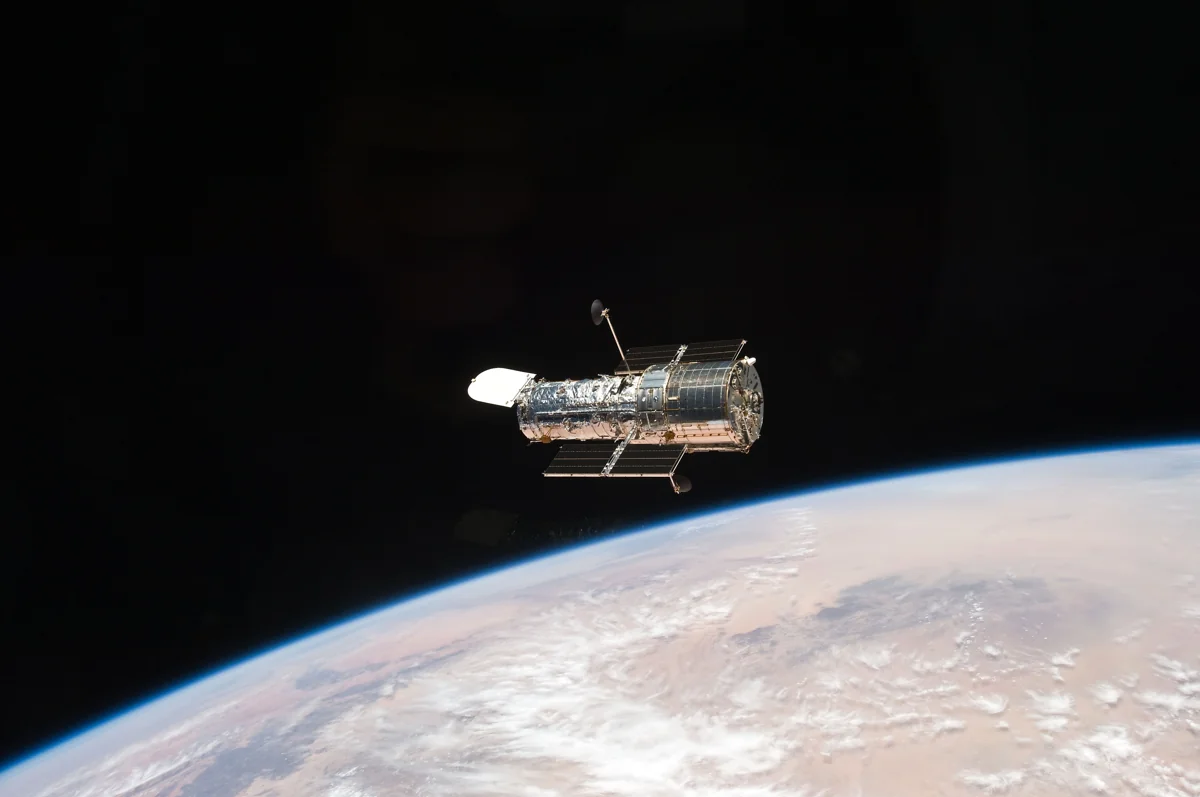
The Hubble Space Telescope launched in 1990 into orbit around Earth. Above most atmospheric effects, it can make sharp observations without the same turbulent blurring that affects ordinary ground-based views. It also observes ultraviolet light that the atmosphere largely blocks. Hubble is not simply a telescope with extraordinary magnification. Its value comes from the combination of a stable observing environment, sensitive instruments and carefully planned measurements.
The mirror problem and its correction
After launch, a flaw in the primary mirror’s shape was found to blur images. Servicing astronauts installed corrective equipment during the 1993 mission, restoring the intended quality of observations. Later servicing missions replaced or improved instruments and other hardware. This history shows why testing and calibration are part of science. It also demonstrates the value of a design that allowed astronauts to reach and service the observatory in Earth orbit.
Images are only one kind of data
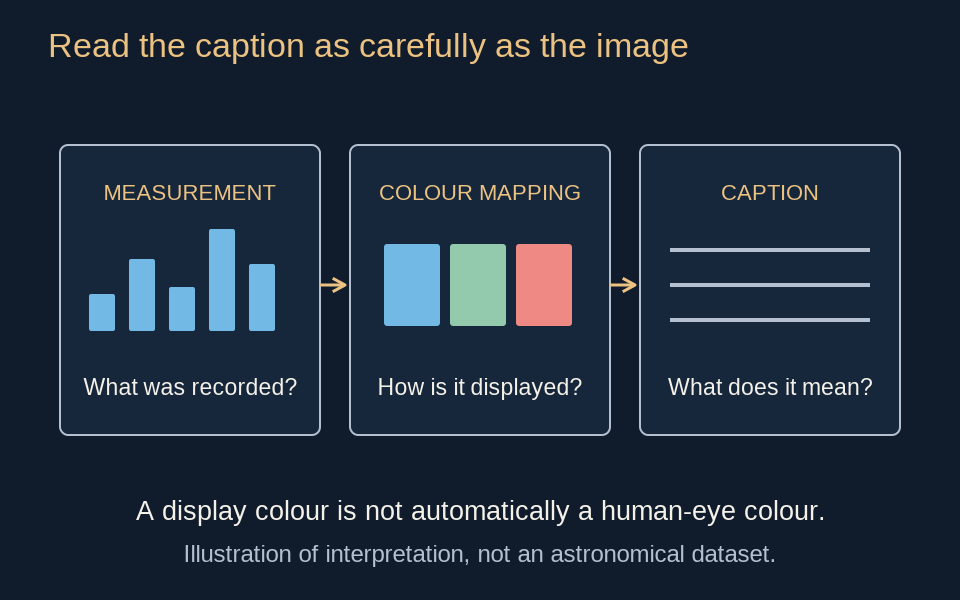
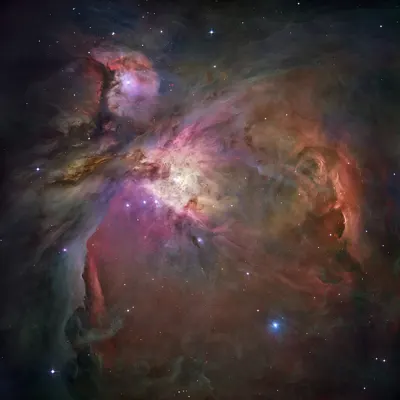
Hubble’s instruments collect images and spectra in selected wavelength bands. Images reveal structure and changes in position, while spectra can probe composition, temperature and motion. Long exposures reveal faint objects that human eyes could not detect in a brief glance. The final colour image may combine several filters, so its caption matters. An astronomical image is a measured and processed record rather than an unmediated view from a window.
Questions across the universe
Hubble has contributed to studies of planets, star formation, galaxies and the expansion of the universe. Deep observations show many distant galaxies in apparently sparse patches of sky. Measurements of variable stars and other distance indicators help connect nearby observations with much larger scales. No single telescope establishes every cosmological conclusion alone: its data become part of a network of measurements and models tested by independent observations.
How to read a Hubble image
Start with the object’s name, distance if available and the wavelengths used. Then ask which structures are directly visible and which explanations rely on additional measurements. Check whether the picture combines observations from several telescopes. If colours represent invisible wavelengths, treat them as a visual key to the data. This approach preserves the wonder of the image while making it a starting point for scientific questions rather than a substitute for them.
PAUSE AND THINK
Why might an ultraviolet observation require a space telescope even if a ground telescope has a larger mirror?
Explore the answer
Earth’s atmosphere blocks much ultraviolet light. A larger mirror cannot collect radiation that never reaches the ground.