On this page
Clouds between stars
A nebula is a cloud of gas and dust in space. Nebulae are not all produced in the same way and do not all shine for the same reason. Some occupy regions where new stars form. Others contain material released by aging or exploding stars. Their shapes and colours reveal interactions between matter, radiation and motion. The plural word nebulae simply means more than one such cloud.
THE BIG IDEAS
- Nebulae are clouds of gas and dust.
- Some form stars while others are stellar remains.
- Image colours need an explanation of filters and processing.
Light can be emitted or reflected
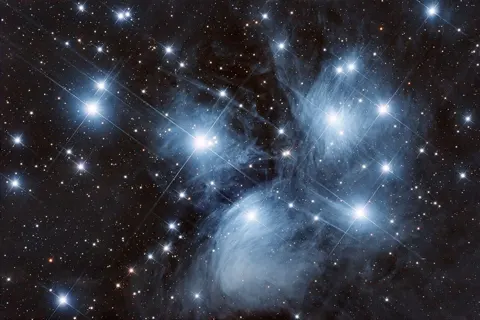
In an emission nebula, energetic radiation from nearby hot stars can excite or ionise gas. As atoms and ions change energy states, they emit light at particular wavelengths. A reflection nebula is visible mainly because dust scatters light from nearby stars. Dark nebulae block light from objects behind them. A dark patch in a photograph therefore need not be empty space; it can be material hiding a brighter background.
Where stars begin
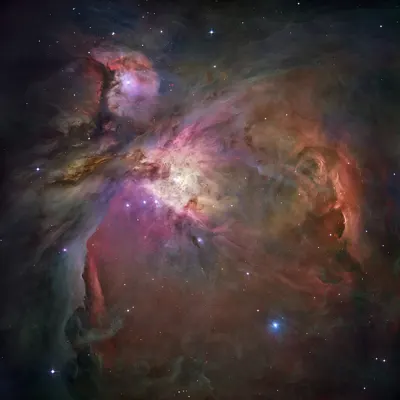
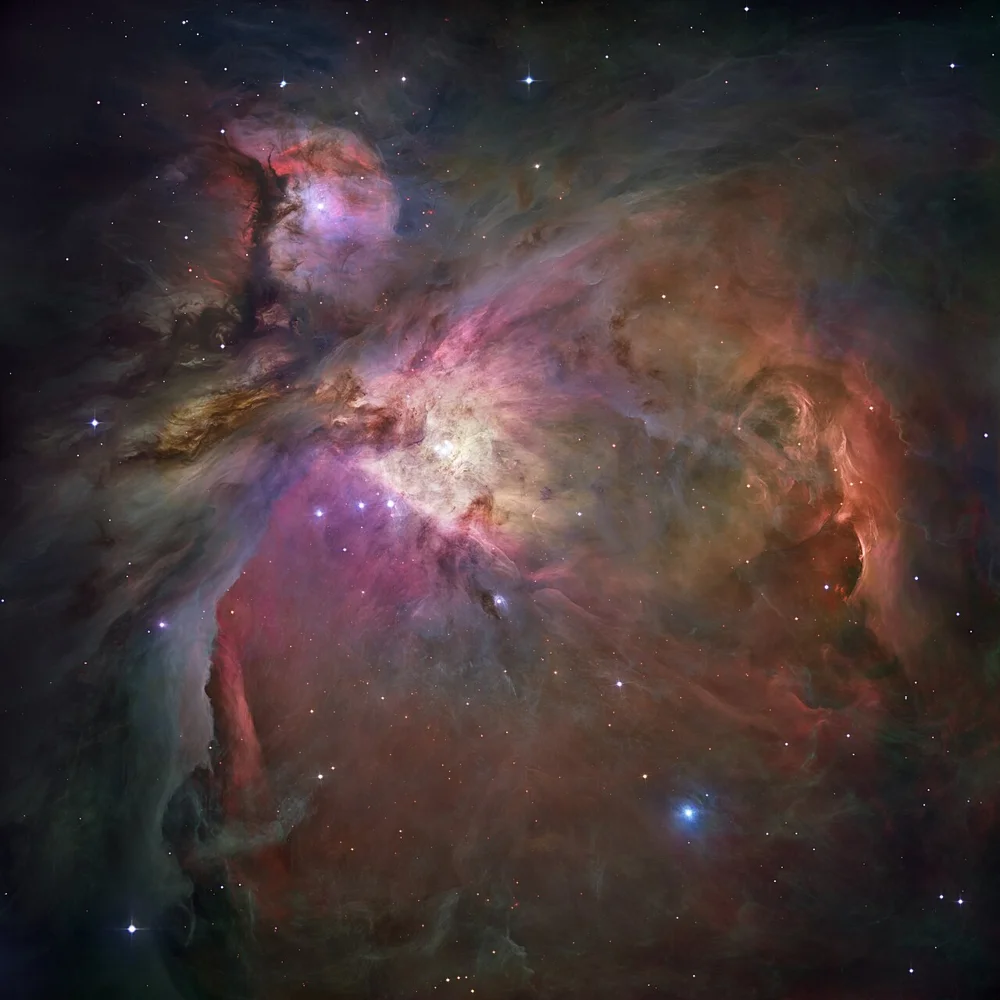
Cold dense regions within large molecular clouds can collapse under gravity. As material gathers, a forming star heats up and may develop a surrounding disk. Not every cloud fragment becomes a star and the process is affected by turbulence, magnetic fields and nearby stars. The Orion Nebula is a familiar example of a region associated with star formation. Its visible glow reveals energetic young stars interacting with surrounding material.
What stars leave behind
Some nebulae form near the end of stellar lives. A planetary nebula is an expanding shell released by a star of roughly Sun-like ancestry; despite the name, it is not a collection of planets. A supernova remnant comes from an exploding star and its interaction with surrounding matter. Both return material to interstellar space, but their physical histories differ. Labelling every beautiful cloud a stellar nursery erases these important distinctions.
Read the colour key
Many nebula images combine filters or wavelengths that human eyes cannot see directly. Their assigned colours help distinguish physical structures or chemical emissions. A telescope photograph is a scientific visualisation as well as an image. Check its caption before interpreting blue as cold or red as hot. Through a small telescope, many nebulae appear grey because the light is too faint for strong colour perception, even though their spectra contain rich information.
PAUSE AND THINK
Does the word planetary in planetary nebula mean that planets created the cloud?
Explore the answer
No. It is a historical name based on appearance in early telescopes. Such nebulae are linked to material shed by aging stars.