On this page
At a glance
| Feature | Optical observatory | Radio observatory |
|---|---|---|
| Signal | Visible light | Radio waves with longer wavelengths |
| Tools | Mirrors or lenses focus the light. | Dishes or other antennas gather the signal. |
| Results | A view through an eyepiece or data from a detector | Recorded data used to make maps or graphs |
| Conditions | Night viewing needs clear skies. | Radio observing can take place in daylight. |
| Public visits | Look through a telescope at selected sessions. | Tour the antennas and learn how data are recorded. |
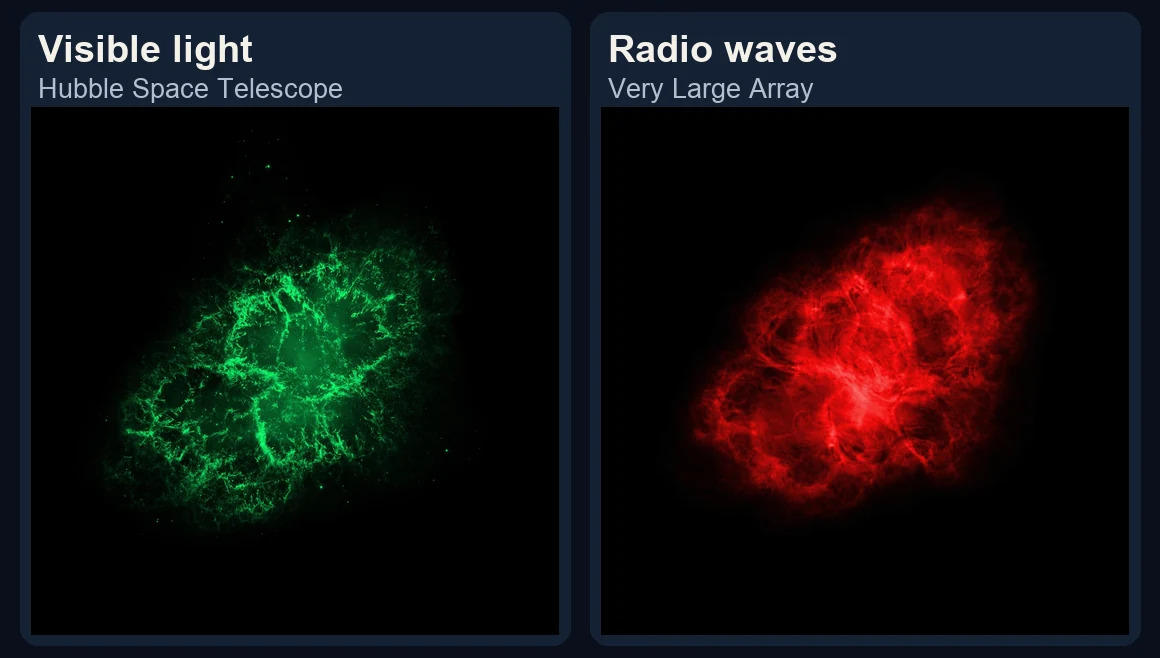
One nebula in two wavelengths
Both images show the Crab Nebula, the remains of an exploded star. In visible light, look for thin threads of hot gas. In the radio map, look for the broader glow produced by fast-moving particles in the nebula’s magnetic field. Astronomers get a fuller view of the same object by measuring more than one part of the spectrum.
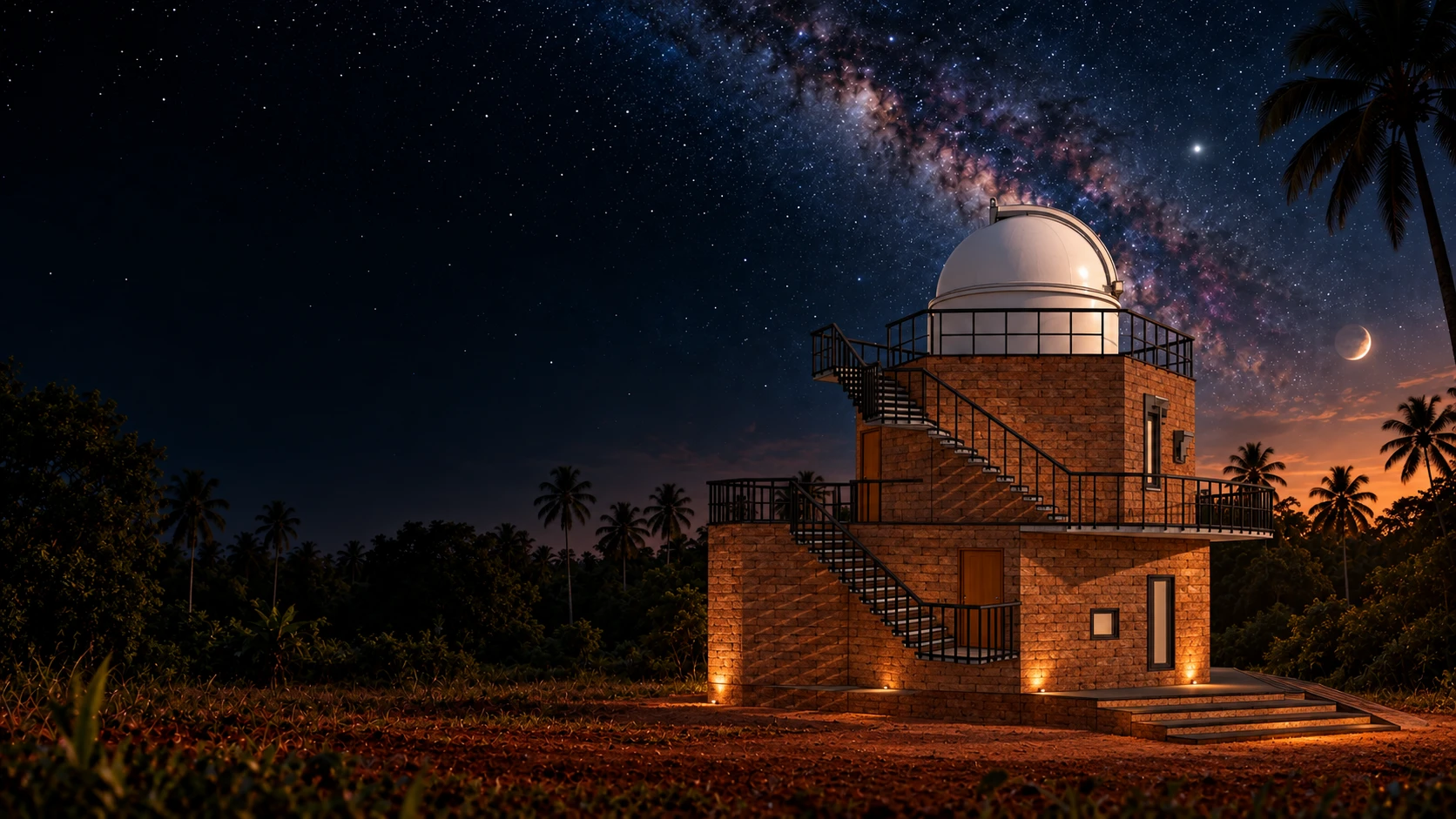
Optical stargazing at HONTARA
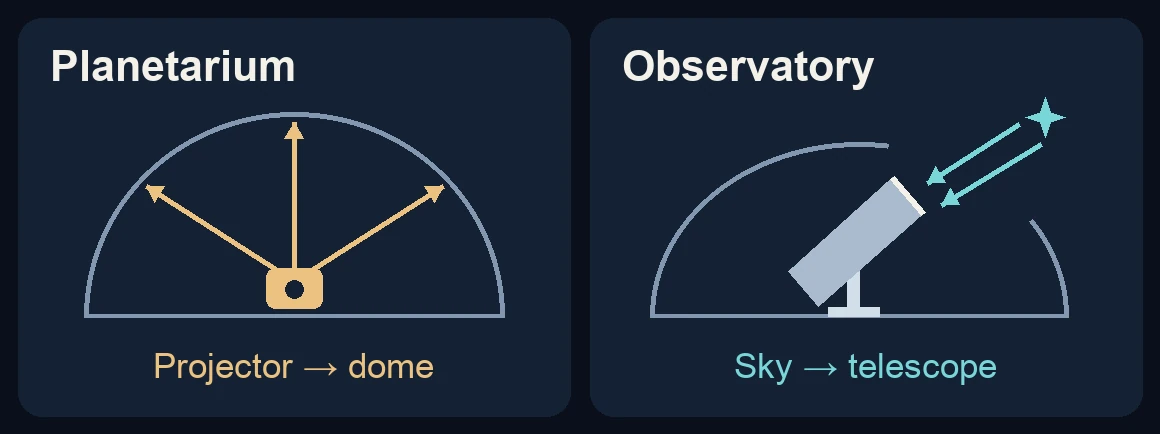
An eyepiece lets you look at the image formed by an optical telescope. During public stargazing, you might see craters near the Moon’s shadow line or a bright planet. What you can see depends on what’s above the horizon and how clear the sky is. Research telescopes often send this light to cameras or other detectors.
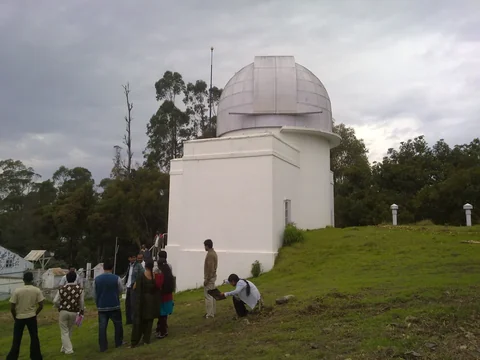
HONTARA in Honavar welcomes individuals, families and groups for stargazing by advance appointment, weather permitting. It can be part of a weekend trip from Bengaluru.
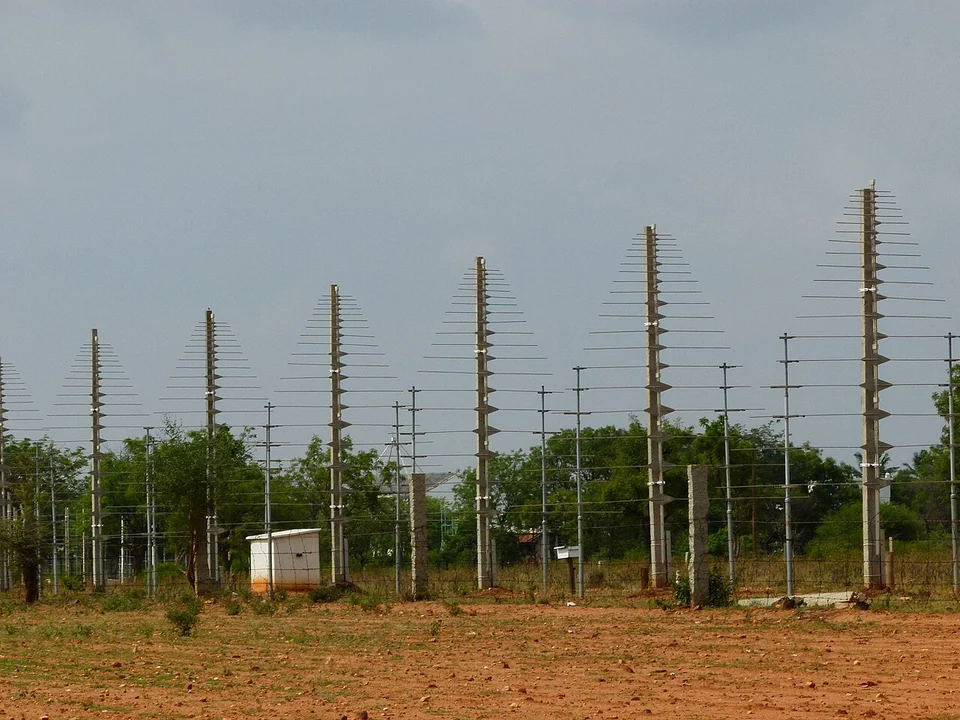
Visiting Gauribidanur Radio Observatory
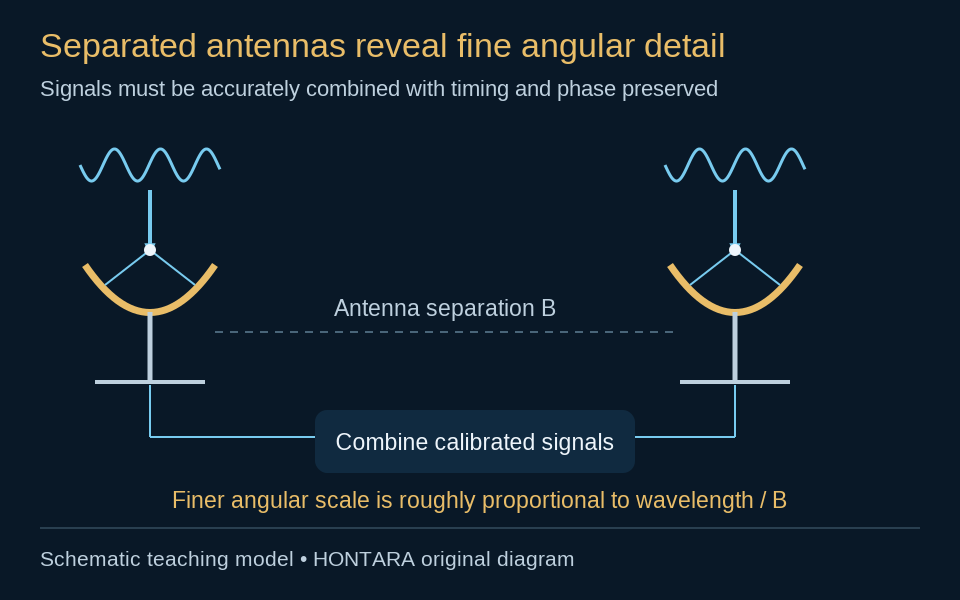
At Gauribidanur in Karnataka, rows of antennas receive radio waves from the Sun. Electronic receivers measure the signals. Scientists can combine measurements from multiple antennas to map radio emission from the Sun’s outer atmosphere.
A public visit is a guided daytime tour of the equipment. There is no eyepiece viewing on the radio tour. The Indian Institute of Astrophysics asks visitors to request a Tuesday at least 15 days in advance. Government holidays are excluded.
Why observing conditions differ
For optical stargazing, clouds can block the light from a target and city lights make faint objects harder to see. At radio observatories, transmissions from equipment such as mobile phones can interfere with weak signals from space. Follow the instructions at the site about using electronic devices.
The weather matters in radio astronomy too. At ALMA in Chile, water vapour in the air affects the short radio wavelengths used by its antennas. Radio observatories choose their equipment and location to suit the signals they study.