On this page
Why blue reaches you from across the sky
Sunlight contains a range of visible wavelengths. Gas molecules scatter the shorter wavelengths more strongly than longer ones. Some light headed in another direction is scattered into your eyes, so blue light reaches you from large parts of the sky.
This is called Rayleigh scattering when the scattering particles are much smaller than the wavelength of light. Violet is scattered strongly too. Because of the mixture of sunlight and the way human eyes respond to it, the clear sky normally looks blue.
Why the low Sun and nearby clouds look red or orange
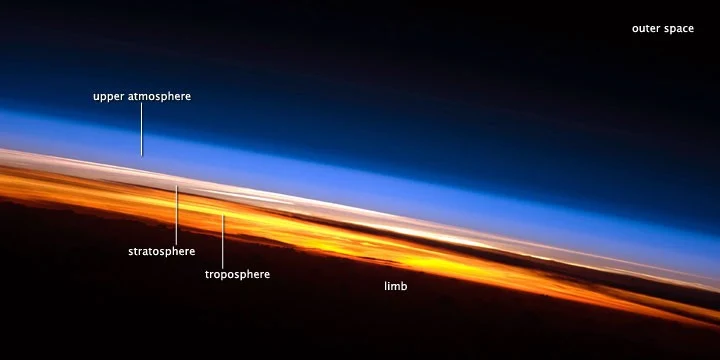
When sunlight arrives at a shallow angle it passes through a longer stretch of atmosphere. Along that path much of the blue light is scattered out of the direct beam. More of the red and orange light continues toward you. Clouds can take on those colours when they scatter the remaining warm light.
Larger droplets and particles scatter a wider range of colours. Thin clouds can look white and haze can make the sky look pale. Smoke and dust can change or dull the colours, so a red sunset alone cannot tell you how clear the sky will be after dark.
Compare two directions after sunset
After the Sun is below the horizon, look toward the remaining glow and then look higher up or turn toward the darker side of the sky. Note where orange or red fades into blue. You can make the same comparison a few minutes later as the direct sunlight reaches less of the atmosphere above you.
For a nearby observing site, trees or hills can hide the brighter glow near the horizon. A higher patch of sky can be a better place to look for stars while twilight is ending.