On this page
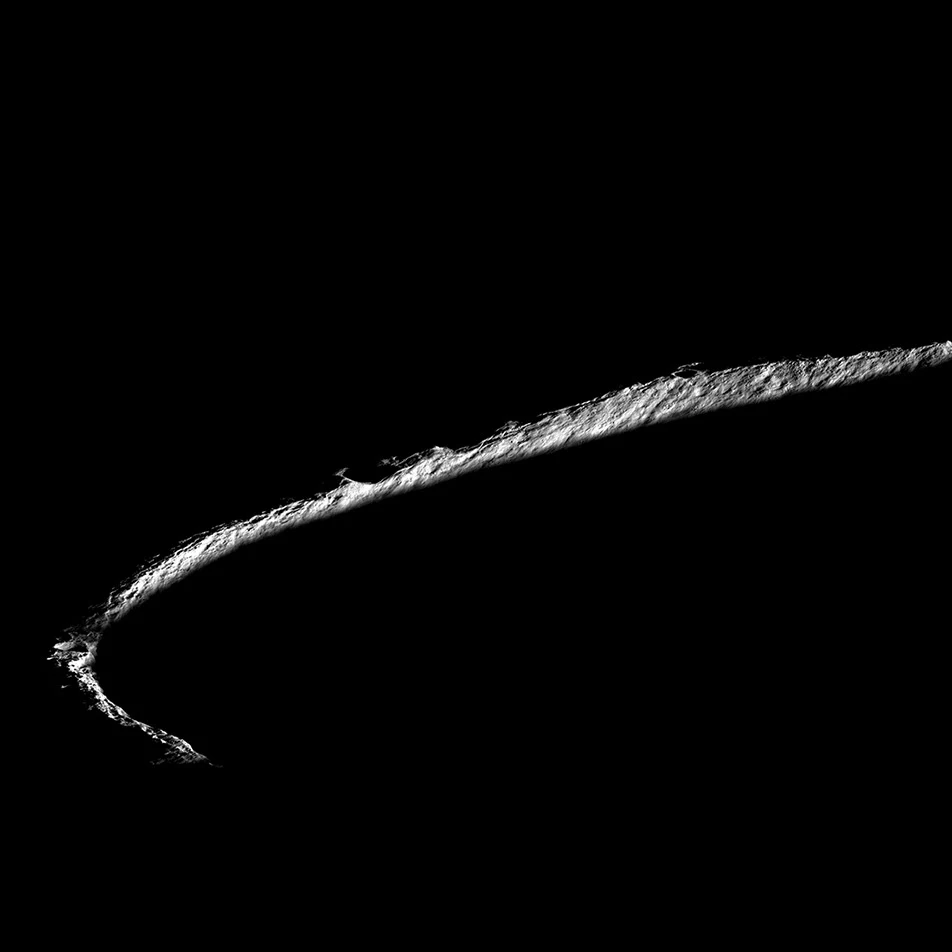
How a bright rim can border a permanent shadow
Near the poles the Sun appears low. A raised rim can intercept its light so that part of the crater floor never receives direct sunlight. Temperatures in such a cold trap can stay low enough for water molecules to persist as ice. Other slopes and ridges nearby can receive sunlight for much longer periods.
Think of a low lamp shining over the rim of a deep bowl. The rim can be bright while part of the inside stays dark. The Moon adds a slowly changing Sun angle and complex terrain, so the precise shadow depends on the crater’s location and shape.
How spacecraft found evidence of ice
Orbiting instruments look for signals such as how the surface reflects different wavelengths. Researchers compare those measurements with where shadow and temperature would allow ice to survive. Some instruments can see only the shallowest surface layers.
In 2009 NASA’s LCROSS impact experiment sent material up from the shadowed Cabeus crater. Spectrometers detected water among the material thrown up at that site. The result showed that water was present there. Measuring how much exists at other locations takes further investigation.
Where Chandrayaan-3 landed
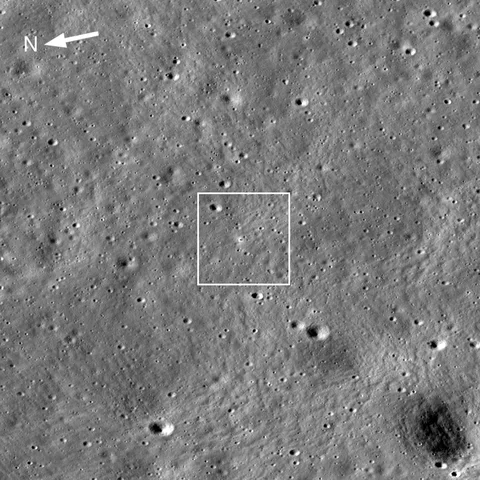
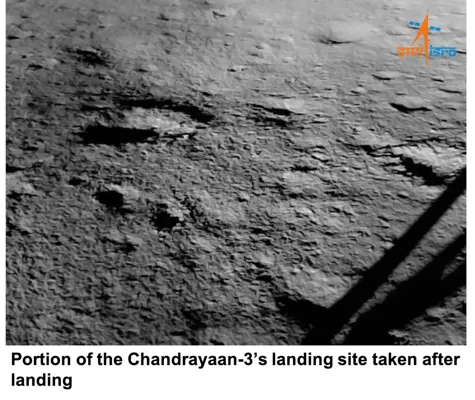
Chandrayaan-3 touched down at about 69° south latitude. That is in the Moon’s southern high latitudes, around 21° of latitude north of the pole itself. Vikram and Pragyan worked on sunlit terrain at their landing site.
Landing safely with enough sunlight for solar power and reaching a very cold, dark crater are separate challenges. A future mission that plans to sample an ice deposit would have to confirm that the target is accessible and work out how to power instruments in the shadow.