On this page
What each mission achieved
The three missions used different ways to study the Moon. An orbiter can revisit large areas. A lander can place instruments at one site. A rover can move among individual rocks or soil patches nearby.
| Mission | What reached the Moon | Result |
|---|---|---|
| Chandrayaan-1 · 2008 | A science orbiter and a Moon Impact Probe. | Mapped the surface. Its Moon Mineralogy Mapper detected signatures associated with hydroxyl or water. |
| Chandrayaan-2 · 2019 | A science orbiter plus the Vikram lander carrying the Pragyan rover. | The landing attempt failed. The orbiter returned science including mineral maps and detailed images. |
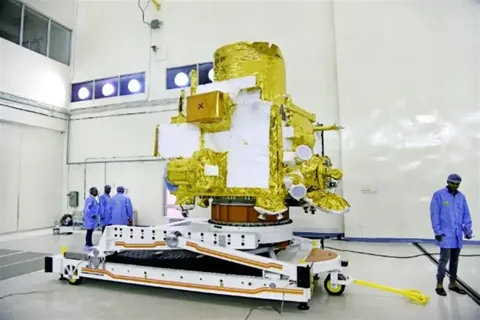
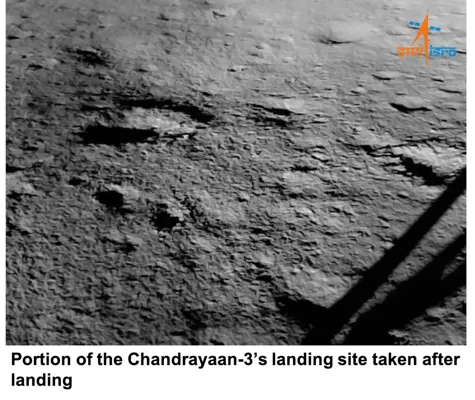
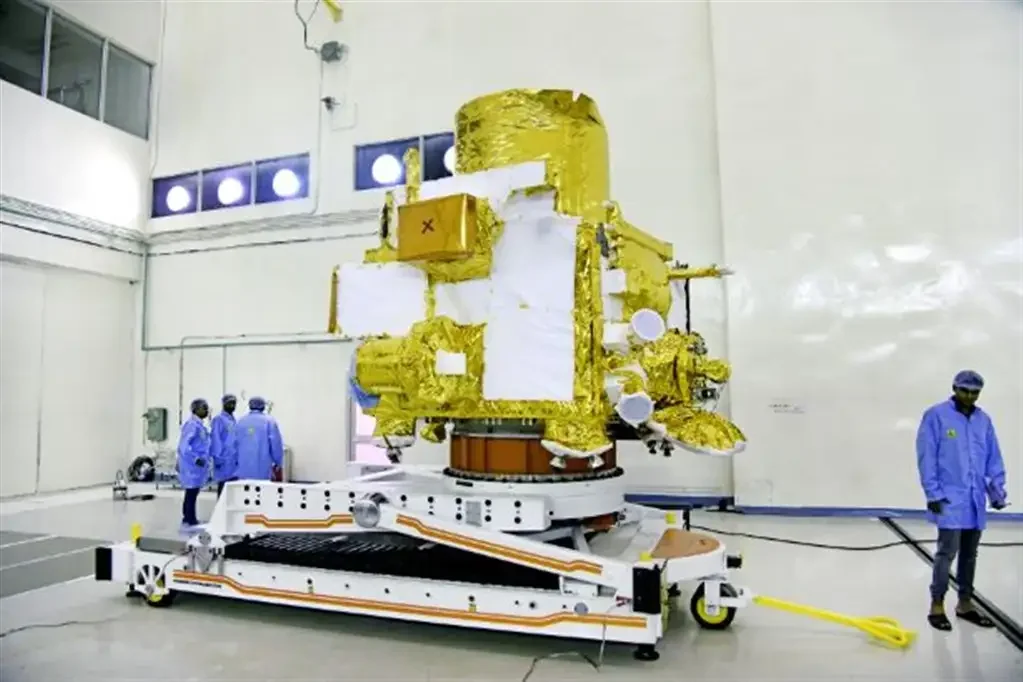
| Chandrayaan-3 · 2023 | A propulsion module plus a new Vikram lander carrying a new Pragyan rover. | Vikram landed on 23 August 2023. The rover explored the area around the landing site. |
The two Vikram landers had different outcomes
Chandrayaan-2 lost contact with its lander during descent. Its orbiter was already in lunar orbit and returned measurements. This is why an account of the landing alone misses much of the mission.
Chandrayaan-3 focused on a soft landing, rover movement and experiments at the site. Its propulsion module transported the landing system to lunar orbit and carried an instrument to observe Earth. The mission design did not include a new lunar mapping orbiter equivalent to Chandrayaan-2’s.
What the water evidence actually says
The Moon Mineralogy Mapper team identified infrared absorption signatures consistent with hydroxyl or water on parts of the Moon. Orbital instruments establish patterns across large areas. Measurements from one landing site answer more local questions.
Chandrayaan-3’s surface results included measurements of soil temperature and elemental composition. Pragyan’s detection of sulphur near the lander is a separate result from the evidence for lunar water. To see why ice can persist in some places, look at the light and shadow around the poles.