On this page
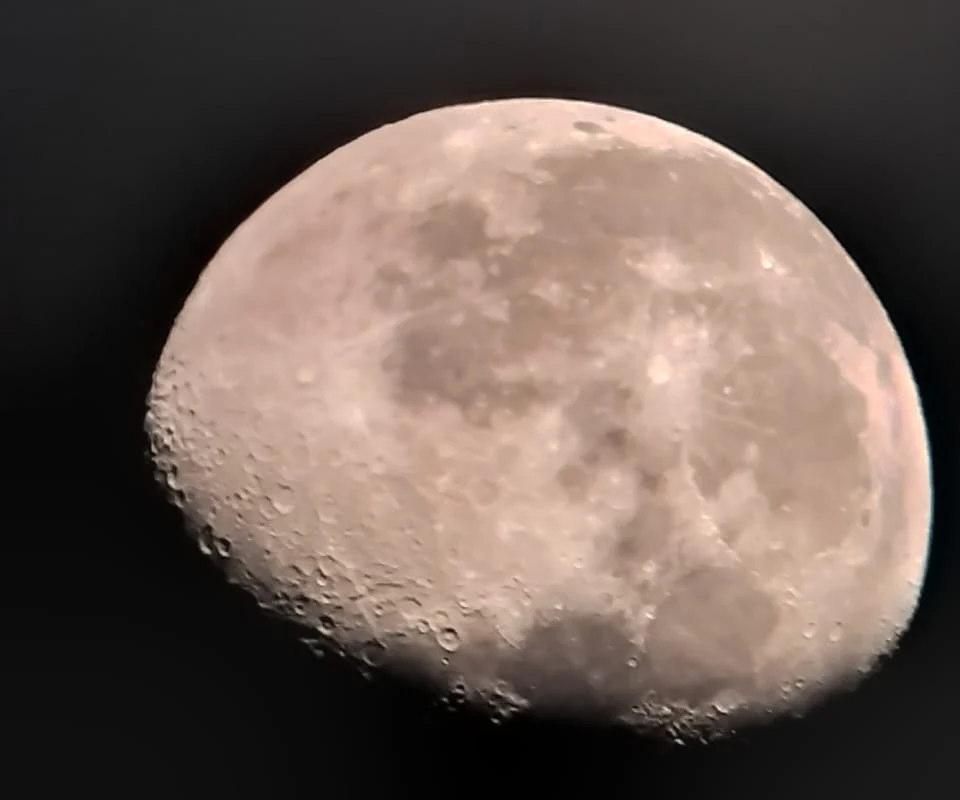
The Moon’s craters stand out along the shadow line
Start where lunar day meets night. This boundary is called the terminator. Low sunlight casts long shadows there, making crater rims and mountain ridges easier to pick out. A crescent or quarter Moon gives you a good chance to see this relief. At full Moon, the contrast is lower and the dark plains are easy to compare.
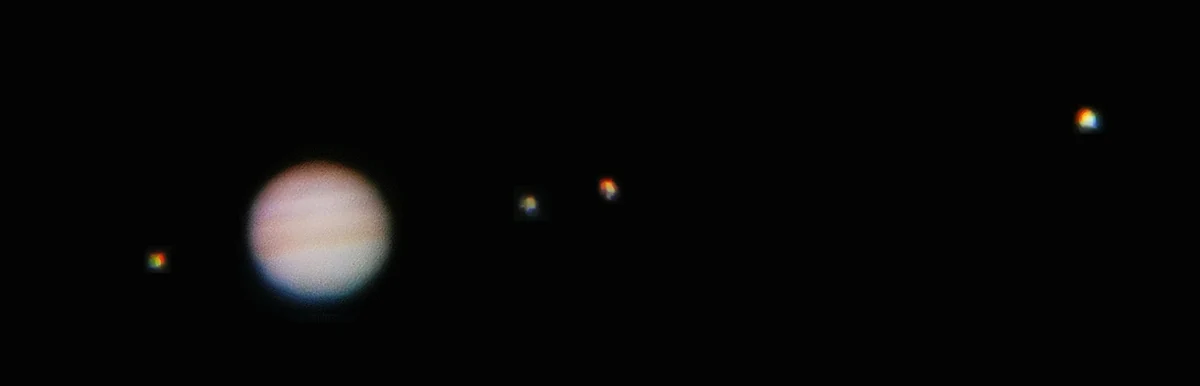
Jupiter’s moons look like tiny points
Look for a bright disc and up to four points roughly along a line beside it. These are Io, Europa, Ganymede and Callisto. A moon can disappear from view when it passes in front of or behind Jupiter or enters its shadow. If the image is steady, look for two darker cloud bands across the planet.
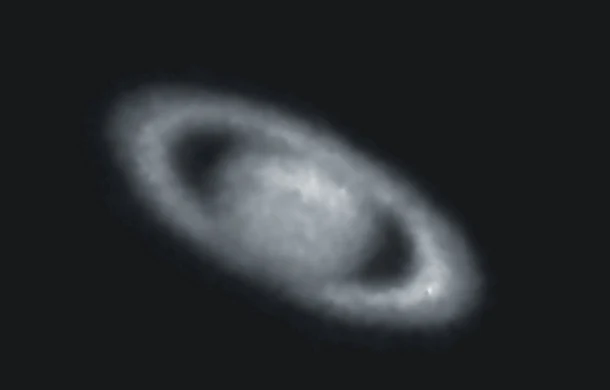
Saturn’s rings change their tilt as seen from Earth
Saturn looks small even through a telescope. Look for the rings extending from either side of the pale disc. When the rings tilt towards us, they form a clear oval. When we see them nearly edge-on, they look like a thin line and are harder to distinguish. Give the view a few seconds for the air to steady.
Star clusters, nebulae and galaxies
The Pleiades are a group of bright stars best seen with a wide view. The Orion Nebula often looks like a soft grey glow around a handful of stars. Under a dark sky, the Andromeda Galaxy typically shows up as a faint oval with a brighter centre. Cameras collect light for longer than our eyes can, revealing colours and structure that are much harder to see at the eyepiece.
A clear evening with little moonlight helps with faint objects. Start at low magnification to keep more sky in view. For a planet, wait until it’s higher above the horizon when possible. Air turbulence can smear fine details even on a cloudless night.
Plan a first telescope session at HONTARA
HONTARA in Honavar welcomes individuals, families and groups for stargazing by advance appointment, weather permitting. When you request a visit, share your preferred dates and group size. If there’s something you especially want to see, ask whether it will be above the horizon during your session.