On this page
A stellar core on a city scale
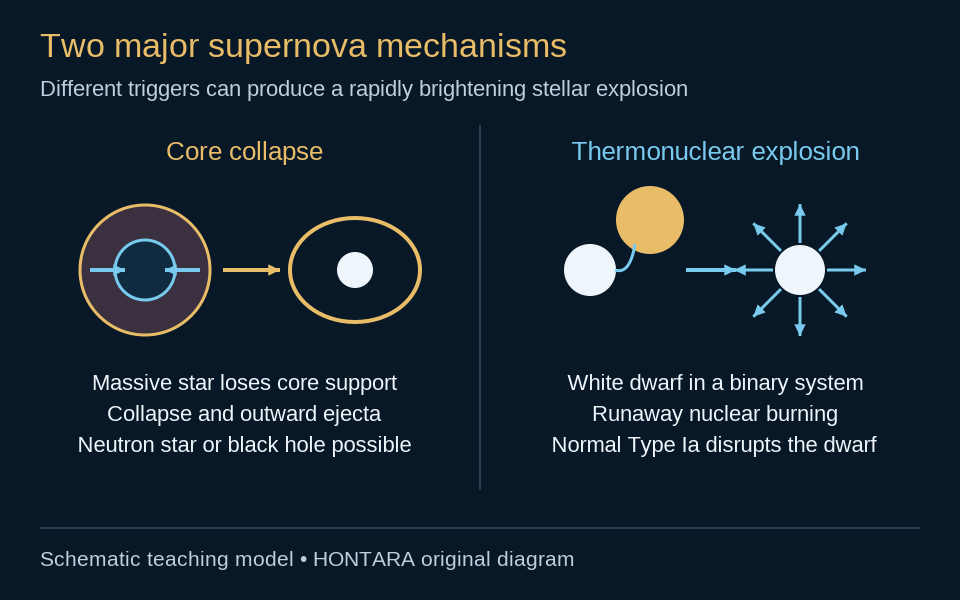
A neutron star is a compact remnant produced in some core-collapse events. More mass than the Sun can fit into a sphere only a few tens of kilometres across. These dimensions describe a whole astronomical object rather than an ordinary star with a small bright spot. The surrounding supernova debris can be vastly larger than the remnant.
At extreme density, electrons and protons can combine into neutrons. The star’s interior is not simply a solid ball of familiar laboratory material. Nuclear forces, pressure and relativity determine its structure. Important details of the densest central regions remain uncertain. Measurements of mass and radius help test competing descriptions of that matter.
THE BIG IDEAS
- A pulsar is a neutron star observed through repeating emission.
- Beam geometry determines whether Earth sees pulses.
- Timing needs corrections for motion and signal propagation.
A pulse is often a viewing effect
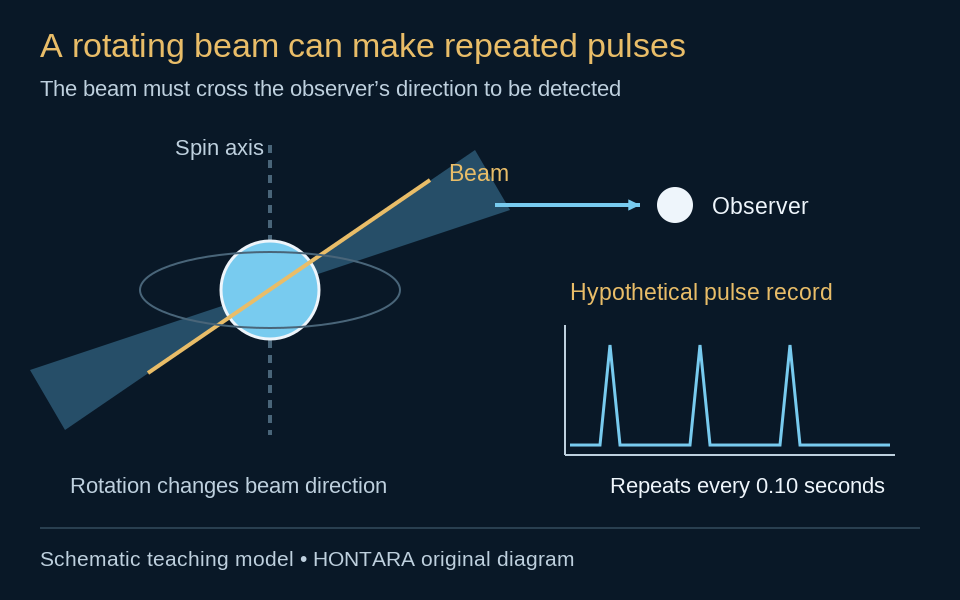
Many neutron stars rotate rapidly and have strong magnetic fields. Radiation associated with their magnetic regions can sweep around as the star turns. If a beam crosses Earth we detect a repeating pulse and call the source a pulsar. The magnetic axis need not line up with the rotation axis, which makes the lighthouse comparison useful.
The star is not being created and destroyed at every flash. Nor does the whole object necessarily brighten and fade uniformly. A beam can miss Earth completely, so the absence of detected pulses does not establish the absence of a neutron star. Pulsars are observed in radio waves and sometimes other bands including X-rays and gamma rays.
Turn a period into a rotation rate
Suppose a hypothetical pulsar produces one detectable beam crossing every 0.10 seconds. With that geometry its rotation frequency is 1 divided by 0.10, or 10 turns per second. Over one minute that is 600 turns. The calculation assumes one observed pulse per rotation; real pulse profiles can have multiple components and require careful interpretation.
Draw a tilted beam rotating around a vertical axis. Mark an observer inside its swept path and another outside it. Predict what each detects. Then change the tilt without changing the spin rate. The exercise separates the period set by rotation from visibility set by beam geometry. It does not model how magnetised plasma actually generates the radiation.
Why careful timing matters
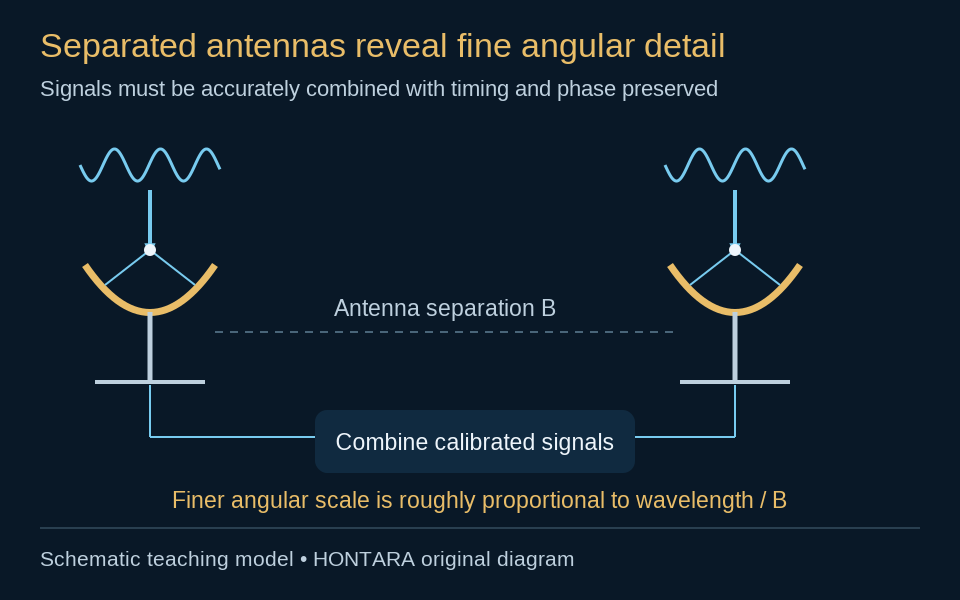
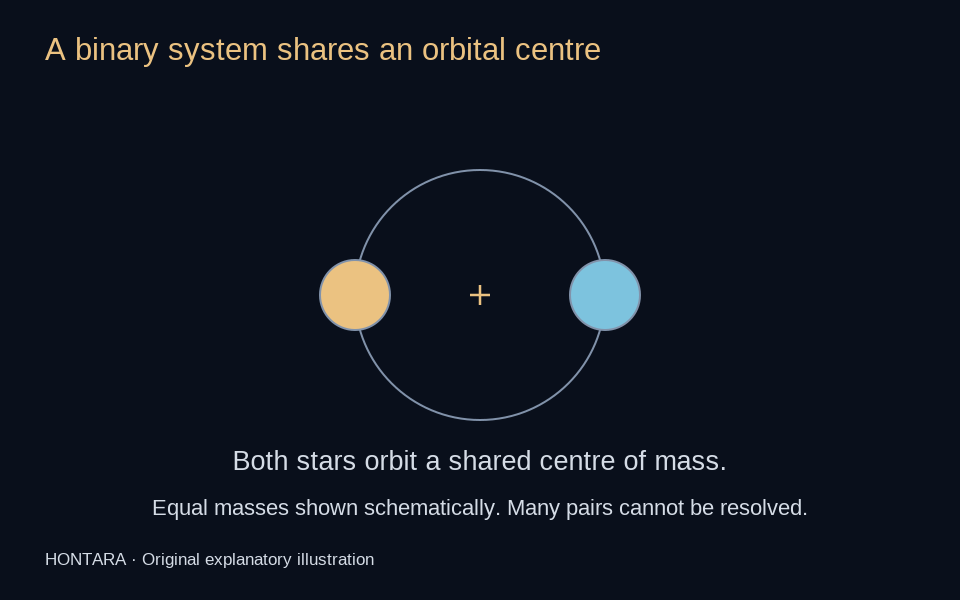
Pulse arrival times carry information about the source and the journey of its signal. A binary orbit changes the path length to Earth and introduces systematic timing shifts. Free electrons along the path delay lower radio frequencies more than higher ones. Astronomers account for these effects before treating a timing residual as evidence of new physics.
Pulsars can probe gravity and interstellar material rather than merely supply a striking fast-spin fact. Many gradually slow as they lose rotational energy. Some acquire faster spins through interaction with a companion. Keep these histories separate from magnetars, neutron stars distinguished by especially strong magnetic fields. The categories describe physical properties and can overlap in observable behaviour.
PAUSE AND THINK
Would all observers around one pulsar see its pulses?
Explore the answer
No. Repeating pulses are detected only along directions crossed by suitable emission beams and with instruments sensitive to that radiation.