On this page
More than a distant point
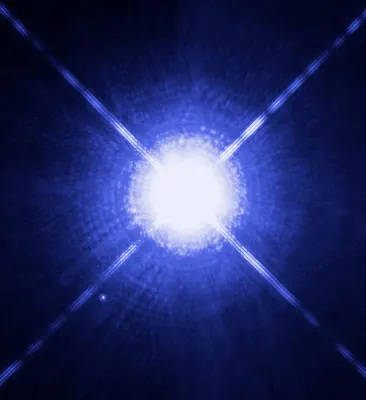
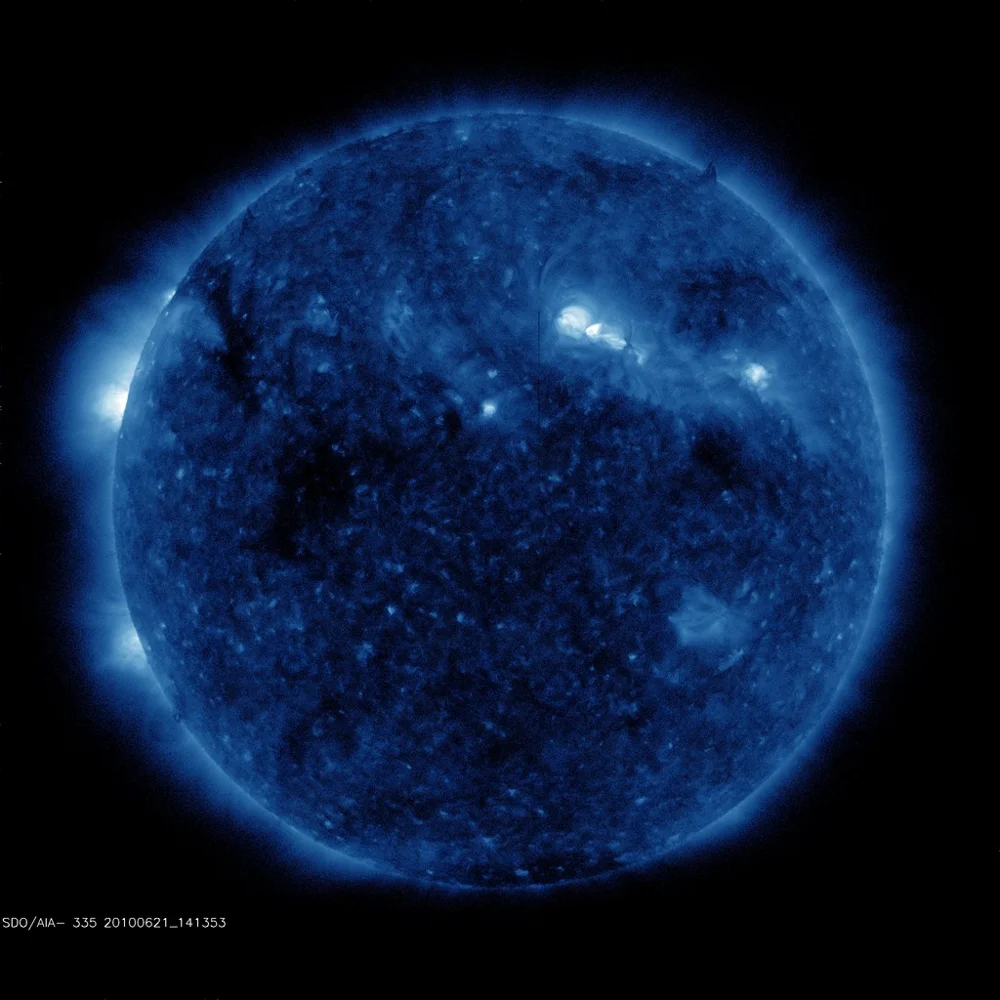
A star is a massive hot sphere of gas, much of it in the electrically charged state called plasma. Stars look like tiny points because they are extremely far away. The Sun is the nearest example and is itself a star. It appears different from the night-time points mainly because we are close enough to see its disk and receive far more light from it.
THE BIG IDEAS
- The Sun is a star.
- Main-sequence stars release energy through hydrogen fusion.
- Mass is a major influence on stellar evolution.
Gravity gathers the material
Stars begin within clouds of gas and dust. Gravity can pull part of a cloud inward, increasing the density and temperature near its centre. Not every small concentration becomes a star. A forming object needs sufficient mass for its core to reach conditions that sustain hydrogen fusion. Rotation, magnetic fields and interactions with nearby material make real star formation more complex than a perfectly smooth ball simply shrinking.
Fusion supplies energy
In the core of a main-sequence star, nuclear reactions turn hydrogen into helium and release energy. That energy gradually reaches the surface and escapes as radiation. The star does not burn like wood in air and does not need oxygen for this process. Gravity pulls inward while pressure within the star resists compression. This balance is dynamic: the material is hot and moving even when the star’s overall size changes slowly.
Mass shapes the life story
A star’s initial mass strongly affects its temperature, brightness and lifetime. Massive stars have more fuel but use it at a much faster rate, so they can live shorter lives than lower-mass stars. As fuel in the core changes, the balance and internal structure change. Sun-like stars and very massive stars follow different later paths. A single diagram of stellar evolution therefore needs branches rather than one universal sequence.
Use evidence rather than appearance alone
A bright-looking star is not automatically the most powerful star. Apparent brightness depends on distance as well as emitted light and dust can dim the view. Astronomers combine measurements of distance, colour, spectra and changes over time to infer stellar properties. When you look up, you see a mixed population at different distances and stages of life. The familiar constellations are patterns on the sky, not necessarily groups born together.
PAUSE AND THINK
Why can a massive star have a shorter life even though it starts with more fuel?
Explore the answer
It releases energy and consumes its available core fuel much faster, so the larger fuel supply does not guarantee a longer life.