On this page
THE BIG IDEAS
- Sirius is the brightest star in the night sky, but planets can be brighter.
- Strong twinkling is usually an atmospheric effect.
- A defocused star disk is not a view of its surface.
Find Sirius from Orion’s Belt
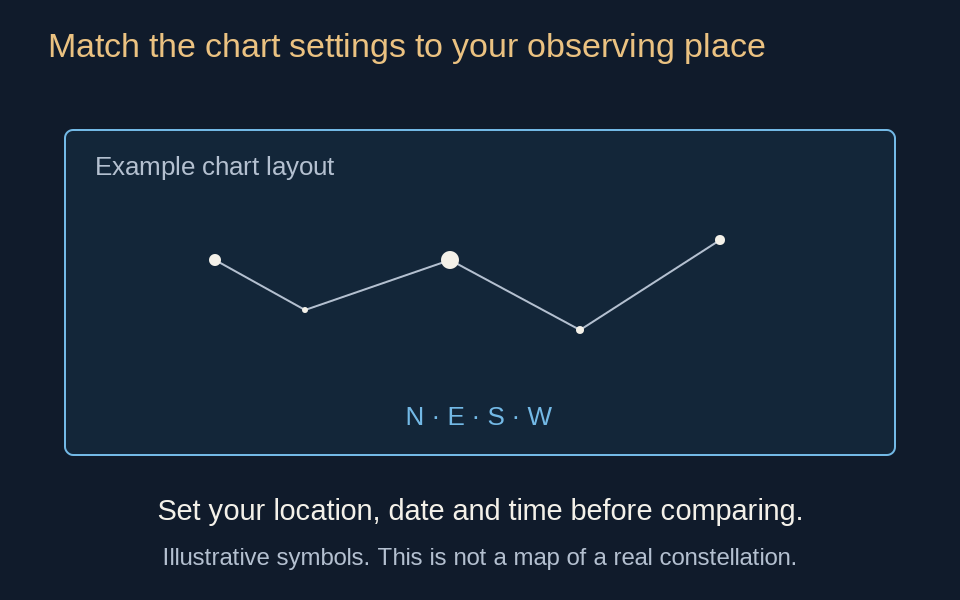
Start by finding the three bright stars in a short row that form Orion’s Belt. On a sky chart, trace that row from Mintaka through Alnilam and Alnitak. Continue past Alnitak toward Sirius in Canis Major. Match the tilt of the Belt on the chart to the stars above you.
Choose a time to look
Try a clear winter evening in Karnataka. Set the chart to your town and observing time. Search for Sirius, check that it is above your horizon and choose a spot with an open view in that direction. Venus or Jupiter can outshine Sirius when visible, so confirm the star by matching its position to Orion’s Belt.
Why Sirius twinkles and flashes colours
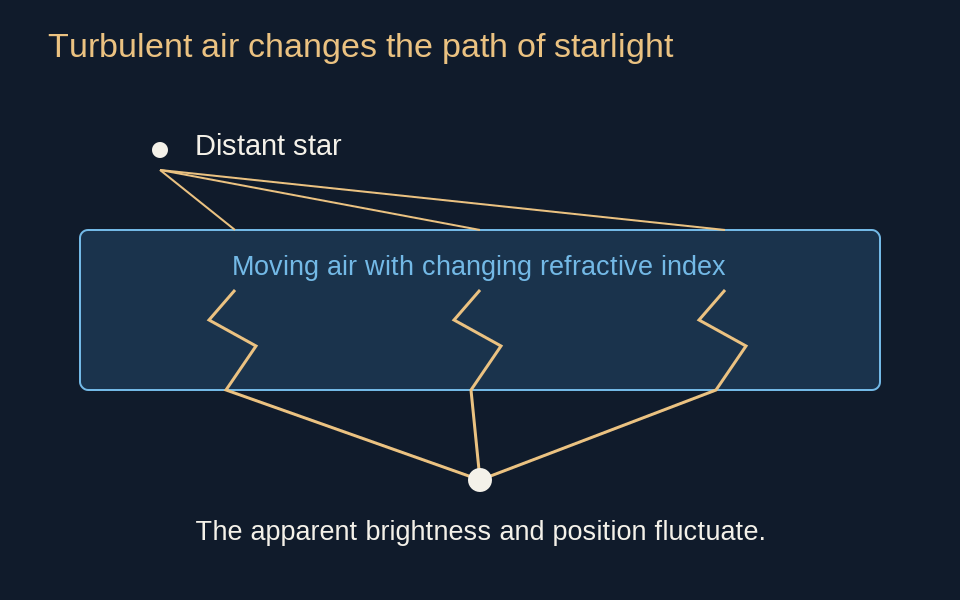
Moving pockets of air bend and spread starlight in changing ways. Sirius can shimmer and flash different colours when it is low because its light travels through more air on the way to your eyes.
If Sirius is rising, look again after half an hour and note whether the flashes become less obvious as it gets higher. Record haze or passing clouds alongside your sketch.
Set realistic telescope expectations
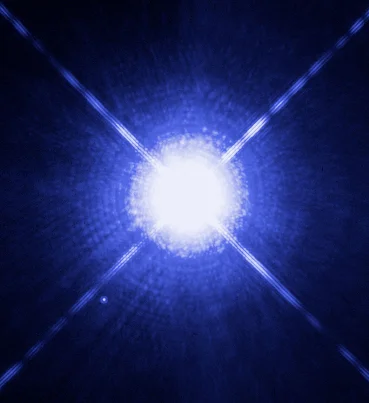
At ordinary visual magnifications, Sirius remains a star-like point surrounded by diffraction and atmospheric effects. Defocusing spreads its light into a disk, but that disk is not a resolved view of the star’s surface. Refocusing should make the central image as small and clean as conditions permit.
Sirius has a faint white-dwarf companion, but the glare of the primary makes this a difficult specialist target. It should not be treated as a routine beginner observation or a required test of telescope quality.
Try a brightness and motion record
Sketch Sirius and several stars around it. Use larger dots for brighter points, without assigning numerical magnitudes. Write down whether it looks steady or restless and which colours you notice. Repeat after half an hour if practical. A useful result might simply show that the pattern moved while the relative brightness order remained similar. Choose a safe place where you can stand or sit without stumbling in the dark.
PAUSE AND THINK
Why can Sirius flash colours when it is low above the horizon?
Explore the answer
Its light passes through a long turbulent atmospheric path that bends and disperses the light in changing ways.