On this page
Start inside the star
The Sun’s energy begins mainly with nuclear fusion in its core. Through a sequence of reactions, hydrogen nuclei become helium. The products have slightly less mass than the ingredients; that difference appears as energy. This is a change involving atomic nuclei. It is different from the chemical reactions in a candle or a wood fire. The Sun does not need a supply of atmospheric oxygen to keep shining.
Fusion can continue in the core because the material is extremely hot and dense. The temperature there is about 15 million degrees Celsius. A classroom lamp can represent a source of light, but its electrical mechanism is not a model of the Sun’s nuclear reactions.
THE BIG IDEAS
- Nuclear fusion supplies most of the Sun’s present energy.
- Radiation and convection transfer energy through different regions.
- The photosphere is a visible-light layer rather than solid ground.
Gravity and pressure
Gravity draws solar material inward. Pressure increases toward the interior and provides outward support. Over most of the Sun’s present lifetime these effects remain close to balance. The Sun is therefore neither a rigid solid nor a loose cloud that can simply drift apart.
Energy production and the star’s structure influence each other. A useful diagram should show both the inward pull of gravity and the pressure gradient supporting the material. Avoid drawing a force called fusion pushing on the outside of the Sun. Fusion supplies energy that helps maintain its internal conditions.
Energy takes several routes
Outside the core, energy passes through the radiative zone and then the convection zone. Radiation transfers energy through repeated interactions with matter. In the convection zone, rising and sinking plasma also carry energy. These processes are not equivalent to a single visible photon flying directly from the core to Earth.
The photosphere is the layer from which much of the visible light escapes. It is often called the Sun’s surface, although it is not solid ground. A cutaway can label the core, radiative zone, convection zone and photosphere without making their drawn thicknesses a precise measurement.
Build an explanation from a diagram
Draw four nested regions and place the words make, transfer and escape beside them. Put make by the core. Use transfer for the two surrounding transport zones and escape by the visible-light boundary. Now explain the drawing to a partner without saying that the Sun is a burning rock.
Ask your partner to identify one thing the drawing cannot show: microscopic reactions, changing plasma motions or the enormous range of distances. Recording a model’s limitations is part of using it well. Colours in a textbook cutaway usually identify regions rather than reproduce an actual view through the Sun.
Connect the inside with observations
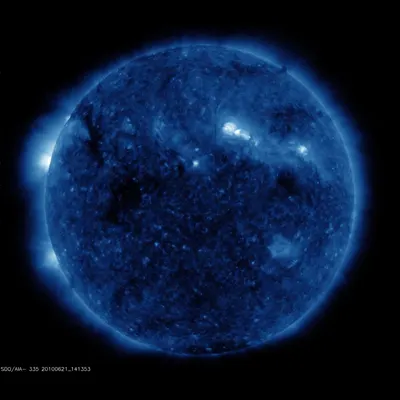
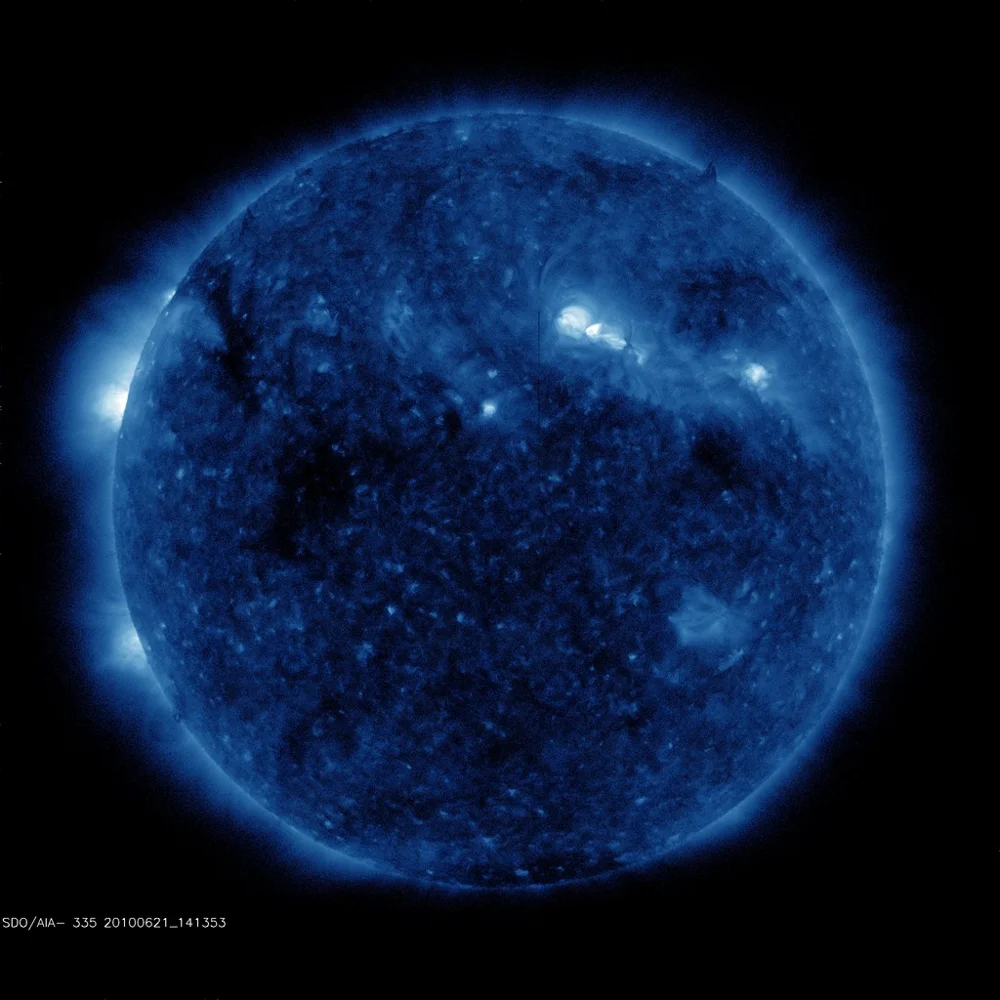
We observe the Sun’s light and study how its surface and atmosphere behave. Different instruments reveal different wavelengths and physical conditions. A visible-light photograph alone does not directly reveal the core. The explanation combines measurements with tested physical models.
Explore solar images from a reliable mission rather than attempting an unfiltered look. Never point a telescope or binoculars at the Sun without correctly installed purpose-designed solar equipment and knowledgeable supervision. An indoor diagram or image comparison is enough for this learning task.
PAUSE AND THINK
Why is a candle a poor model of what powers the Sun?
Explore the answer
A candle releases chemical energy through combustion. Solar energy is produced mainly by nuclear reactions in the core. Both can provide light, but their mechanisms and operating conditions differ.