On this page
THE BIG IDEAS
- Aditya-L1 studies solar radiation and the surrounding particle environment.
- L1 is near Earth compared with the distance to the Sun.
- Remote images and in-situ measurements answer complementary questions.
A mission devoted to the Sun
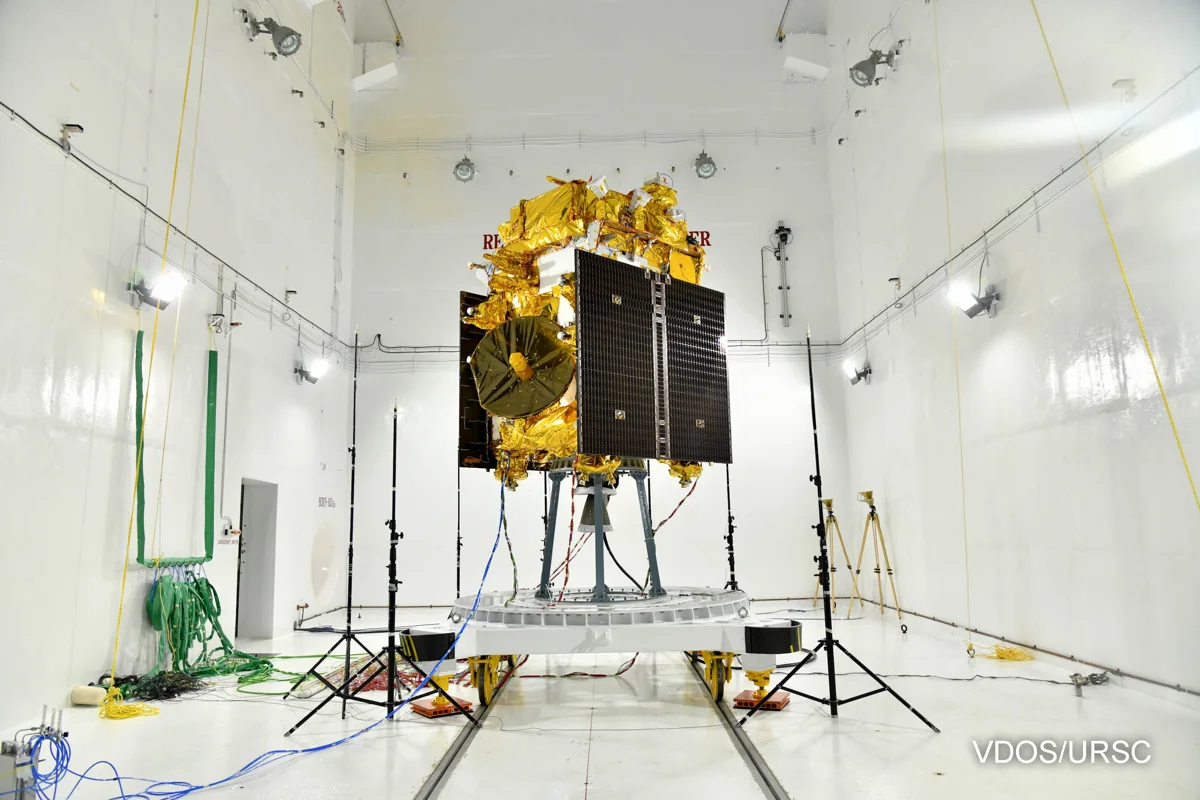
Aditya-L1 is India’s first dedicated space-based solar observatory. It launched on 2 September 2023 and was inserted into a halo orbit around the Sun–Earth L1 region on 6 January 2024. The mission studies the Sun and its surrounding environment using several instruments. Understanding our star matters because solar radiation and charged particles shape conditions throughout the Solar System and influence the space environment near Earth.
Why observe near L1
The Sun–Earth L1 region lies roughly 1.5 million kilometres from Earth toward the Sun. A halo orbit around this region offers a useful perspective for solar monitoring. L1 is not the Sun’s surface and is only a small fraction of the Earth–Sun distance. Nor is it a place where gravity simply disappears. The gravitational and orbital relationships make the region useful, while spacecraft still require careful navigation and orbit maintenance.
Light reveals different layers
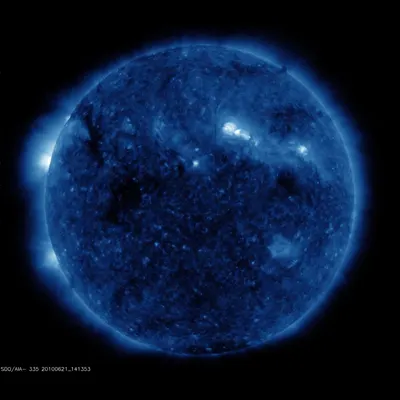
Remote-sensing instruments study radiation from the solar photosphere, chromosphere and corona in selected wavelength ranges. Different wavelengths respond to different temperatures and physical processes, so one image cannot describe every part of the Sun. A coronagraph suppresses the bright central solar disk to reveal the much fainter surrounding corona. This is a specialised instrument design, not permission to imitate the effect by covering the Sun with an improvised object at a telescope.
Particles add another measurement
Other Aditya-L1 instruments sample particles and magnetic fields near the spacecraft. These in-situ measurements complement images of events on the Sun. Linking a solar eruption with changes later measured in space helps researchers study how disturbances travel and evolve. A picture of an eruption and a particle measurement are not interchangeable evidence: they describe different locations and physical quantities within a connected system.
Connect the mission to everyday questions
Space-weather research is relevant to satellites, communication and technological systems that interact with the near-Earth environment. It does not mean every solar event causes a disaster. The useful questions concern the event’s direction, strength and interaction with Earth’s magnetic environment. Aditya-L1 also provides a clear classroom example of combining methods: measure the light from a source and separately measure material arriving near the observer.
PAUSE AND THINK
Why does a solar mission need more than one wavelength of light?
Explore the answer
Different wavelengths reveal different temperatures, layers and processes, so combining them gives a more complete physical picture.