On this page
What changes at moonrise
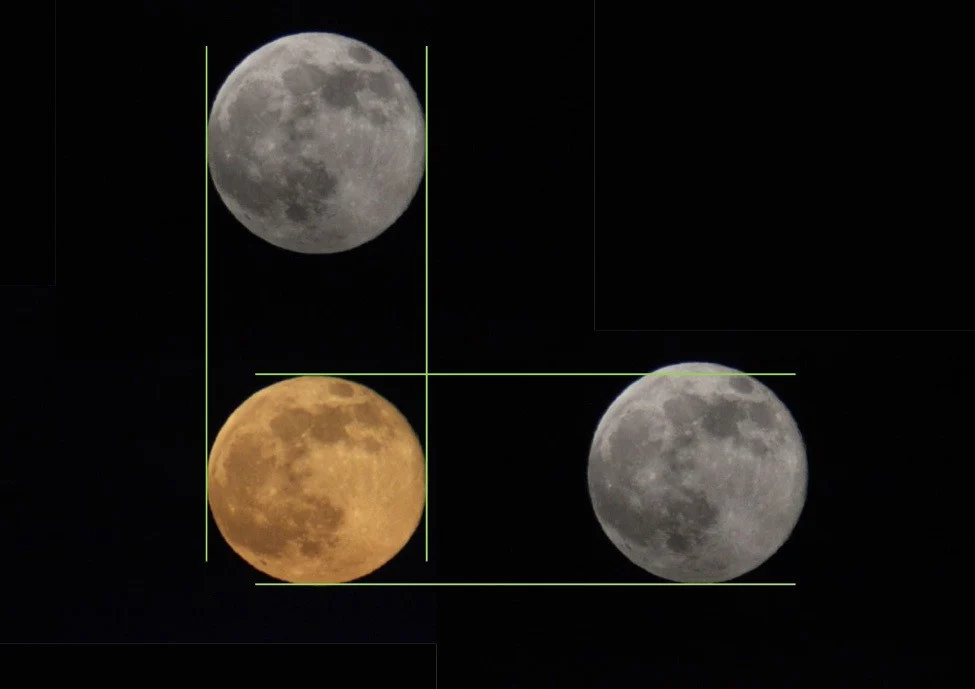
A Moon next to buildings, trees or hills can look much larger than it does in an empty sky. Scientists have proposed several explanations for how the brain interprets size and distance. A same-night photo comparison gives you a way to test what the camera records without having to settle on one explanation.
Low in the sky the Moon often looks orange because its light passes through more atmosphere. The atmosphere can also bend light from the lower edge more strongly and flatten the disc vertically. Measure across the width when testing the illusion.
How to test it with your own photos
Choose a night close to full Moon with a clear eastern horizon. Photograph it just after it clears the horizon and again when it is higher. Use the same camera, lens, zoom setting and image dimensions. A tripod or stable support helps keep the edges clean.
On each original image, measure the width of the disc in pixels. If you crop for a side-by-side view, use the same crop size and display scale. A phone may change lenses as you zoom. Stick to the same camera mode and avoid comparing automatic crops.
For example, widths of 198 and 201 pixels give a difference of about 1.5%. That is a small change even if the rising Moon looked huge. At phone scale, an error of only a few pixels can be enough to explain the difference.
How this differs from a supermoon
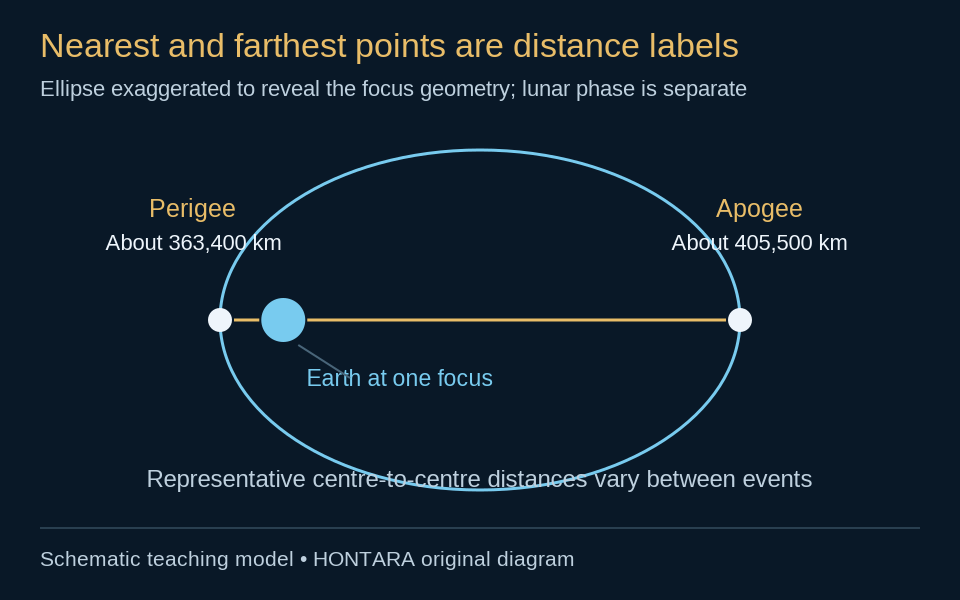
The Moon’s orbit brings it nearer to and farther from Earth over the month, which changes its actual angular size. That takes place over weeks. The horizon effect can happen within hours on one evening. To check the orbital change, compare separate nights with nearly the same phase, similar altitude and the same camera setup.