On this page
Start with the image rather than the eyepiece
A telescope’s main optic collects light and brings light from distant points toward a focus. An eyepiece lets your eye examine the resulting image at a useful angular size. A camera can instead record it directly. Magnification is therefore only one property of a telescope; aperture and the quality of the focused image matter too.
Aperture is the diameter of the main light-collecting opening. Ignoring losses and obstructions, collecting area grows as diameter squared. A 100-millimetre aperture has four times the area of a 50-millimetre aperture. This comparison does not guarantee four times as much visible detail because atmospheric steadiness, optical quality and the target also matter.
THE BIG IDEAS
- The objective forms an image and the eyepiece helps inspect it.
- Refractors use lenses while reflectors use a primary mirror.
- Compound designs combine elements and fold the optical path.
A refractor bends transmitted light
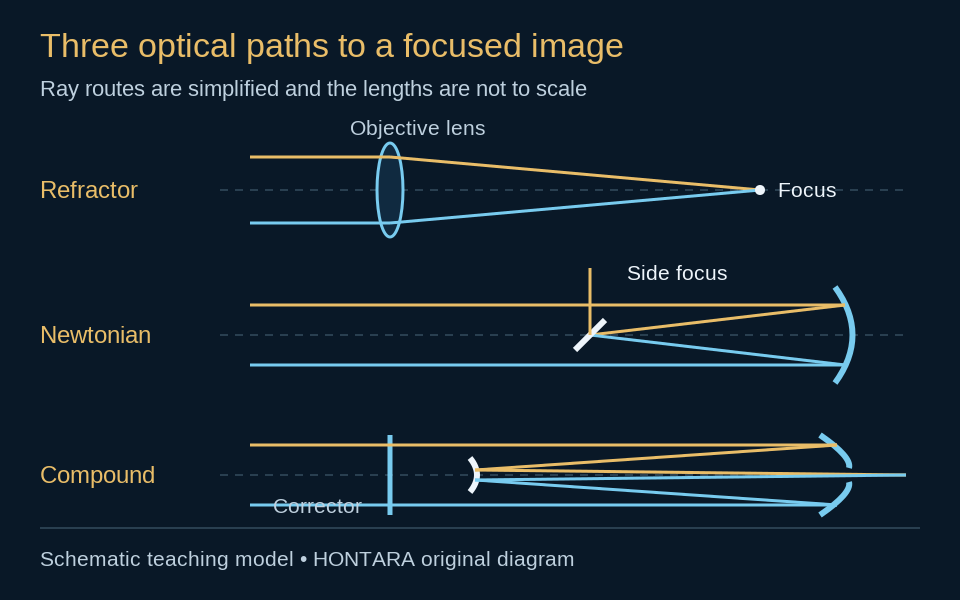
A refracting telescope uses an objective lens to bring light toward a focus. A simple lens bends different wavelengths by different amounts and can produce coloured fringes. Astronomical objectives combine lens elements and materials to reduce these errors. The diagram’s single lens is an optical-path simplification rather than a complete prescription for a modern objective.
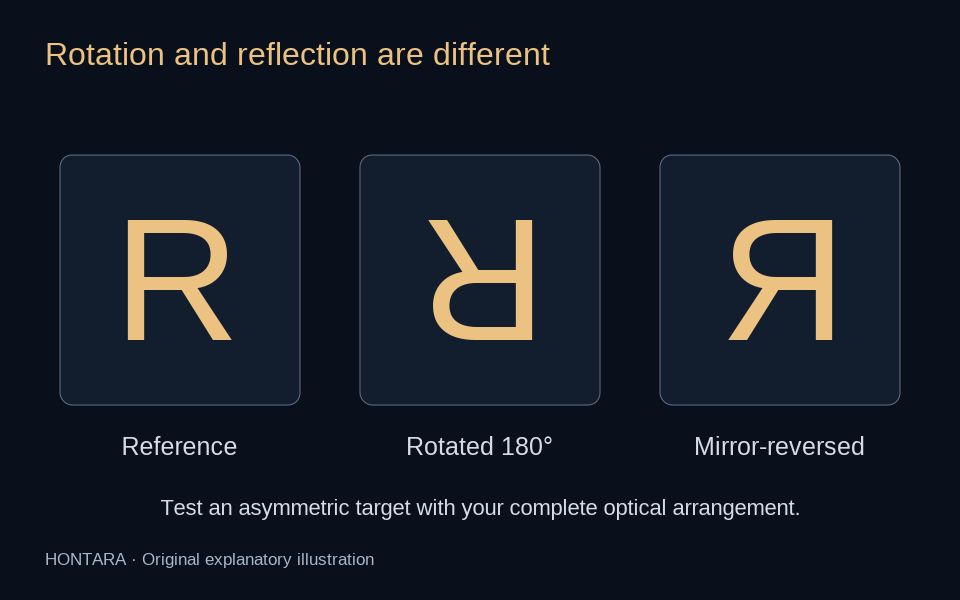
Light enters the front and proceeds through the tube toward the focal plane. A diagonal near the back may redirect it into a comfortable viewing position. That accessory changes the viewing path and can change image orientation. It does not turn a lens-based objective into a reflecting telescope. Always trace the actual arrangement rather than infer orientation from the outside shape alone.
A reflector redirects gathered light
A reflecting telescope uses a curved primary mirror. In a Newtonian arrangement the primary sends converging light back toward the front of the tube. A small flat secondary redirects it sideways to the focal plane and eyepiece. The secondary mainly changes the path; the curved primary performs the main focusing in this simplified explanation.
Alignment of the mirrors, often called collimation, matters because the light must reach the intended image plane correctly. The secondary blocks some incoming light and supporting structures can affect the diffraction pattern. These are design properties rather than evidence that reflecting telescopes cannot form sharp images. Large scientific observatories commonly use mirrors because very large lenses become difficult to support and manufacture.
Compound systems fold the route
Catadioptric designs combine refracting and reflecting elements. In a typical Schmidt-Cassegrain arrangement, light passes through a corrector, reflects from the primary to a secondary then returns through a central opening in the primary. This folds a long optical route into a shorter tube. The corrector helps control optical aberrations rather than simply acting as a protective window.
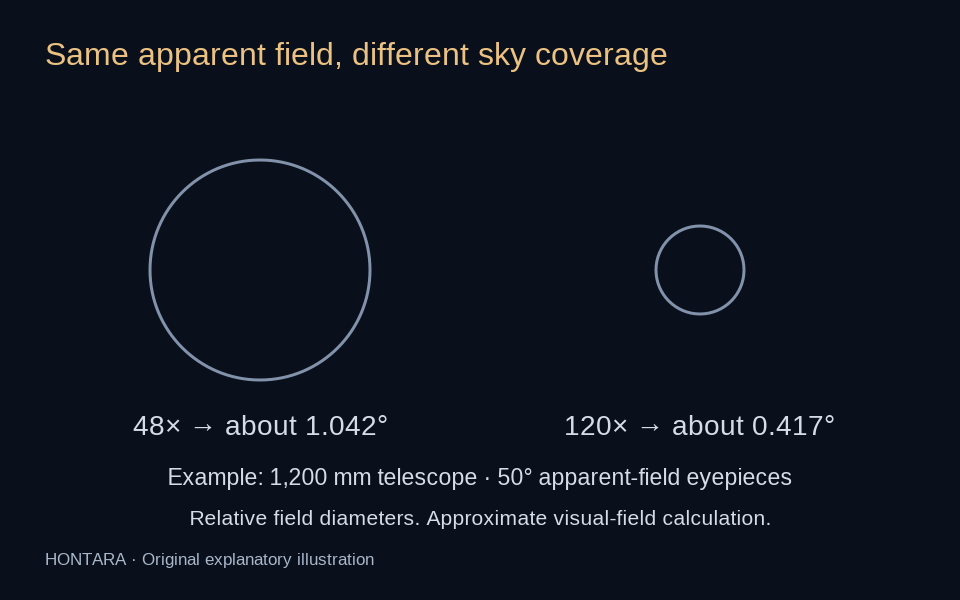
For a worked eyepiece comparison take a telescope with a focal length of 1,000 millimetres. A 25-millimetre eyepiece gives 40 times magnification; a 10-millimetre eyepiece gives 100 times. Both values come from dividing telescope focal length by eyepiece focal length. They do not identify the optical design or certify that atmospheric conditions support the higher power on a particular night.
PAUSE AND THINK
Does a diagonal behind a refractor make it a reflecting telescope?
Explore the answer
No. The objective remains a lens. The diagonal redirects light after the objective has already performed the main focusing.