On this page
THE BIG IDEAS
- Apparent field and true field describe different angular widths.
- Apparent field divided by magnification is an estimate.
- A target that fits can still be too faint to see.
Two widths with different meanings
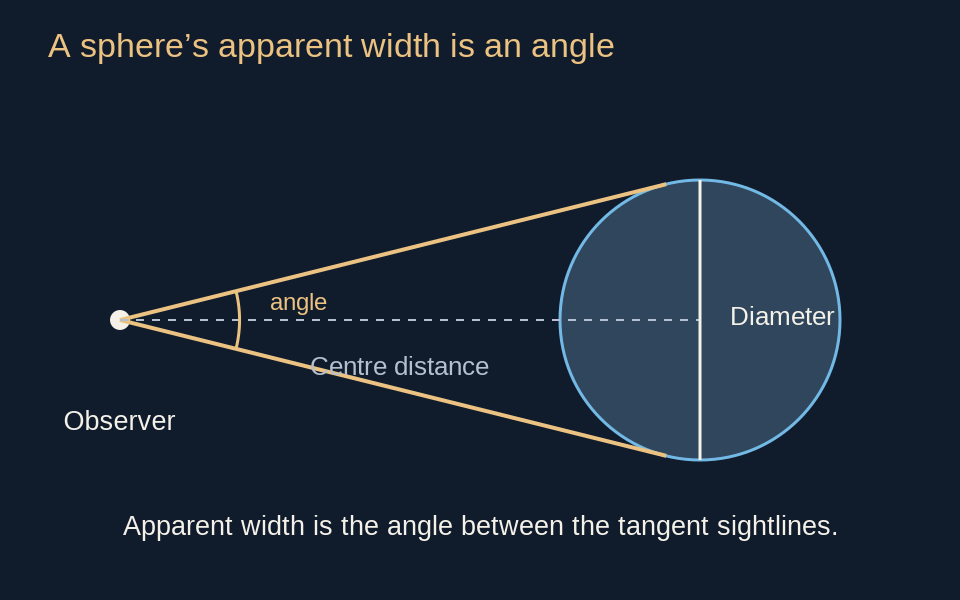
An eyepiece’s apparent field describes the angular width of the view presented to your eye. True field is the angular width of sky included in that view. A wide-looking eyepiece and a wide patch of actual sky are related ideas but they are not the same measurement.
Imagine a photograph enlarged on a screen. Making each detail larger does not automatically include more of the original scene. In a telescope, a change of eyepiece can alter both magnification and the apparent width of the viewing window.
Work through a comparison
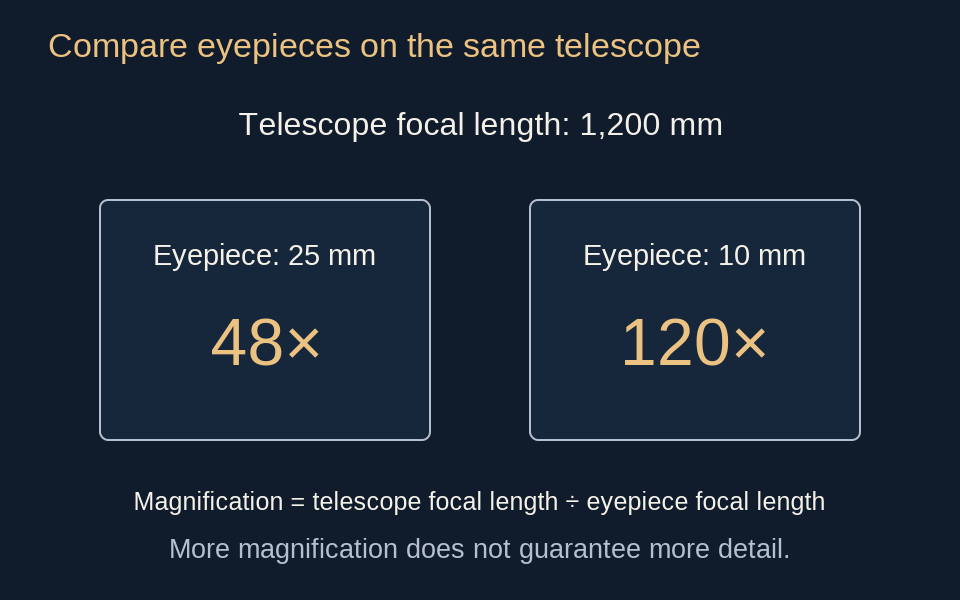
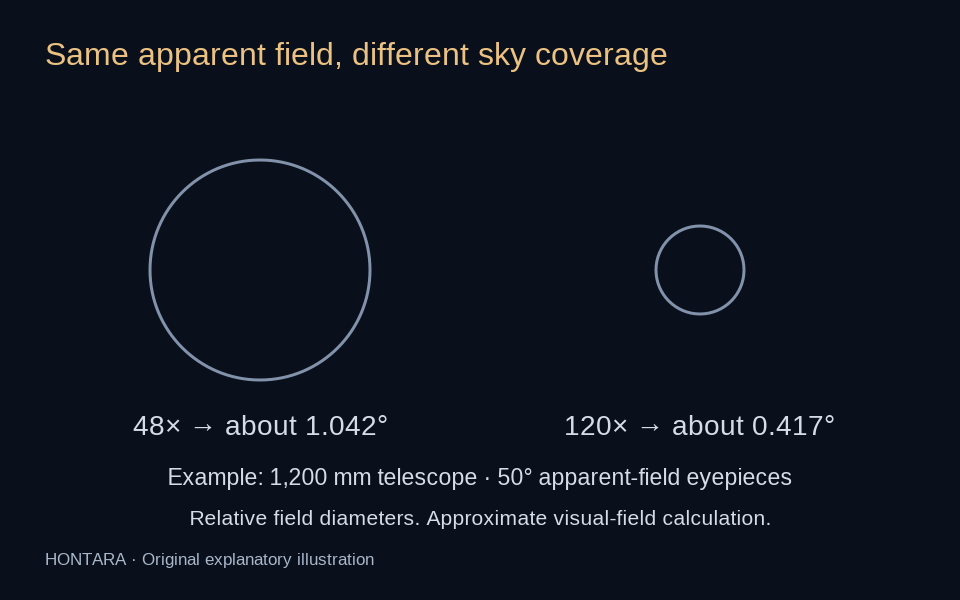
Use a 1,200 mm telescope with a 25 mm eyepiece. Its magnification is 48×. If the eyepiece’s specified apparent field is 50 degrees, a useful estimate of true field is 50 ÷ 48, or about 1.04 degrees.
Now use a 10 mm eyepiece with the same 50-degree apparent field. Magnification becomes 120× and estimated true field becomes 0.417 degrees. The second view enlarges details while covering less sky. A lunar disk of about half a degree would not fit fully in that example field. These are illustrative input values, not tonight’s lunar diameter.
Why the calculation is approximate
The apparent-field method is a planning estimate. Distortion in an eyepiece and its field stop influence the actual patch of sky. A field-stop calculation or a suitable measured drift test can provide a better estimate when the relevant specifications and observing geometry are known.
Do not turn the last displayed decimal into a claim about the instrument. A calculated 1.042-degree field is not necessarily known to a thousandth of a degree. Use it to choose a sensible starting combination and check the actual view.
Use field size while observing
Begin with a broad field to recognise the surrounding star pattern. A target’s published angular width helps you judge whether it fits, but sky brightness and contrast still determine whether faint portions are visible. Fitting within the circle does not guarantee detection.
Make a three-column record: eyepiece, estimated true field and what fitted in the view. Compare two eyepieces on the same safe night target. Sketch the field boundary and familiar stars rather than drawing the whole scene at an unspecified scale.
PAUSE AND THINK
What happens to estimated true field if magnification doubles while apparent field stays fixed?
Explore the answer
It halves. For example, 50 degrees divided by 50× is 1 degree, while 50 divided by 100× is 0.5 degrees.