On this page
THE BIG IDEAS
- Magnification equals telescope focal length divided by eyepiece focal length.
- Begin low and increase only when detail improves.
- Different target sizes call for different fields.
Start with the calculation
Telescope magnification is approximately the telescope focal length divided by the eyepiece focal length, using the same units. A 900 mm telescope with a 30 mm eyepiece gives 30×; with a 10 mm eyepiece it gives 90×. The larger eyepiece number therefore produces lower magnification in the same telescope.
This calculation describes image scale. It does not promise that the atmosphere or optics can support that power on a particular night. A larger blur is still a blur.
Find before you enlarge
Use a low-power eyepiece to locate the target and establish a sharp view. The wider field generally makes finding easier and keeps an untracked object visible longer. Centre the object before changing eyepieces so the higher-power field has the best chance of containing it.
Keep the replacement eyepiece ready in a secure place. Avoid touching glass surfaces and tighten the holder only as instructed. Dropping an eyepiece in darkness is easier than it seems.
Match the field to the object
A wide star cluster can look better when its surrounding pattern fits in view. A planet or a small lunar feature may benefit from more magnification if the air is steady. The target’s apparent size matters as much as its brightness.
Eyepieces also differ in apparent field and eye relief. Two eyepieces with the same focal length may not feel equally comfortable or show the same width of sky. Eyeglass wearers may particularly notice eye-relief differences.
Use an evidence-based stopping point
Increase power one step and ask whether you can distinguish a new feature. If the object is larger but softer, dimmer or harder to keep in view, return to the previous eyepiece. The aim is the clearest useful observation, not the highest printed power.
High magnification also makes vibration and atmospheric wavering more obvious. Let the mount settle after touching it. If fine details repeatedly snap into view and vanish, seeing conditions may be the limit rather than focus.
Compare with a simple record
On the Moon, choose one crater group and sketch it at two powers. Record the telescope and eyepiece focal lengths, calculated magnification and the details confidently seen. Include comfort and tracking difficulty in the comparison. Repeat the experiment on a broad cluster and notice whether the preferred eyepiece changes. That contrast teaches why there is no single best magnification for every object or every observing session.
Check the physical fit first
Before choosing a focal length, check the barrel size accepted by your telescope’s eyepiece holder or diagonal. Common sizes include 1.25 inches and 2 inches; the telescope manual specifies compatible accessories. Barrel diameter describes the physical fit. Focal length helps determine magnification, so the two measurements answer different questions.
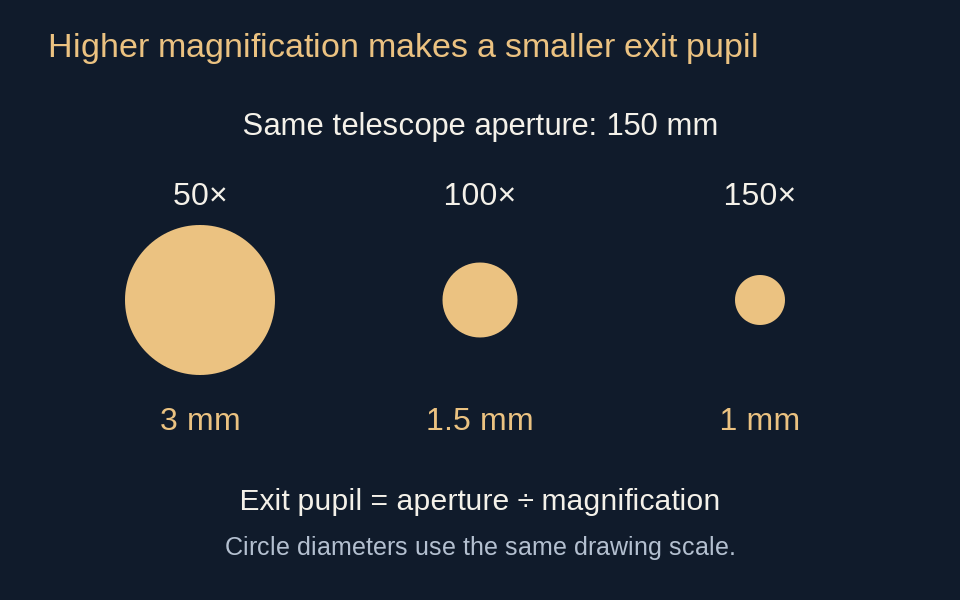
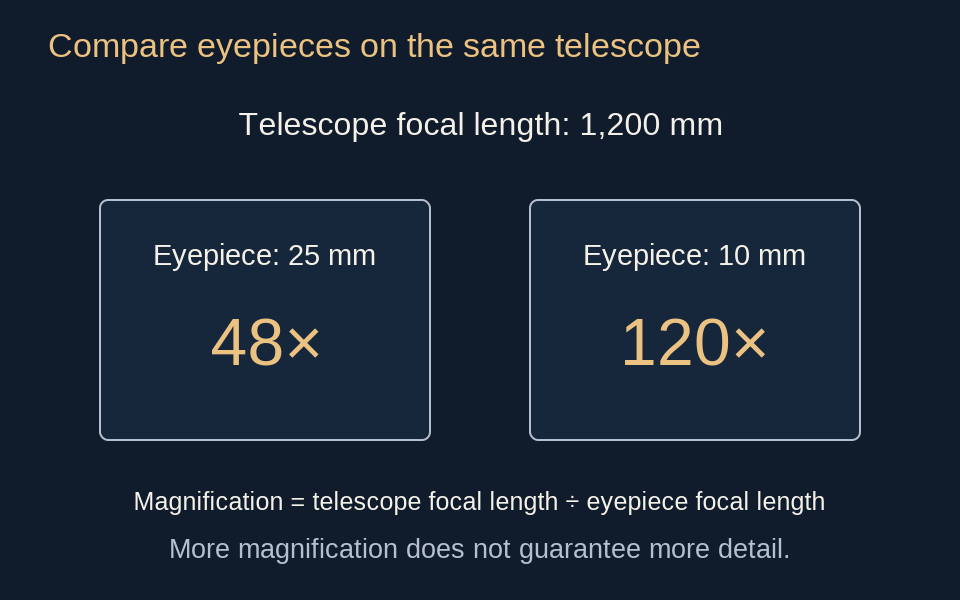
For a 1,200 mm focal-length telescope, a 25 mm eyepiece gives 48× and a 10 mm eyepiece gives 120×. Use the linked magnification calculator to compare your own pair, then check exit pupil before deciding whether greater power is useful for the target.
PAUSE AND THINK
What magnification does a 1200 mm telescope give with a 20 mm eyepiece?
Explore the answer
1200 divided by 20 gives 60× magnification.