TRY IT YOURSELF
Telescope magnification
1200 ÷ 25 × 1 = 48×
On this page
THE BIG IDEAS
- Magnification is telescope focal length divided by eyepiece focal length.
- A shorter eyepiece focal length gives more power.
- Atmosphere, aperture and steadiness limit useful detail.
Start with two focal lengths
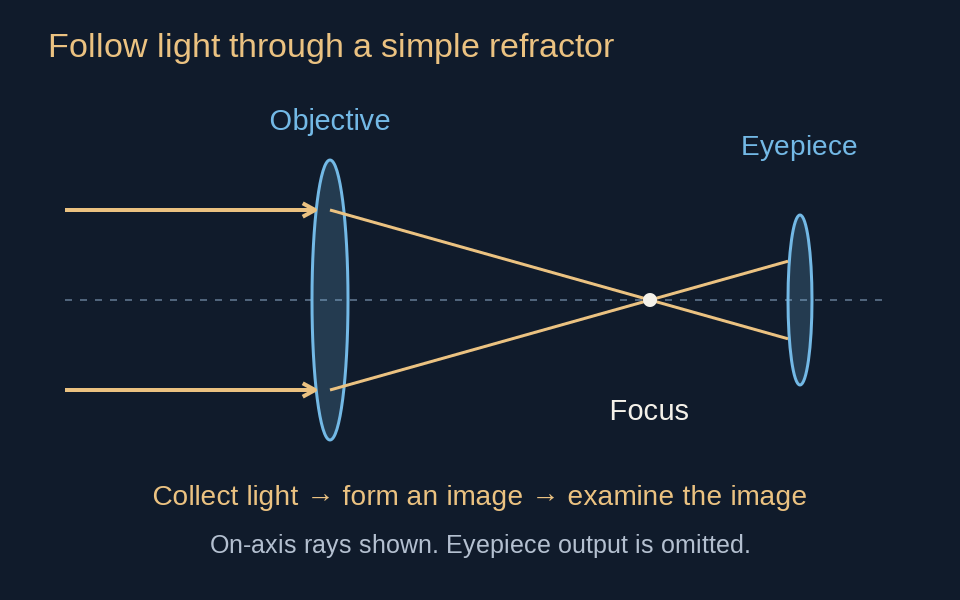
Magnification describes how much larger an object’s angular size appears through an eyepiece. For a telescope with a conventional eyepiece, divide the telescope focal length by the eyepiece focal length. Use the same units for both measurements. Millimetres are normally printed on the telescope specification and eyepiece barrel.
The aperture is a different measurement. A telescope labelled 150 mm aperture and 750 mm focal length does not have a focal length of 150 mm. Check the label carefully before entering your numbers.
Work through an example
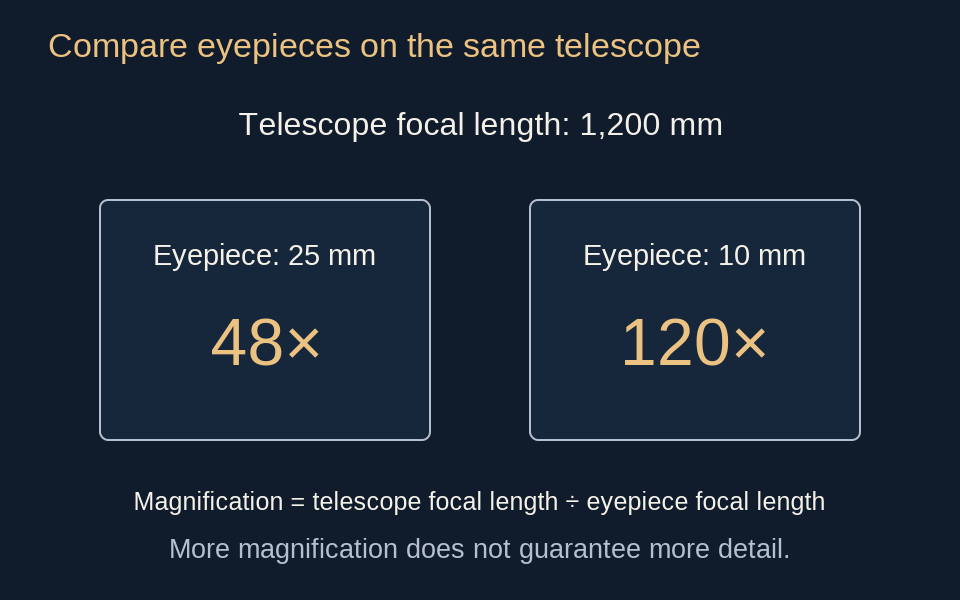
A telescope with a 1,200 mm focal length and a 25 mm eyepiece gives 48× magnification. Replacing that eyepiece with a 10 mm model gives 120×. A nominal 2× Barlow with the 25 mm eyepiece gives about 96×. The calculator uses the factor you enter; some Barlow combinations vary with spacing.
Try these three combinations and record the results. Then predict what happens when you double the eyepiece focal length. The magnification halves, even though the eyepiece carries a larger number.
A bigger image is not always a better image
Increasing magnification spreads an extended object’s light across a larger apparent area. The view can look dimmer and atmospheric turbulence can become more obvious. A shaky mount also makes a highly magnified image difficult to examine. The numerical result does not guarantee a sharp or useful view.
Start with the longest focal-length eyepiece available. Centre and focus the target before changing to a shorter eyepiece. Increase power only while the image continues to show useful additional detail.
Use the result at the telescope
Make a simple eyepiece table before observing: eyepiece focal length, calculated power and a note about the view. Compare the Moon with a bright star cluster; they may call for different combinations. Record when extra power stops helping. Never point a telescope or finder at the Sun without a properly designed front-mounted solar filter and knowledgeable supervision.
This calculator estimates angular magnification for visual use. It does not calculate a camera’s field of view, resolution or image scale.
PAUSE AND THINK
What power does a 900 mm telescope give with a 15 mm eyepiece?
Explore the answer
900 ÷ 15 = 60×. A nominal 2× Barlow would increase that to about 120×.