On this page
How exposure changes what a photo records
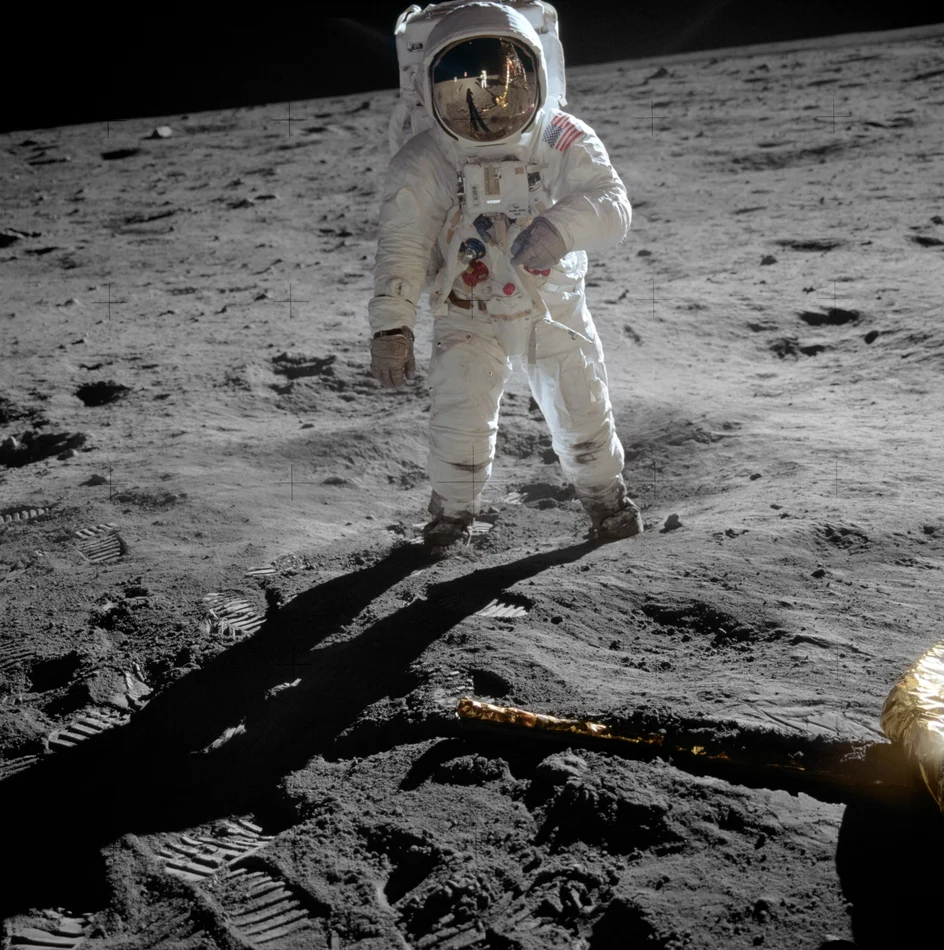
A short exposure lets a camera record a bright surface without washing out details. A faint star contributes very little light during the same exposure. Its signal can fall below what the film or sensor can distinguish from the background.
A longer exposure or wider aperture can record fainter light. Bright parts of the scene can then lose detail. The Moon’s atmosphere is too thin to produce a blue daytime sky like Earth’s, so the background can look black even while direct sunlight makes the foreground bright.
A space photo that does show stars
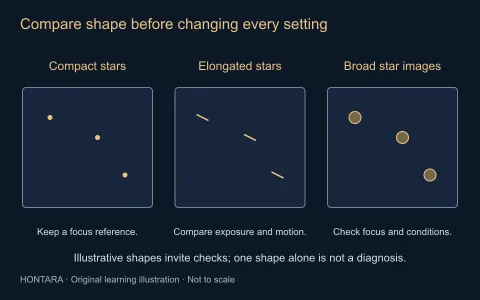
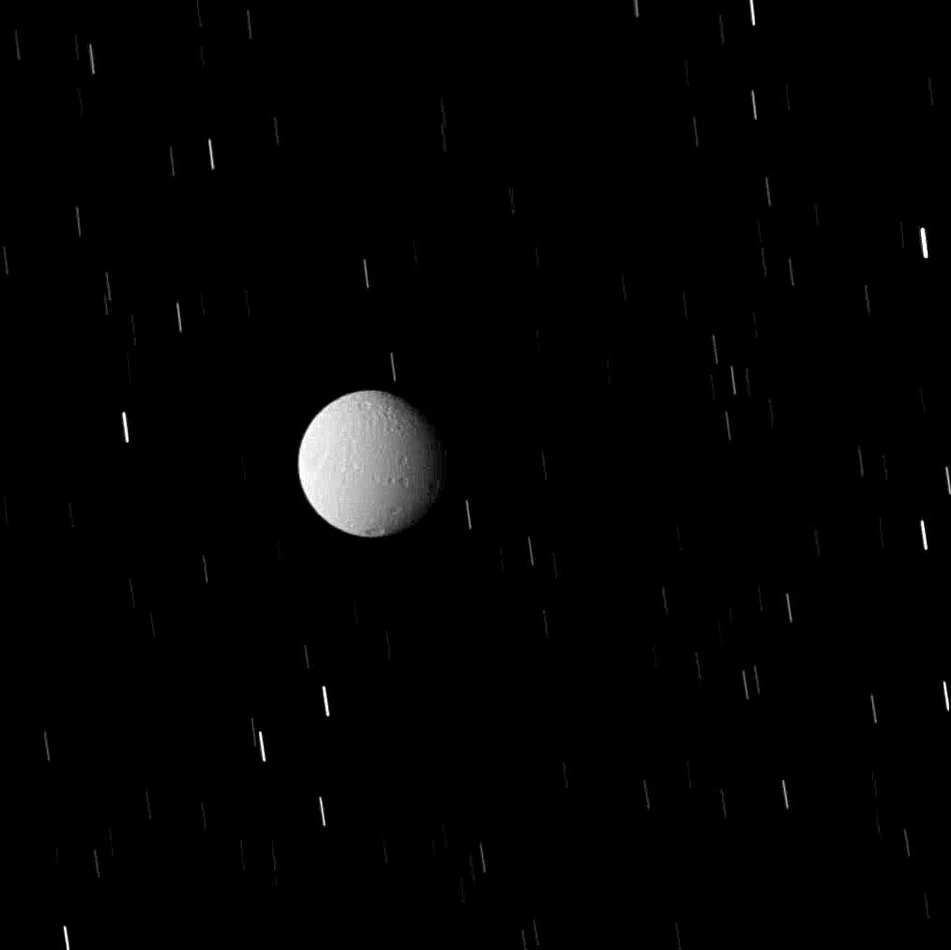
The Cassini spacecraft photographed Saturn’s moon Tethys while it was in Saturn’s shadow. The camera needed a long exposure for the faint moon. It picked up background stars as well. Because the camera’s pointing changed relative to them during the exposure, they show up as streaks.
The two images illustrate photographers solving different brightness problems. For a useful comparison, read the caption and find out what the camera was trying to record.
Try the same effect from home
On a clear night, frame a lit wall or window with a patch of sky. Take one photo exposed for the bright surface. Then try a longer exposure or a night mode with the phone resting on a stable support. In a bright neighbourhood, use a few bright stars as your test targets.
Compare which stars appear and whether the brightest parts of the wall lose detail. Keep the framing the same so you are comparing the same patch of sky.