On this page
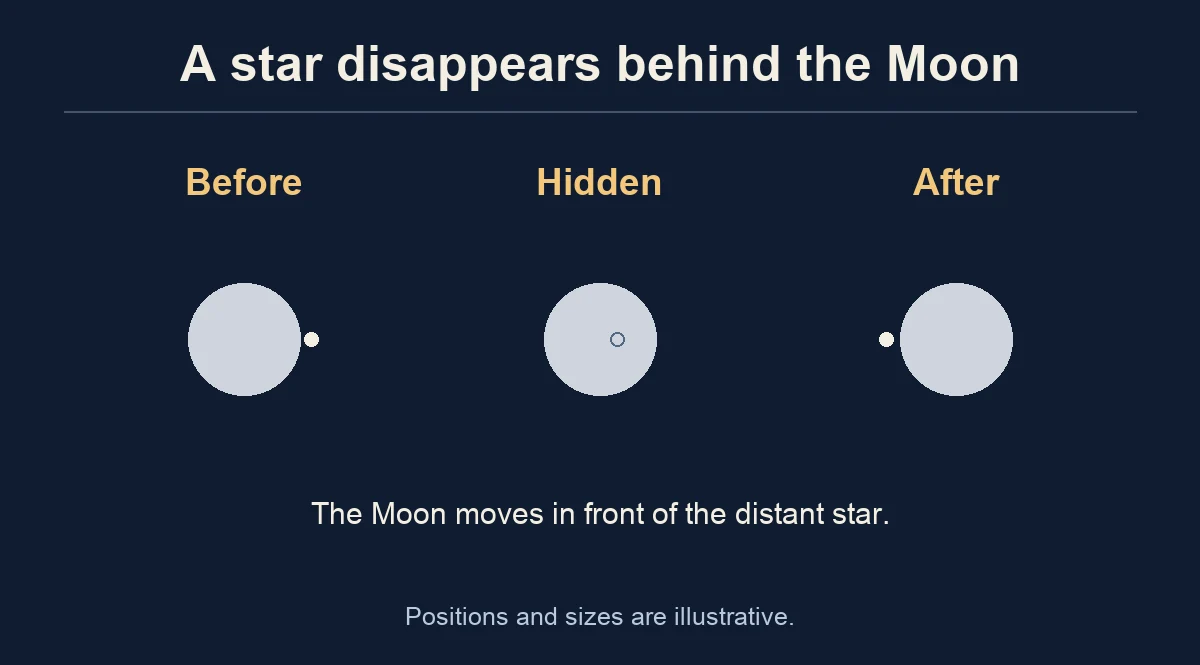
Look at what changes in your view
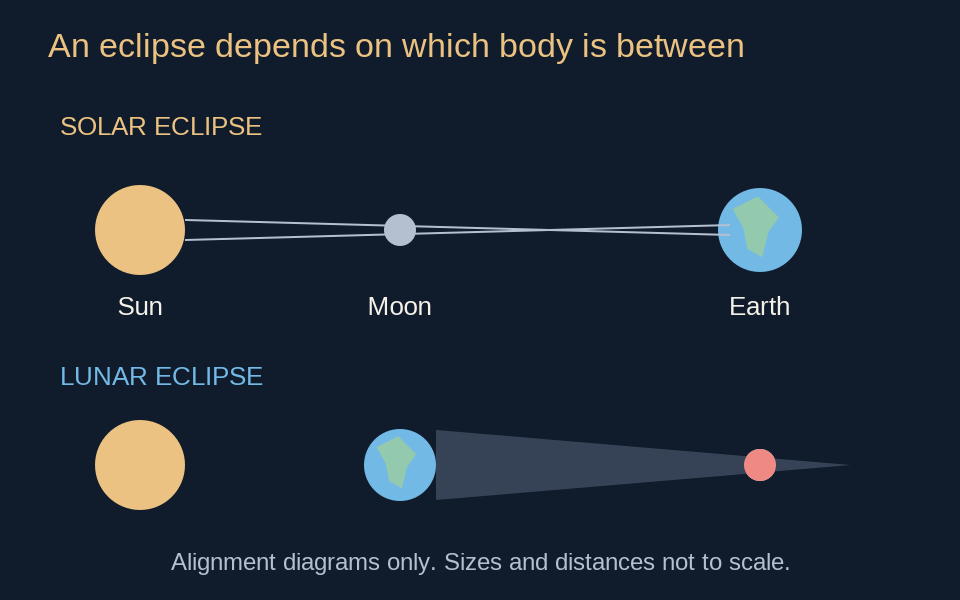
The terms overlap because each event depends on the positions of the observer and the objects. Astronomers normally use the name that best describes what they are studying. A total solar eclipse, for example, also involves the Moon hiding the Sun from observers along a narrow path.
| Event | What changes | Example |
|---|---|---|
| Eclipse | An object moves into shadow or a bright source is blocked from view. | Earth’s shadow darkens the full Moon during a lunar eclipse. |
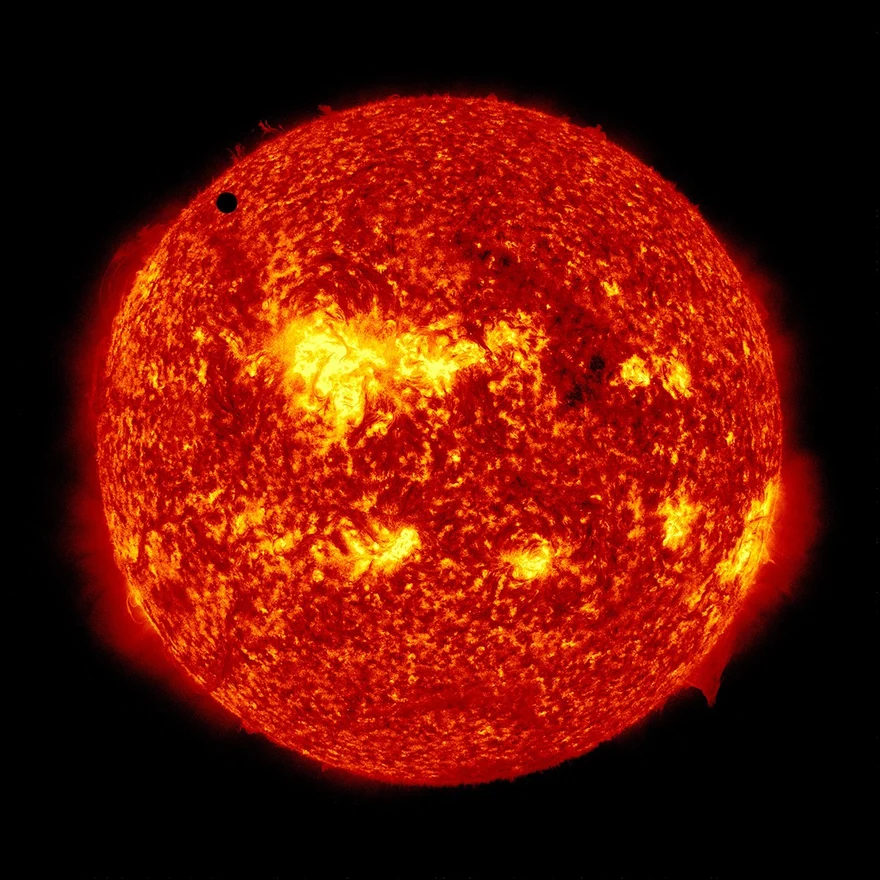
| Transit | A smaller silhouette crosses the face of a brighter object. | Venus travels across a small part of the Sun’s visible disc. |
| Occultation | A nearer object covers the distant target. | A star disappears behind the Moon’s edge and returns later. |
Why different observers can see different things
Two observers in different cities look at the Moon from slightly different angles. For one of them the Moon may cover a star, while from another location the star can pass just clear of its edge. Prediction tables use the observing site and time. A general listing tells you when to check but cannot confirm that your location is on the path.
For a night-time lunar occultation, compare the local predicted disappearance and reappearance times in the correct time zone. Find a clear view of the Moon and start watching several minutes early. A bright star near the unlit limb can be easier to follow than one next to the Moon’s bright edge.
What timing a disappearance can tell astronomers
When an asteroid covers a star, measuring how long the star disappears gives the length of the asteroid’s shadow along that observer’s path if the shadow speed is known. Combine timings from several sites and you get multiple slices across the object’s silhouette.
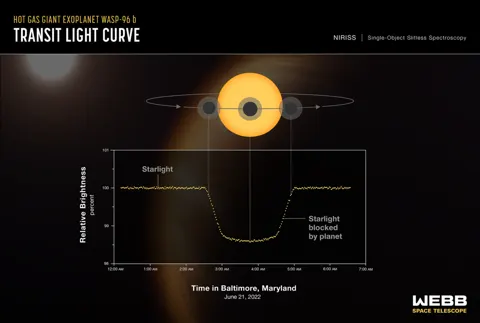
A distant exoplanet transit usually cannot be resolved as a visible dot. Instead, astronomers measure a repeated dip in the combined light they receive from the star. The timing and depth give clues about the orbit and the planet’s size relative to the star.