On this page
How far is one light-day?
Light travels at exactly 299,792.458 kilometres per second in vacuum. A day has 86,400 seconds. Multiplying those numbers gives 25,902,068,371.2 kilometres, about 173 astronomical units. An astronomical unit is roughly the distance from Earth to the Sun.
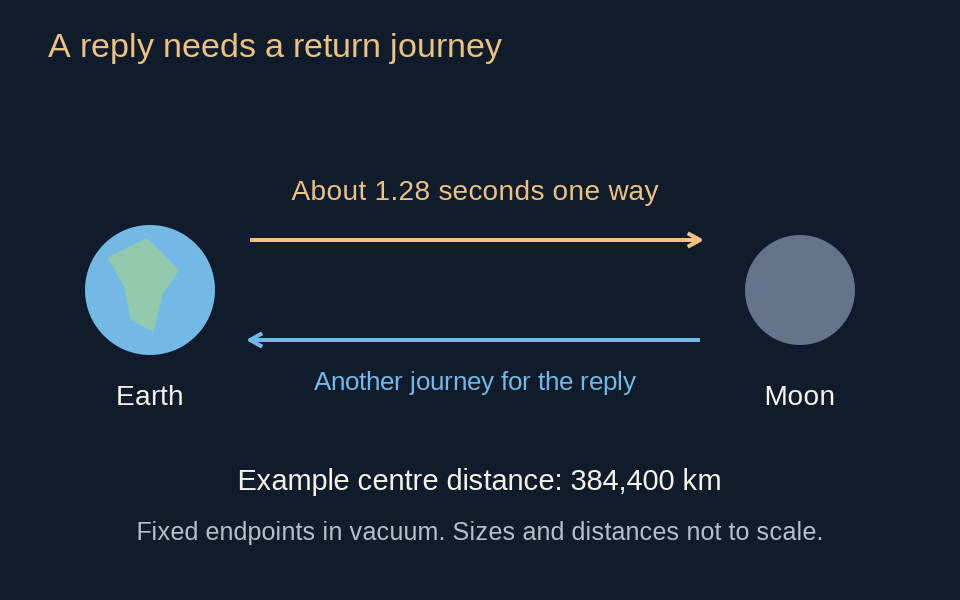
A light-second, light-minute and light-day are all distance units. They express a separation in terms of the time a light signal takes to cross it. The Moon is about 1.28 light-seconds away at its average distance, while 1 AU is about 8 light-minutes and 19 light-seconds.
What Voyager 1 reached on 18 November
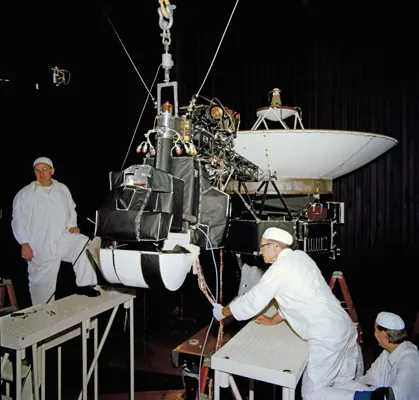
NASA places the crossing at 15:46 IST on 18 November 2026, more than 49 years after launch. The milestone refers to Voyager 1’s separation from Earth. The spacecraft followed a changing route past the giant planets and eventually crossed into interstellar space.
Its separation changes as Earth moves along its orbit and Voyager continues outward. The November milestone gives you a dated reference point. Use the mission’s tracking data when you want a distance for a specific time.
How long would a reply take?
At a fixed separation of one light-day, a command sent from Earth would reach the spacecraft about 24 hours later. An immediate reply would take another 24 hours to return. That makes the light-travel part of the round trip about two days. Actual operations also have to account for when an antenna can receive the reply and how long the spacecraft takes to act.