On this page
THE BIG IDEAS
- The terminator reveals relief through shadows.
- Begin with low magnification and a stable view.
- Repeat a sketch to see illumination change.
Start with the shape you can see
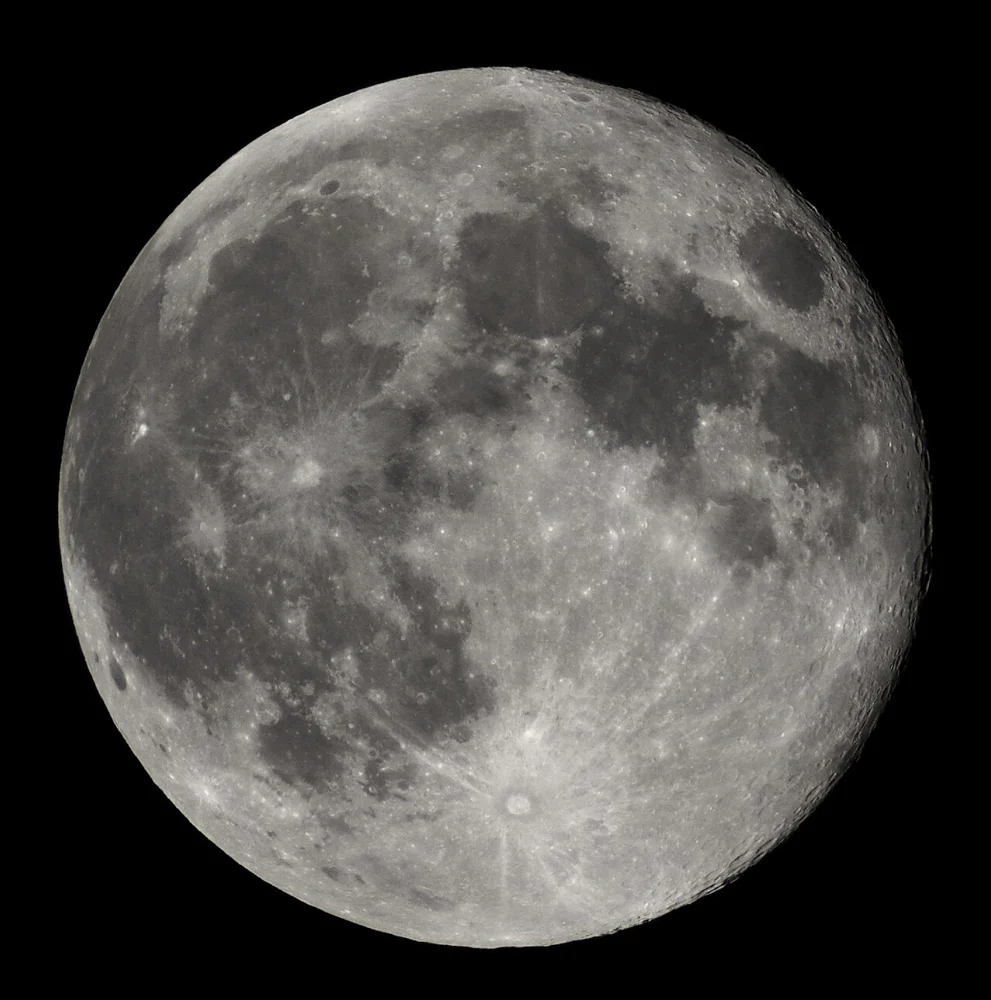
The Moon is an excellent first observing target because its broad patterns are visible even without equipment. Begin by drawing its outline and marking the dark patches. These darker plains are called maria. They are ancient lava surfaces rather than present-day seas. A small sketch gives you a reference before a telescope changes your sense of scale.
Choose a phase with useful shadows
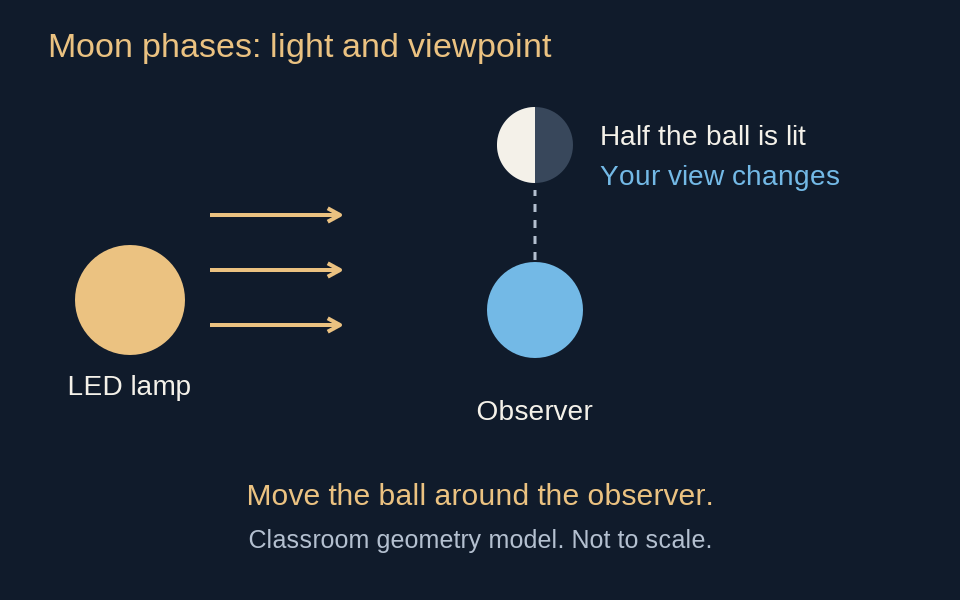
Full Moon is bright but its landscape can look surprisingly flat. Around first quarter or during a crescent or gibbous phase, sunlight strikes some terrain at a low angle. The boundary between lunar day and night is the terminator. Crater walls and mountains near it cast shadows that make their shape easier to interpret.
Check the Moon’s position for your location and time before going outside. First-quarter Moon is often convenient for an evening session. A phase label alone does not tell you whether the Moon is above your horizon at the hour you intend to observe.
Move from a whole view to detail
If using binoculars, rest your elbows on a stable support and bring the image to a sharp focus. With a telescope, start with a low-power eyepiece. Locate one dark plain and then inspect the nearby terminator. Increase magnification only if the smaller view is steady and clear. More power cannot remove atmospheric blur.
The image may be reversed or rotated by your telescope. Rotate your paper chart to match the field before naming features. Do not mistake orientation differences for a change on the lunar surface.
Make an observation you can repeat
Choose one crater or mountain group near the terminator. Draw the bright rim and the shadow rather than trying to copy every detail. Write the date, time and eyepiece beside the drawing. Return on the next suitable night and compare which parts are illuminated. Your two sketches record changing sunlight over the same landscape.
Keep observations separate from explanations: “dark oval beside bright rim” is a direct observation; “a deep crater” is an interpretation. Lunar shadows alone do not provide a reliable depth measurement without geometry.
Observe comfortably
The Moon can be dazzling through optics, so take breaks if needed and adjust your setup for a comfortable seated view. Children should have adult help around tripods. Never sweep binoculars or a telescope near the Sun while trying to locate a daytime Moon. A nighttime session is the simplest starting point.
PAUSE AND THINK
Why can a half-lit Moon show clearer crater relief than a full Moon?
Explore the answer
Low-angle sunlight near the terminator creates longer shadows, making slopes and crater walls easier to distinguish.