TRY IT YOURSELF
Horizon radius for a non-rotating black hole
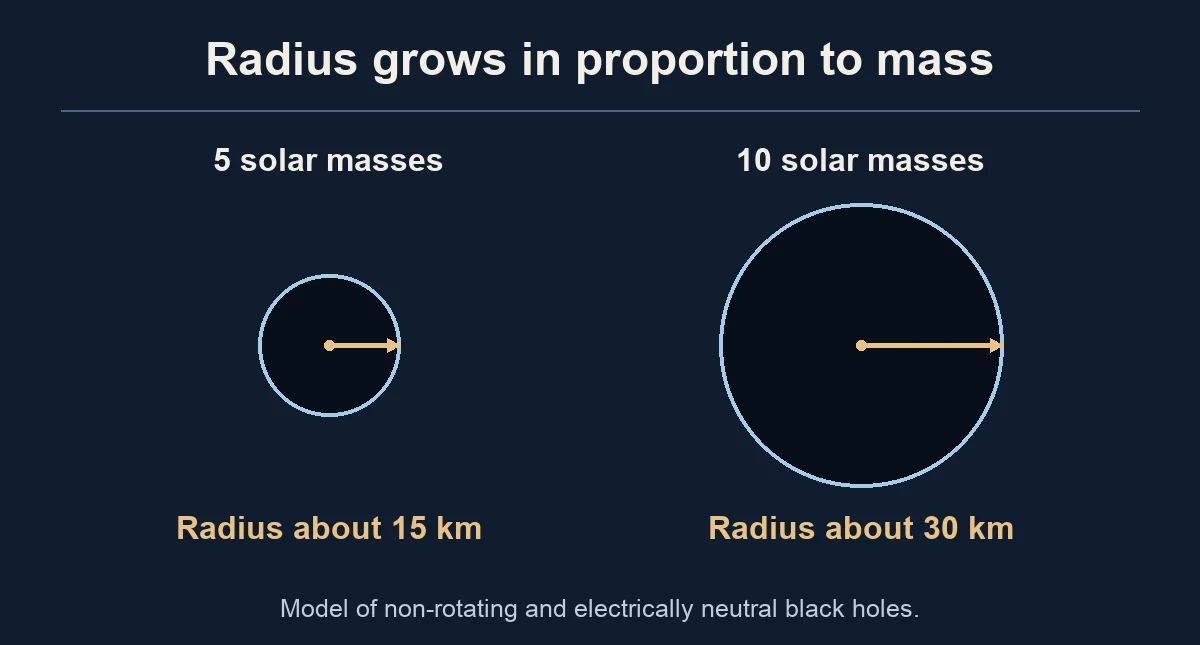
At 10 solar masses, the horizon radius is about 29.53 km.
On this page
What the calculator measures
The Schwarzschild radius is the radius of the event horizon for a spherical black hole with no spin and no electric charge. The event horizon is the boundary beyond which light cannot escape to a distant observer. The calculator also gives the diameter, which is twice the radius.
The formula is r = 2GM ÷ c². G is the gravitational constant, M is the mass and c is the speed of light. The tool uses the IAU nominal solar mass parameter, giving about 2.953 kilometres of radius per solar mass.
Try a stellar and a galactic example
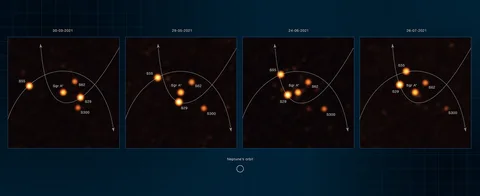
Choose ten solar masses to explore the scale of a stellar-mass black hole. For a second reference, choose four million solar masses, a rounded value for the mass of Sagittarius A*. The much larger mass gives a horizon radius of roughly 11.8 million kilometres in this model.
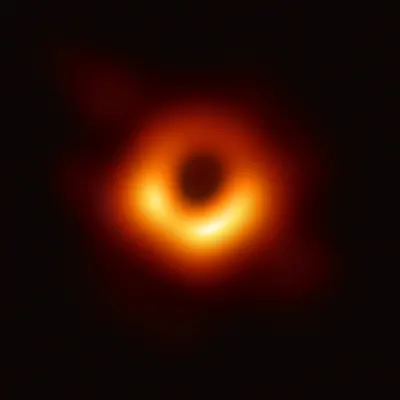
The horizon radius differs from the apparent radius of the shadow in images. Light bends around the black hole and the shadow depends on which paths reach the telescope. Real black holes can also spin, so a model with no spin gives a reference scale.
What a result means for other objects
The same formula gives a Schwarzschild radius for the mass of the Sun. The Sun occupies a much larger region and has no event horizon. The result describes a mass scale in the black hole model. A stellar remnant’s real structure follows from how that matter evolves and whether its own forces can support it against collapse.