On this page
Quick fixes at the eyepiece
| View | What to try |
|---|---|
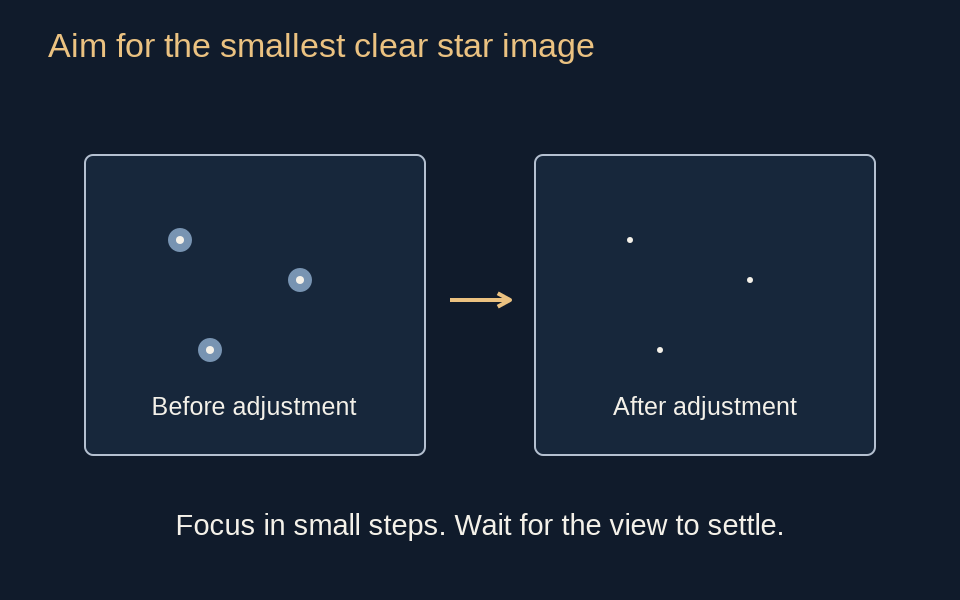
| Blurry | Use low power. Turn the focus knob until the star looks smallest. If it grows again, turn back a little. |
| Black | Remove the front cap and check that your eye is centred behind the eyepiece. Use the finder to bring a bright target into view. |
| Shaky | Take your hand off the telescope and wait for the mount to settle. If details still ripple, try lower magnification. |
Find the sharpest point
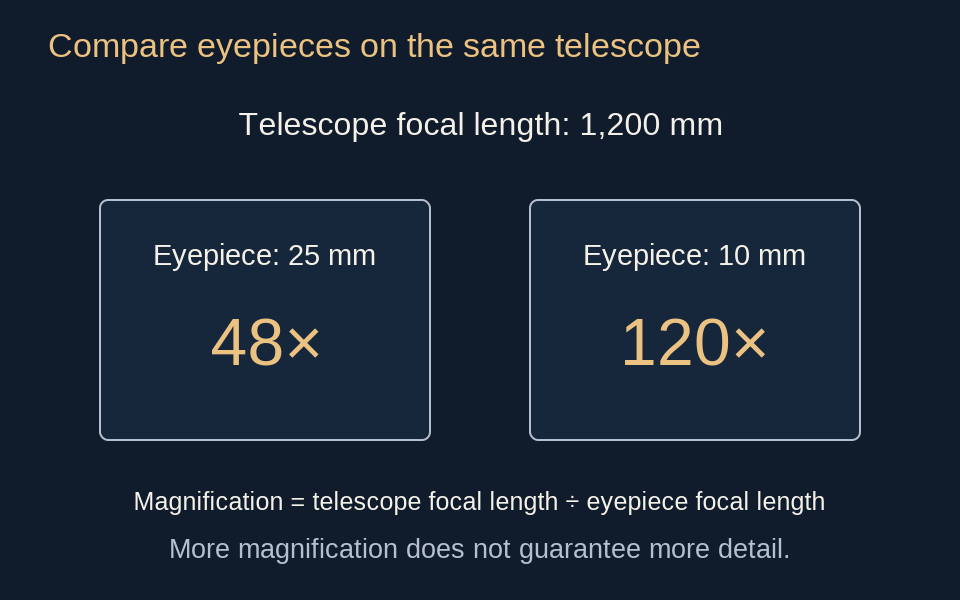
Use the eyepiece with the largest number in millimetres. In the same telescope, a 25 mm eyepiece magnifies less than a 10 mm eyepiece and usually shows a wider area of sky. That makes it easier to find and centre your target.
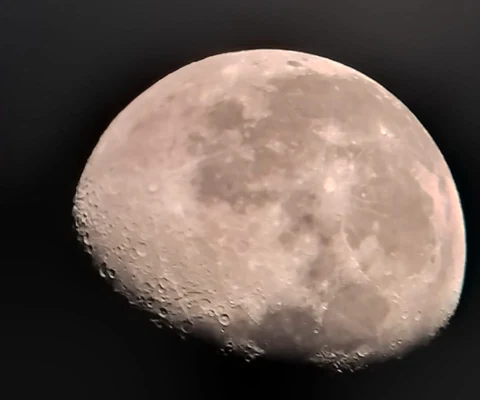
Choose a crater rim near the Moon’s shadow line or a bright star. Turn the knob a little, wait for the mount to settle and look again. Once you reach the sharpest point, turning farther makes the view soften. Go back to the sharpest setting.
A star can look like a large disc or ring when it is far out of focus. Look for the smallest steady point you can get. If you switch eyepieces, check the focus again.
If the view stays black or the knob runs out of travel
If the view goes black as you move your head, look straight into the eyepiece from slightly farther back and move closer until you see the whole circle. If the finder shows the target and the main telescope stays dark, check that the finder points where the telescope does.
If the image is still improving when the knob reaches its stop, check your telescope’s manual for the correct eyepiece holder, diagonal or extension. Different instruments use different arrangements. Stop turning when you reach the end of the focuser’s travel.
If a sharp image keeps blurring
If the whole view jumps when you touch the knob and steadies when you let go, the mount is vibrating. Set the tripod on firm ground and let it settle before judging the focus.
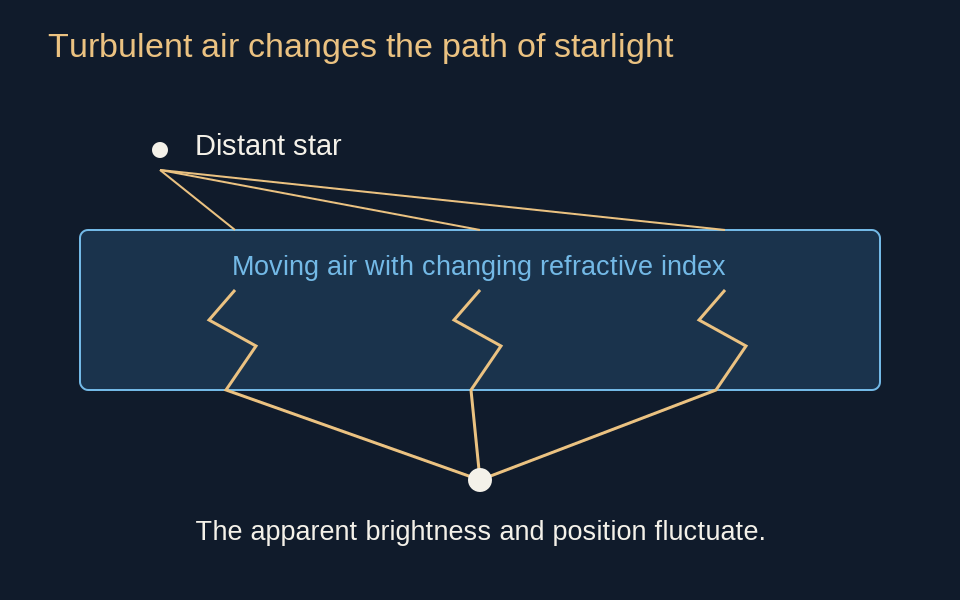
When fine details ripple even with your hands off the telescope, moving air may be blurring the view. Let the telescope adjust to the outdoor temperature and try lower power. If bright objects have persistent halos, check the exposed optics for dew.
Practise a repeatable focus check
At night, pick a crater edge or a bright star. Find focus, move a little past it and return to the sharpest point. Try again with a different eyepiece and notice whether the focus position has moved. Never point an ordinary telescope at the Sun.
PAUSE AND THINK
If a star repeatedly sharpens and blurs without touching the telescope, must the focuser be slipping?
Explore the answer
Not necessarily. Atmospheric turbulence or thermal currents can change the image even at the correct focus.