On this page
THE BIG IDEAS
- Dew can reduce contrast before droplets are obvious.
- Avoid rubbing optics with ordinary cloth.
- Damp equipment should not be sealed away for long-term storage.
Dew is a viewing problem before it is obvious
On a humid night, exposed optics can cool enough for water to condense on them. The view may lose contrast or develop halos around bright objects before droplets are easy to see. Coastal observing sites can make moisture management especially important.
If the image gradually becomes soft, do not assume the focus moved. Check the lens or corrector gently with a light when needed. Avoid touching the glass to test whether it is wet.
Prevent rather than rub
A compatible dew shield can reduce an optic’s exposure to the cold sky. Some instruments use purpose-made dew-control heaters. Follow the equipment manufacturer’s instructions for accessories and power use rather than improvising a hot object against the optics.
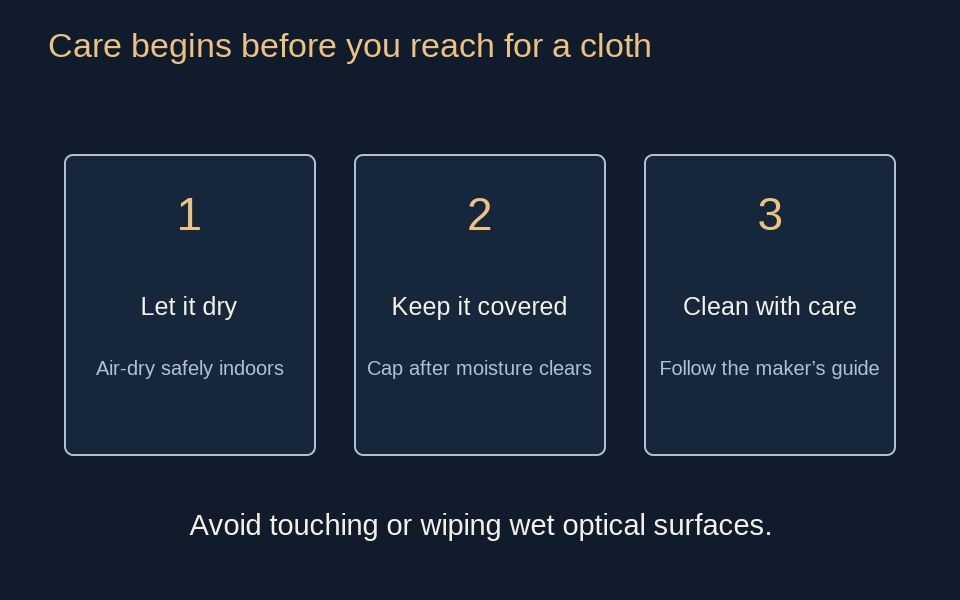
Never wipe dew away with a sleeve or a random cloth. Dust on the surface can act as an abrasive. Strong heat and sudden temperature changes are also poor substitutes for controlled equipment care.
Treat dust cautiously
A few visible specks do not automatically justify cleaning. Unnecessary cleaning can damage coatings more than leaving minor dust alone. If cleaning is needed, use the manufacturer’s recommended method and materials for that particular optical surface.
Do not spray household cleaners onto a telescope or dismantle a mirror assembly to remove an ordinary mark. A loose blower may be appropriate for some exposed dust, but canned air, solvent and pressure can introduce their own problems. When uncertain, ask the instrument’s supplier or an experienced maintainer.
Dry before long-term storage
After observing, protect equipment during transport and allow damp parts to dry in a clean safe place according to the manual. Closing a wet instrument or case for extended storage can trap moisture. Check caps, cases and foam as well as the optical tube.
Keep small accessories organised so a cap does not collect grit in the ground and then transfer it to an eyepiece. Store equipment where children cannot pull heavy components over and where humidity can be managed.
Use an end-of-session check
Make a short checklist: power off, cables removed safely, accessories counted, damp surfaces identified and drying arranged. Record when dew first affected the view and which part was exposed. This helps plan future sessions without blaming the sky for an equipment problem. The goal is not perfectly spotless glass after every use. It is reliable equipment cared for gently enough to preserve its optical surfaces over many years.
PAUSE AND THINK
Why is cleaning after every session not necessarily good maintenance?
Explore the answer
Unnecessary contact can damage coatings or drag dust across the surface; cleaning should follow the manufacturer’s method when actually needed.