On this page
THE BIG IDEAS
- Seeing concerns image steadiness.
- Transparency concerns how clearly light passes through air.
- Match the target to the conditions you actually have.
Two questions about one atmosphere
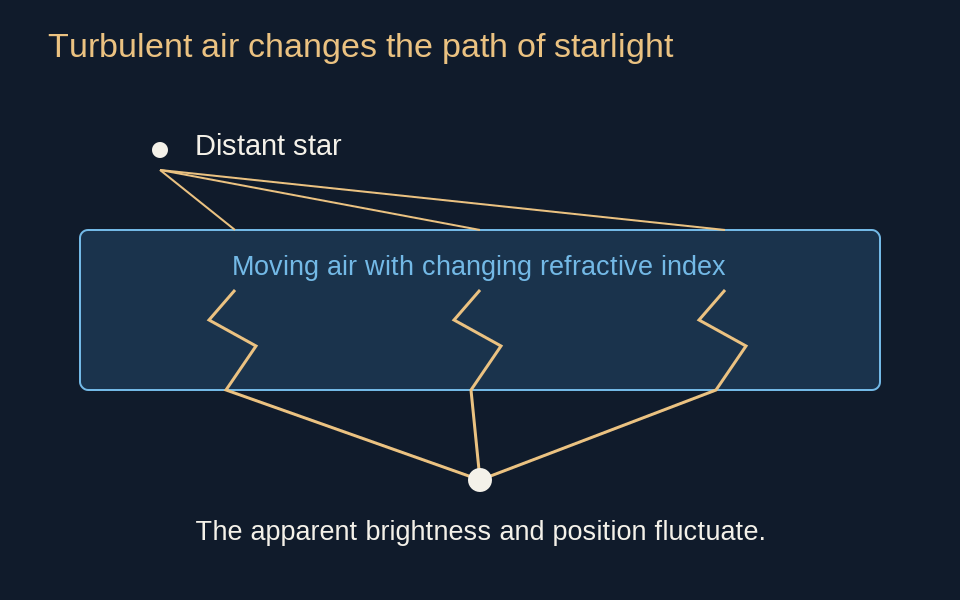
Astronomers use seeing to describe how steadily the atmosphere delivers an image. Turbulent air changes the path of light and can make a planet’s edge ripple. Transparency describes how well light passes through the atmosphere. Haze, thin cloud and particles can reduce it.
A sky can have good transparency but poor seeing, or steady images but poor transparency. Calling both conditions simply “clear” loses information that helps explain your results.
Test seeing with a compact target
Look at a moderately bright star or a planet through a properly focused telescope. Watch whether the image remains compact or repeatedly expands and trembles. Wait for the mount to settle first so movement from your hand is not mistaken for atmospheric turbulence.
Looking above a hot roof, road or warm telescope tube can add local disturbances. Changing position or allowing the instrument to reach outdoor temperature can help distinguish local thermal problems from conditions higher in the atmosphere.
Assess transparency with a broad view
Look for haze around bright lights and compare how many stars are visible in a familiar region. A thin cloud can dim stars without producing an obvious solid cloud shape. The Moon can also brighten the sky and reduce contrast, so record it separately rather than blaming every faint-object difficulty on haze.
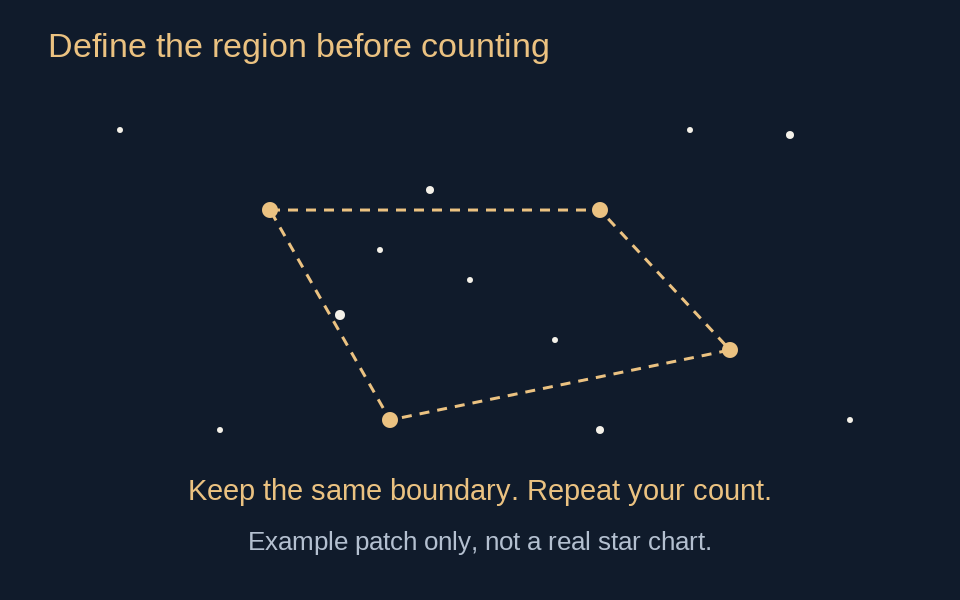
Keep your comparisons consistent. A count made beside a bright streetlight is not directly comparable with a count made behind a wall shielding that light. Your own dark adaptation also affects the result.
Choose targets to fit the night
Steady air is especially valuable for fine lunar and planetary detail. Dark transparent sky is especially helpful for faint galaxies and nebulae. If one condition is poor, another class of target may still be rewarding.
Do not use increasingly high magnification as a universal remedy. It cannot restore detail erased by turbulence or recover contrast lost to a bright background. A lower-power cluster view may be more satisfying than a wavering planetary close-up.
Keep two separate notes
Create one simple rating for image steadiness and another for clarity, with a written description beside each. For example, “planet edge rippling constantly” and “thin haze near horizon” convey more than unexplained numbers. Record the target’s altitude, Moon and location. Repeat the assessment over several sessions, then compare which targets benefited from which conditions. This is a small observing experiment rather than a formal atmospheric measurement, but it makes future planning more informed.
PAUSE AND THINK
Can excellent transparency guarantee sharp high-power views of Jupiter?
Explore the answer
No. Turbulence can still produce poor seeing even when the atmosphere is transparent.