On this page
Plan a view near Honavar
- Height
- The cluster centre reaches about 17° above due south at its highest.
- When to try
- Try March or April. An example near the highest point is 10 April 2027 at 10:25 pm IST.
- First look
- Start with binoculars. Look for a spread of stars against the surrounding field rather than a tight knot.
Set your location and time in Stellarium Web, then search for NGC 3532. Check the Moon and your actual skyline. Record whether you could identify the target and what affected the view.
Pick out a wide gathering of stars
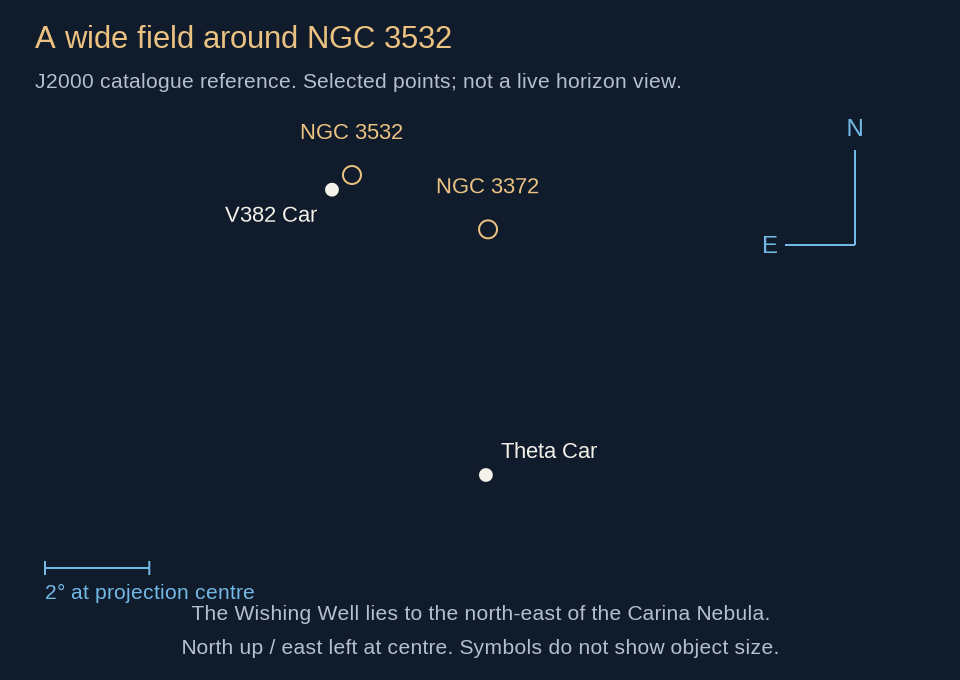
The Wishing Well Cluster is the open cluster NGC 3532, in Carina. ESO describes its angular extent as almost twice the diameter of the full Moon. It takes up much more room than a compact group like the Jewel Box. Start with binoculars or a broad telescope field and give yourself a surrounding rim of sky to judge where the concentration begins and fades.
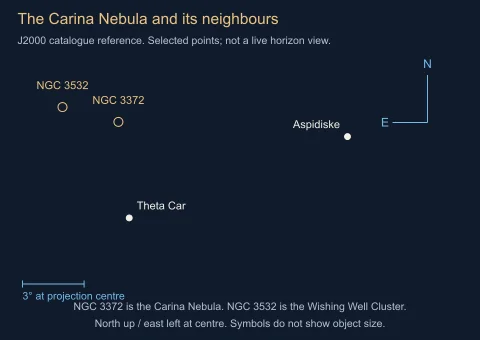
The finder marks the cluster centre and the Carina Nebula about 3° to the southwest. Use both positions on a local chart to orient your field before searching for the cluster. The nebula can be too difficult to use as a starting landmark; recognise the wider plotted star pattern first.
Try the field before increasing power
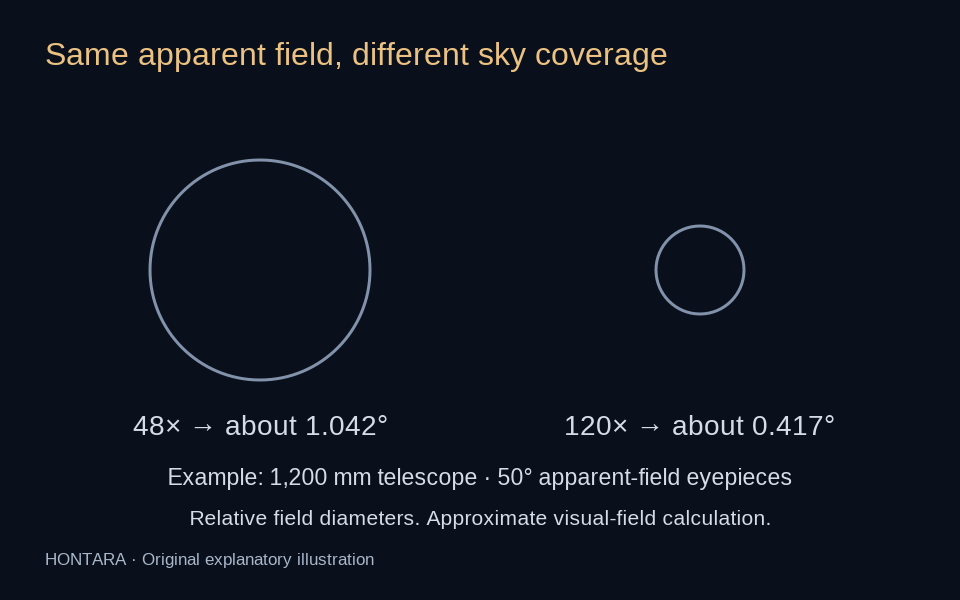
At Honavar the centre tops out at about 17°. Look in March or April for a dark time near the south meridian. Raise your binoculars from a clear horizon and scan a little beyond the target before returning. Changing the field like this makes it easier to tell a real concentration from the edge of a narrow view.
If many stars can be separated, count the ones inside one small sketched region and compare that region with adjacent sky at the same altitude. This comparison estimates concentration. Visual position on its own cannot establish cluster membership.
Connect a simple view with first light
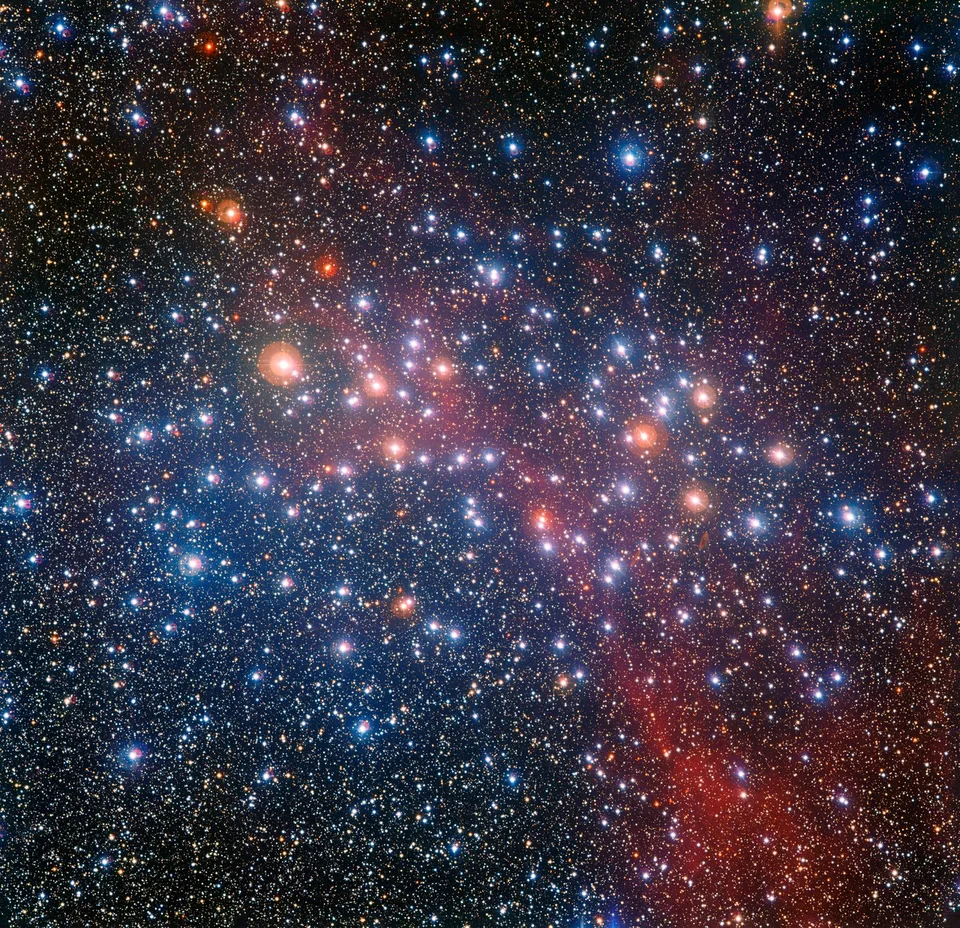
NGC 3532 was the first target photographed by the Hubble Space Telescope after launch on 20 May 1990. ESO’s later survey image shows hot-looking blue-white stars and orange red giants. That scientific image combines instrument measurements through different filters. Note its colour information separately from any colour differences you can see in binoculars.
A bright group can contain stars at different points in their evolution because mass affects how fast a star develops. Movement and other measurements help astronomers distinguish members of the group from coincidental foreground or background stars.
Compare two open clusters fairly
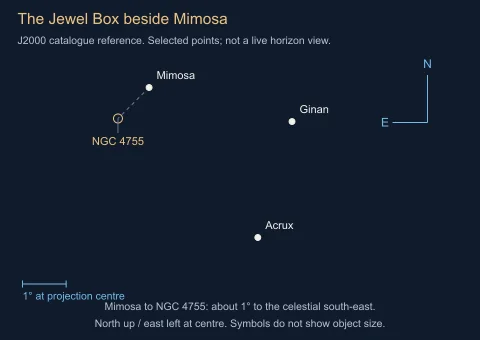
Sketch NGC 3532 and the Jewel Box with the same field width when possible. Mark the approximate boundary of each concentration without trying to assign every star to the group. Write down whether haze, instrument choice or moonlight differed. A larger-looking cluster in the sky is an angular comparison. You need distances and physical membership evidence to compare their sizes in space.
PAUSE AND THINK
Why might a high-power view make the cluster less obvious?
Explore the answer
A small field can cut off the cluster’s outskirts and surrounding sky, removing the contrast that helps you recognise the whole grouping.