On this page
Start with where it is and when you saw it
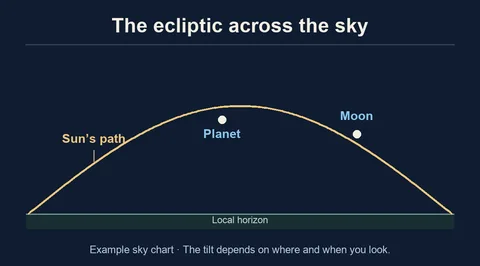
Note the time, your town, the compass direction and how far above the horizon you are looking. A bright point low in the west after sunset could be Venus, Jupiter or a bright star. The same description fits different objects at different times of year. Compare the position to a chart set to that moment.
Use the brightest nearby stars or the Moon to confirm that your chart is facing the same direction as you. If you are near Honavar, the night-sky planner can help narrow the choices. Use a full chart when the planner’s bright targets do not match what you see.
Treat twinkling and colour as clues
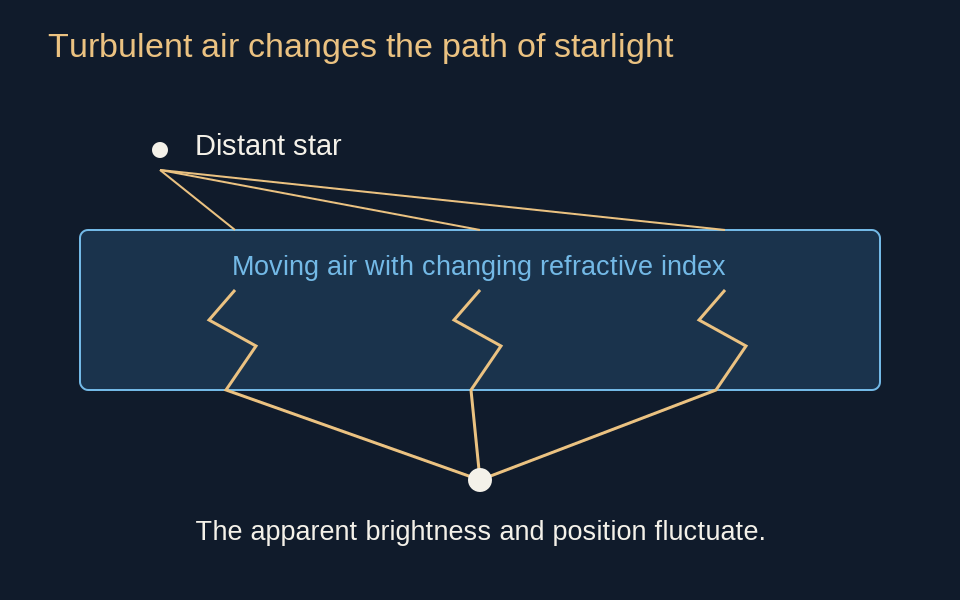
Moving air makes stars shimmer because each looks like a point. The small disc of a planet spreads the effect across a wider area, so its light often looks steadier. Close to the horizon even a bright planet can shimmer. Bright stars can look steady when they are high in calm air.
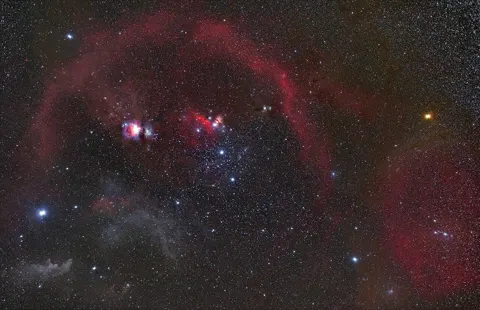
Mars often looks orange. Aldebaran and Betelgeuse can also look orange. Use colour to narrow a choice after checking where the object is. If the light moves between neighbouring stars over seconds or minutes, compare it with the behaviour of aircraft and satellites.
Confirm by returning on another clear night
Draw the bright point with two or three nearby stars. Compare drawings after a few nights or weeks. Earth’s rotation moves the whole pattern across the sky each night. A planet also shifts relative to the background stars over time. Some planets move little over a few nights, so a longer interval can make the comparison clearer.
If the chart says Jupiter and you have steady binoculars, look for tiny points close to it. Their changing arrangement offers a second clue.