On this page
Mark an anchor and a route
Find your target on a chart that shows stars you can see with your equipment. Pick a bright anchor you can find with your eyes. Between the anchor and the target, mark distinct pairs, lines or triangles of stars. Think of each pattern as a point where you can stop and check the view.
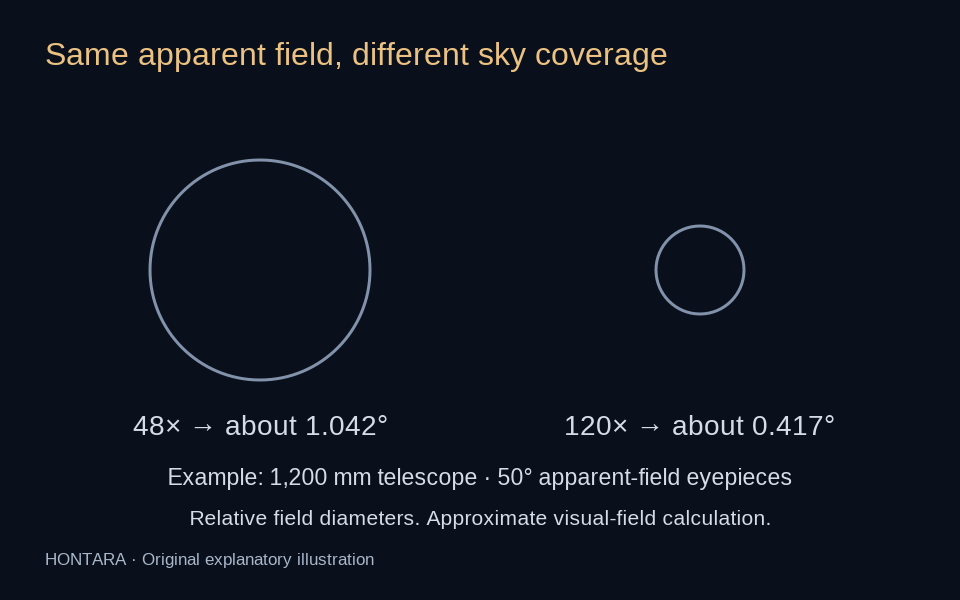
Know the true field of view in degrees. If your view is 6° across, the edge is only about 3° from its centre. Leave some overlap between successive views so a familiar star stays visible as you move.
A worked hop from Orion’s Belt to M42
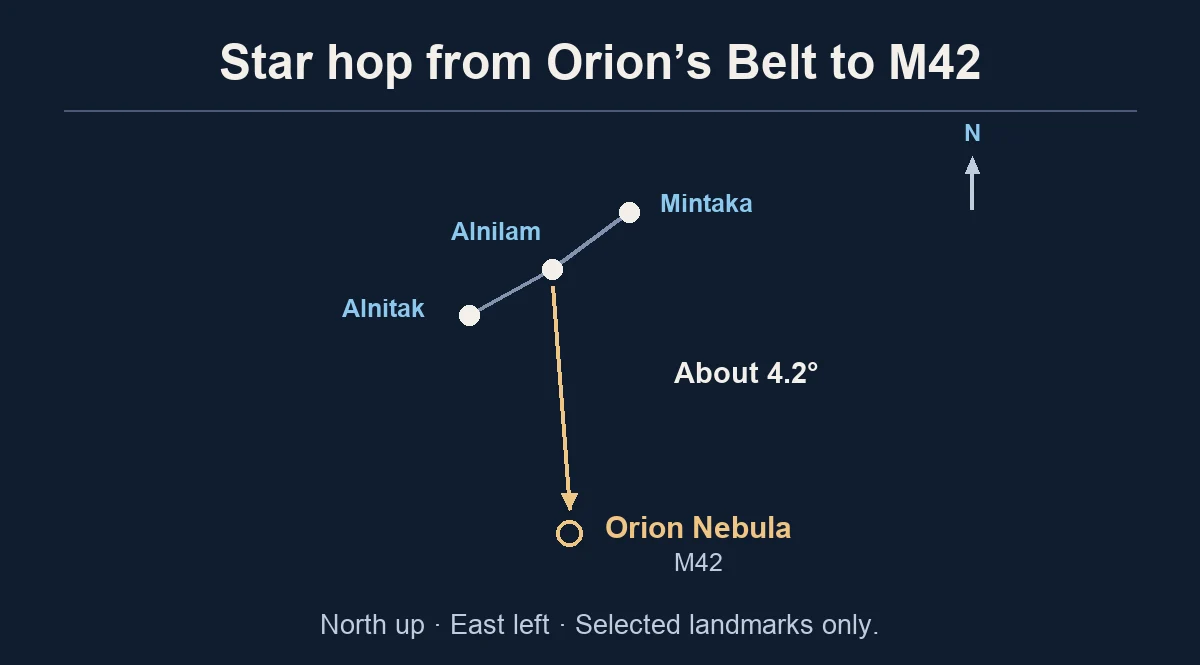
Start with the three Belt stars. Centre Alnilam, the middle star. On a north-up chart, the Orion Nebula sits about 4.2° toward the Sword, almost due south of Alnilam. The whole constellation rotates relative to the local horizon as the night goes on, so match the Belt’s tilt before moving.
In a 6° binocular field centred on Alnilam, the nebula lies just beyond the edge. Move toward the Sword by about half a field at first. Then centre the misty-looking patch in the Sword. A telescope with a narrow field is easier to aim with a wide finder or a low-power eyepiece first.
Under bright skies you may see a small patch of haze with stars embedded in it. Use the nearby pattern to confirm the location even if much of the nebula is hidden by skyglow.
Recover when the view does not match
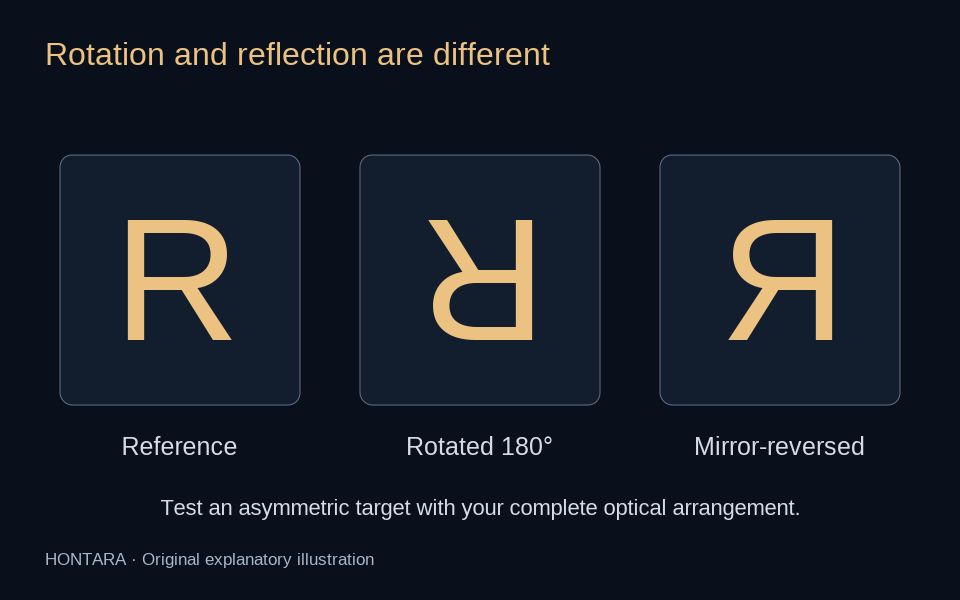
Return to your last known star or pattern. Check whether the finder rotates or mirrors the chart. If you can match one star but the surrounding triangle points the wrong way, turn the chart or use the matching orientation in your app. Start the move again with smaller steps.
Compare the pattern at low power before going closer. Once you identify the target, centre it and then switch to a higher-power eyepiece if you need more detail.