On this page
THE BIG IDEAS
- Mars changes brightness and apparent size as distances change.
- Good surface views are seasonal opportunities, not a nightly guarantee.
- Repeated star-field sketches can reveal motion without a telescope.
Begin with a colour comparison
Mars is often described as the red planet, but through the unaided eye its colour can look orange or warm yellow rather than vivid red. Its appearance depends on brightness, altitude and the observer. Compare it with nearby stars instead of deciding that any reddish point must be Mars.
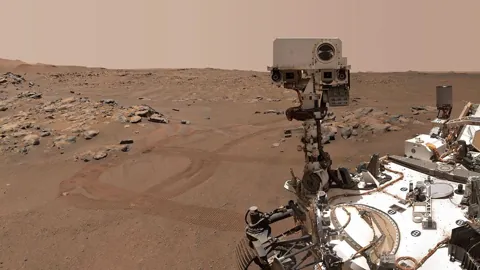
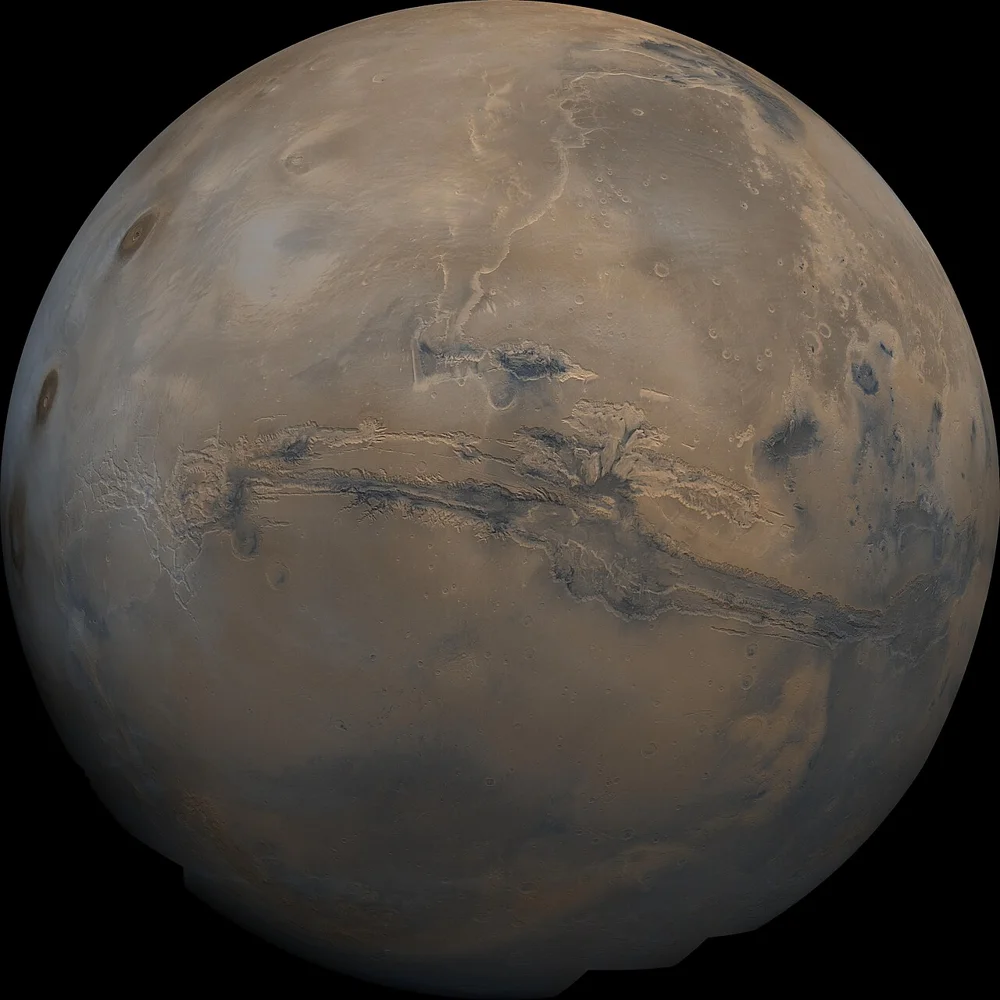
The warm colour is related to iron-rich surface material. A small telescope receives light from the whole visible disk and cannot reproduce the close-up detail recorded by orbiters and rovers.
Check the date rather than a fixed constellation
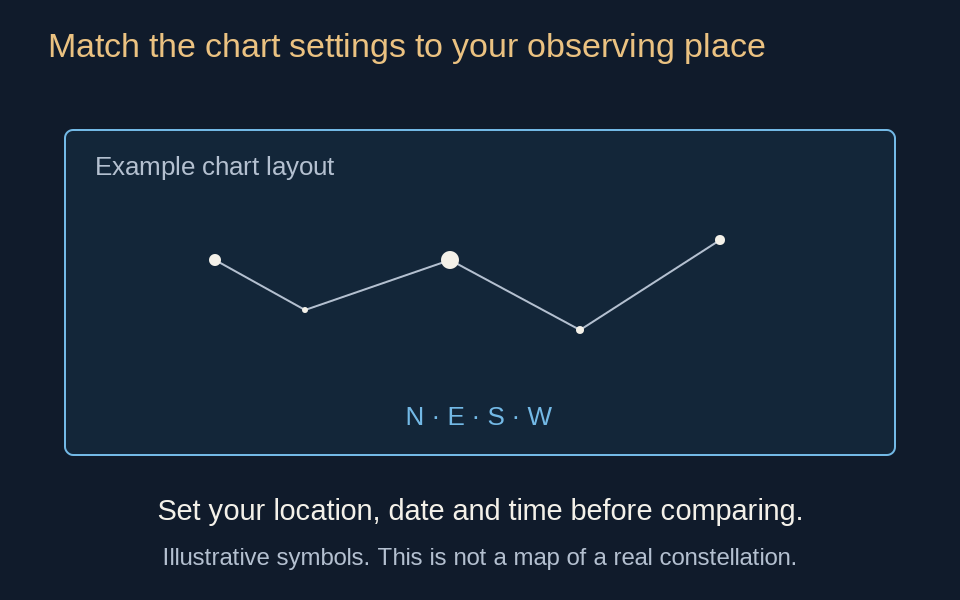
Mars moves noticeably among the background stars over weeks. Use a current sky chart set to your place, date and local time. Confirm its position from more than one nearby star. During some parts of its orbit it is poorly placed or close to the Sun in our sky.
Mars is easier to study through a telescope when it is relatively close to Earth. Useful observing periods occur around opposition, when Mars lies opposite the Sun in our sky. Because planetary orbits are elliptical, the distance at these encounters varies and closest approach need not fall on the exact opposition date. Check the apparent size and position for your chosen evening rather than expecting the same view every year.
Resolve a small disk
Find Mars at low magnification and focus carefully. A star remains effectively a point under typical amateur conditions, while Mars can show a tiny disk if its apparent size and the telescope allow. Increase power only when the image is steady. A large blurry patch contains less useful information than a small sharp disk.
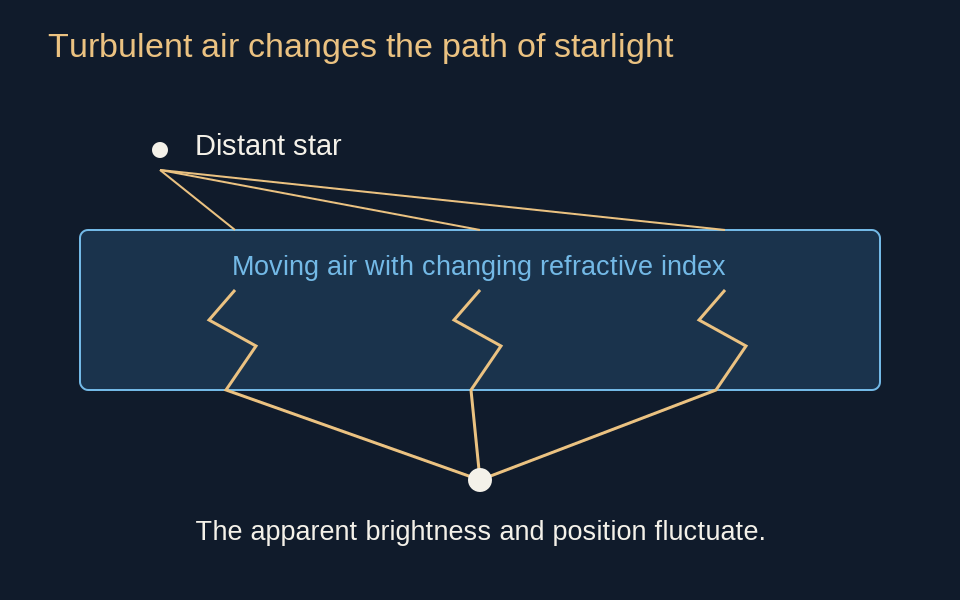
Let a telescope adjust to outdoor temperature before judging it. Avoid looking over sun-warmed surfaces. At low altitude, turbulent air and atmospheric colour effects can overwhelm the subtle markings you hoped to see.
Treat surface features as optional
During favourable conditions, an experienced observer may recognise a polar cap or broad dark markings. These are difficult beginner observations and may not be visible in a small instrument at the time you look. Dust in the Martian atmosphere can also change the appearance.
Record uncertainty honestly. Write “possible bright polar area” if that is what you saw, rather than naming a feature because a map says it should be there. Check maps only after making your first sketch to reduce expectation bias.
Track motion instead of detail
A useful project needs no telescope: draw Mars beside three identifiable stars on several clear nights. Record the times and keep the orientation similar. Its changing position demonstrates the difference between planets and the relatively fixed star patterns. If observations span a suitable period, the apparent path may curve or reverse, but you should check a current ephemeris rather than expect that effect every month.
PAUSE AND THINK
Why can Mars look disappointing through a telescope even when it is easy to see by eye?
Explore the answer
It may be far from Earth and have a very small apparent disk; atmospheric blur can then hide its subtle surface details.