On this page
THE BIG IDEAS
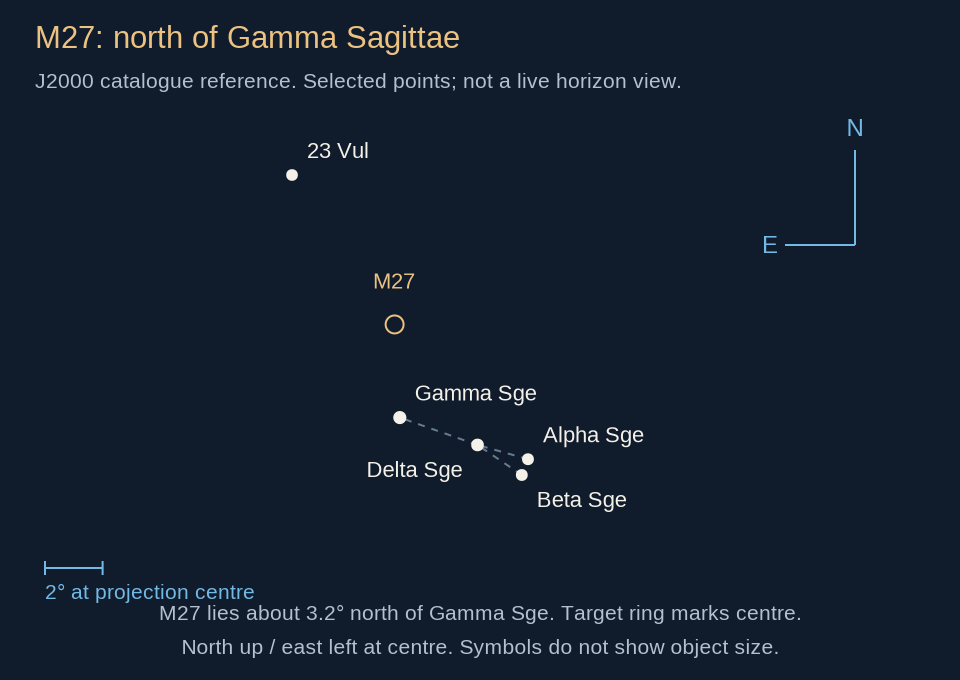
- M27 lies about 3.2° north of Gamma Sagittae.
- Its local upper-transit altitude is about 82°.
- Long-exposure structure need not match an eyepiece view.
Use Sagitta as the final signpost
M27 lies in Vulpecula near the small arrow-shaped constellation Sagitta. Locate the wider region between Altair and Albireo with a current local chart, then identify Sagitta's Alpha, Beta, Delta and Gamma stars. Gamma Sagittae is the useful final anchor, not a randomly chosen point in a rich Milky Way field.
From Gamma Sagittae the nebula lies about 3.2° almost due north. The finder also marks 23 Vulpeculae to give an additional regional check. This is a selected reference pattern rather than a complete field atlas. Prepare a detailed eyepiece chart if the crowded background makes the final identification uncertain.
Take advantage of its local height
M27 has declination about +22.7°, giving an upper-transit altitude near 82° from latitude 14.3° north. Evenings roughly July through November can provide useful opportunities, with the exact hour varying across the season. Check the actual date and local obstructions instead of assuming it is always near overhead.
A low-power telescope can reveal an extended pale patch under suitable conditions. Moonlight, haze and local lighting may hide its fainter outskirts while leaving the anchor stars visible. A nearly overhead position can also make an instrument awkward to handle, so choose a comfortable interval as well as a favourable altitude.
Translate north into the instrument's view
The chart uses north up and east left at its tangent centre. It shows catalogue directions without a horizon or time. Rotate it to match a current sky map before beginning. The move north from Gamma Sagittae is a celestial direction and may point sideways or diagonally through the eyepiece.
Estimate how many of your true fields make 3.2° and use overlapping steps. Keep checking the surrounding pattern rather than jumping straight to a presumed patch. A marked target ring is a locating symbol, not a scale drawing of the glow or a guarantee that binoculars will reveal it.
Connect the glow with the science
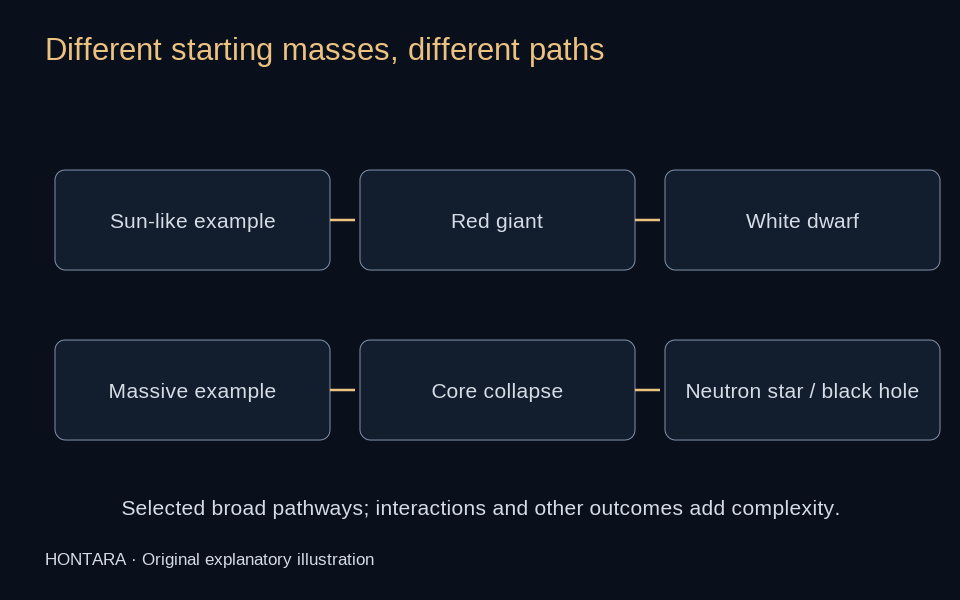
NASA describes M27 as a planetary nebula with integrated apparent magnitude about 7.5. An evolving star shed the gas that now glows around its remnant. The historical word planetary refers to a visual resemblance in early telescopes and does not mean the object is a planet or a planet-forming cloud.
The brighter lobes can suggest a dumbbell shape through suitable equipment. Long exposures reveal much fainter gas and processing can emphasise chemical or structural differences. Compare any published image with its caption before expecting its colour or full extent visually. Human vision and an accumulating camera exposure record light differently.
Make an observation that can be compared
Start with a field sketch and then describe the extended object's brightness distribution. Is it uniform, elongated or narrower through the middle? Repeat the look with direct and averted vision. Record only features that return reliably, leaving uncertain edges as tentative rather than drawing a remembered photograph.
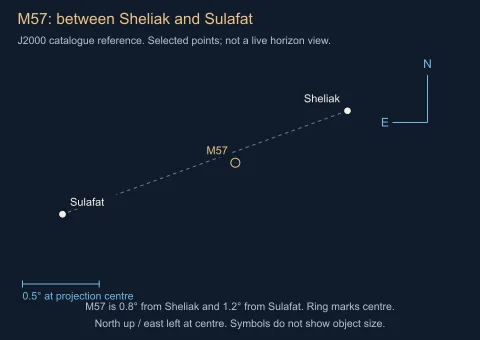
Add instrument, magnification, time and sky conditions. A later M57 comparison asks a useful question: how can two objects in the same broad class differ so much in apparent size and ease of identification? Keep angular appearance separate from physical size until distances and other measurements have been considered.
PAUSE AND THINK
What does planetary mean in planetary nebula?
Explore the answer
It is a historical name based on the rounded appearance of some examples in early telescopes. M27 is gas shed by an evolving star rather than a planet.