On this page
Plan a view near Honavar
- Height
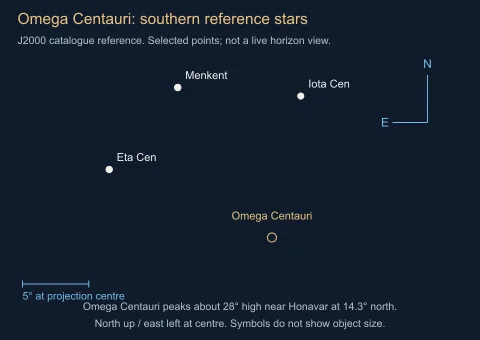
- The galaxy reaches about 33° above due south at its highest.
- When to try
- Try late April or May. An example near the highest point is 7 May 2027 at 11 pm IST.
- First look
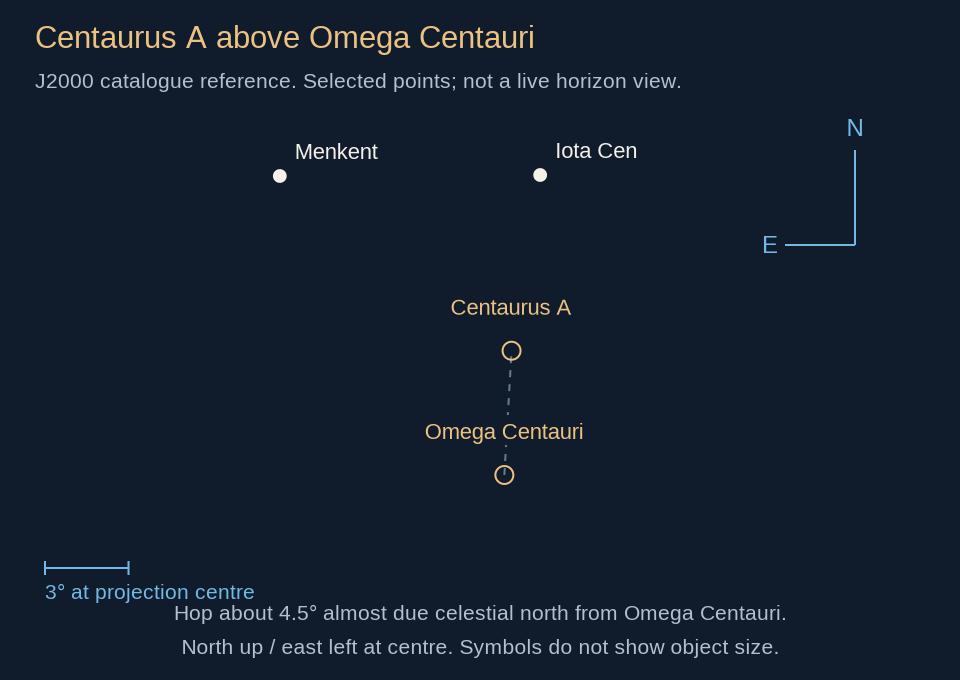
- Use a telescope at low power from a dark site. Start at Omega Centauri and hop 4.5° almost due celestial north.
Set your location and time in Stellarium Web, then search for NGC 5128. Check the Moon and your actual skyline. Record whether you could identify the target and what affected the view.
Start with the brighter landmark
Centaurus A is the galaxy NGC 5128. Omega Centauri is a globular cluster inside our own Milky Way. Their apparent positions are close enough for an observing hop, although the objects are at very different distances. Locate Omega Centauri in a wider field first. The galaxy is about 4.5° almost due celestial north of the cluster.
The chart also shows bright reference stars in Centaurus. Match their arrangement to a local chart and use separate overlapping fields if your eyepiece shows less than the full separation. Trace your route back to the cluster if the star field changes unexpectedly.
Choose conditions for a diffuse target
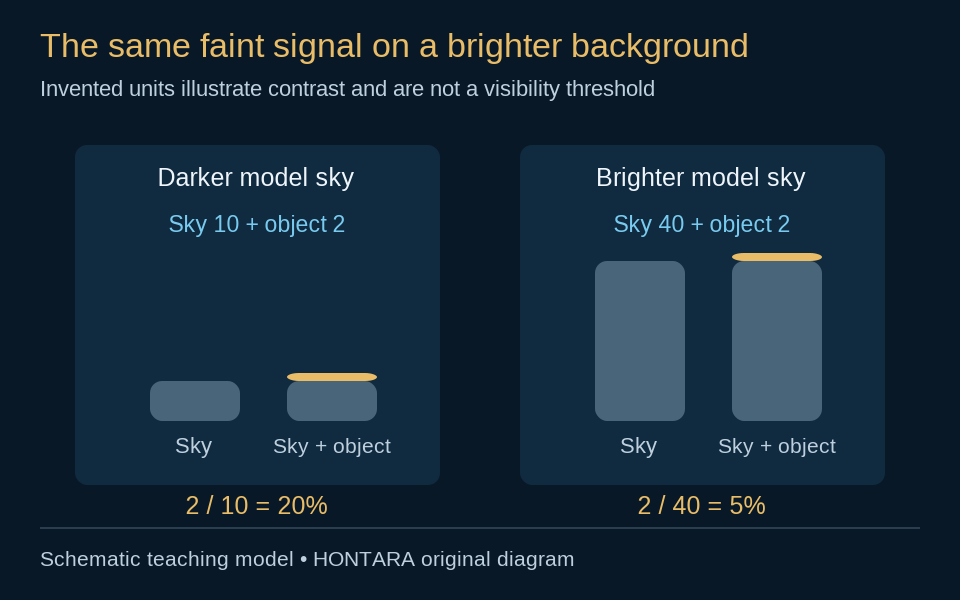
Centaurus A peaks near 33° high at Honavar. Start with a late April or May evening when a local chart places the galaxy close to the meridian in darkness. The extra altitude compared with Crux helps, but it cannot restore contrast lost to moonlight, thin cloud or a bright southern foreground.
Use a low-power telescope view to locate the field. In a good sky the galaxy can appear as a faint oval glow. Once you have a repeatable position, test a slightly higher power. The famous dust band might be difficult or absent in your view. Record the galaxy and band as separate detections.
Read the photograph as a separate measurement
Professional images show a dark band crossing the galaxy. The band contains dust that blocks visible light from behind it. Observations at other wavelengths probe material and processes that can be hard to infer from an eyepiece view alone. A real visual sighting may be a soft patch with an uncertain shape.
Compare the sky patch around the galaxy with the brighter cluster. In a telescope a globular cluster may show stars around its edges, whereas the galaxy usually stays diffuse in an amateur visual view. The seeing and aperture at your site constrain how useful that comparison is.
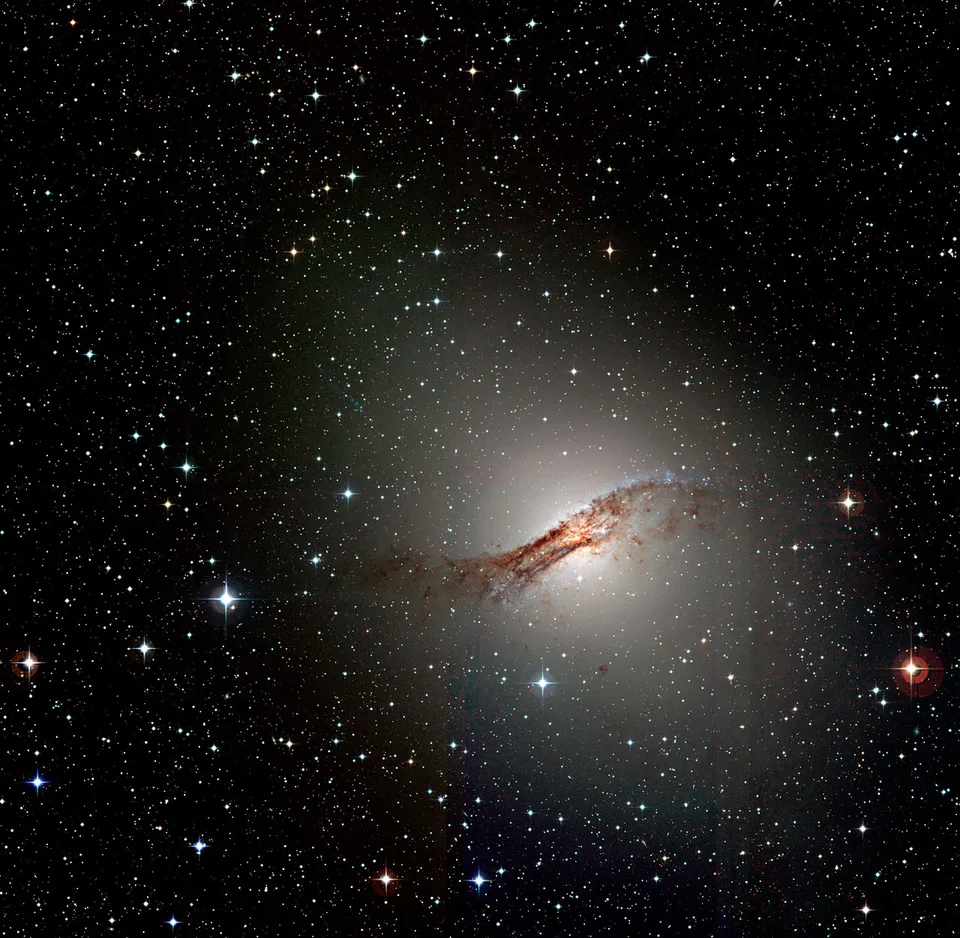
Draw a checkable comparison
Mark the relative positions of the targets and the celestial north direction on your sketch. Add the date, time, instruments and whether haze or glare was present. If you see the cluster but lose the galaxy, estimate the upper limit of what you could see in the field. No galaxy detection can still be a record of the sky conditions.
PAUSE AND THINK
Why might Omega Centauri remain visible when the galaxy is lost?
Explore the answer
Their light is distributed differently. A brighter concentration can stand out more easily than a faint extended glow under haze or glare.