On this page
THE BIG IDEAS
- M81 peaks only about 35° above the northern horizon locally.
- M82 is about 0.6° from M81.
- A bright central glow is more realistic than obvious spiral arms.
Choose a northern view with enough clearance
M81, often called Bode's Galaxy, lies in Ursa Major at declination about +69°. From latitude 14.3° north it reaches only about 35° above the northern horizon at upper transit. It is not circumpolar from this latitude. A northern object is therefore not automatically an easy high target in coastal Karnataka.
Choose a clear northern sector and observe near upper transit when practical. Evenings roughly February through May offer a useful seasonal window, depending on the hour. Check a current chart at the actual planned time. Haze and obstructions can spoil a low northern galaxy search even when overhead stars look clear.
Use the Great Bear as a broad anchor
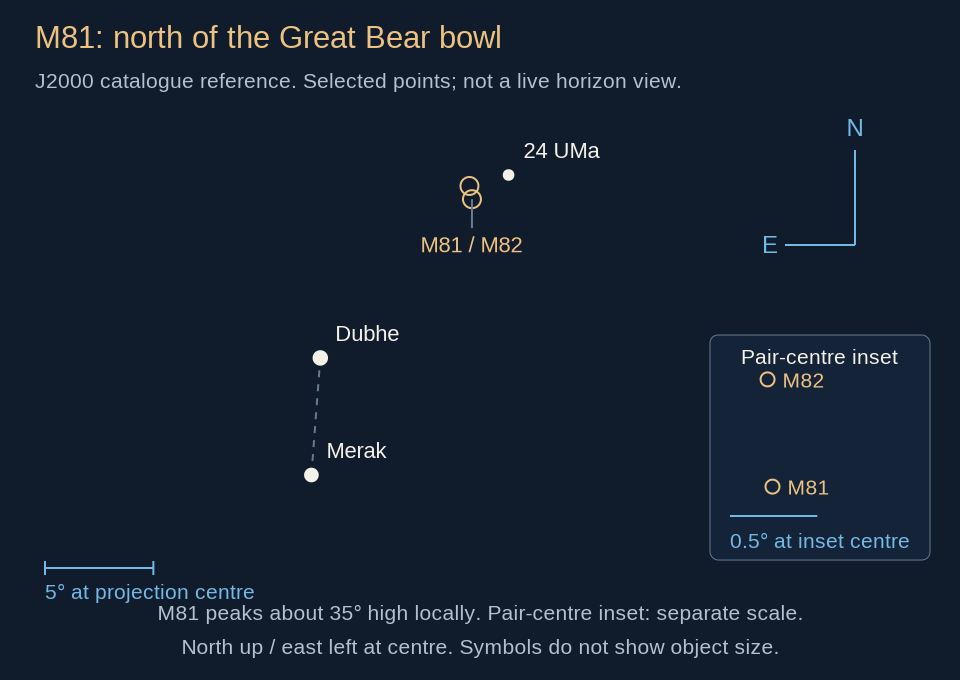
Identify Dubhe and Merak in the Great Bear's bowl. M81 lies roughly 10° northwest of Dubhe, so this is a broad regional step rather than a single telescope field. The finder plots the two bowl stars, M81, M82 and 24 Ursae Majoris as selected reference points.
Use a detailed star atlas or current planetarium for intermediate fainter stars. Do not treat an imaginary extended bowl diagonal as proof of a galaxy identification. The chart has north up and east left at the tangent centre. Rotate it against the local sky and account for the telescope's optical orientation.
Confirm the compact galaxy pair
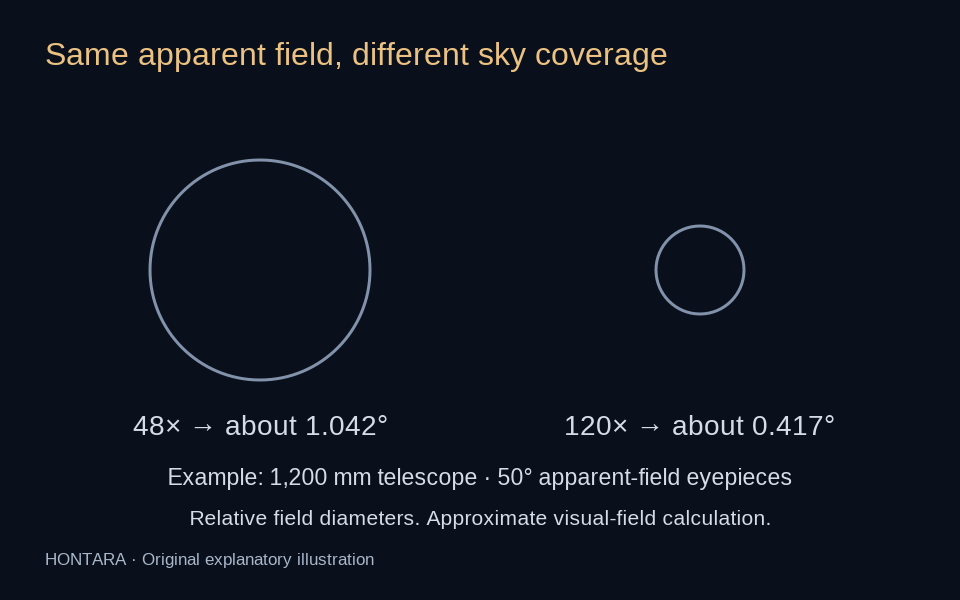
M82 lies about 0.6° from M81, mostly northward. A suitable low-power field can contain both, but many eyepiece combinations cannot. Check the true field rather than assuming the pair always fits. The inset in the finder separates their catalogue centres at its own scale and does not reproduce either galaxy's size.
The nearby star 24 Ursae Majoris provides another regional anchor, though it is several degrees away. Match the position of a candidate against multiple surrounding points. A faint smudge caused by poor focus or a dirty optical surface will not behave like a sky object when you move and refocus.
Expect a bright core before spiral arms
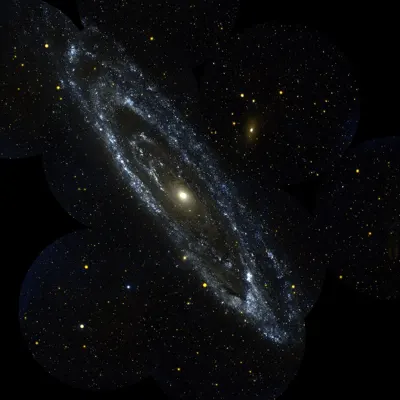
NASA lists M81 as a spiral galaxy around 11.6 million light-years away with integrated apparent magnitude about 6.9. Its light is spread over an extended area. Under suitable conditions a small telescope may show a concentrated centre with faint surrounding glow, while spiral structure is a much more demanding task.
A long-exposure image makes the arms conspicuous by accumulating faint light. That appearance should not be copied into a beginner sketch. Start with a low-power view and compare direct with averted vision. Extra magnification may help distinguish shape while also making the diffuse outer light harder to notice.
Make the comparison meaningful
If both galaxies are detected, sketch their relative positions and compare apparent elongation and central concentration. Do not assign details to M82 merely because its nickname suggests a cigar. Record the shapes you actually see and preserve uncertainty if only one patch is secure.
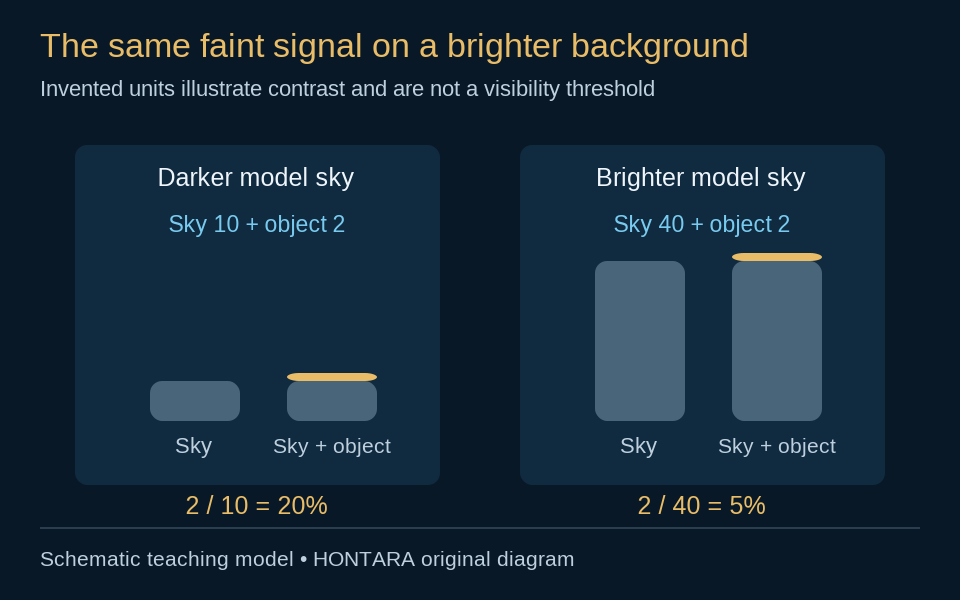
Include date, time, equipment, Moon conditions and any northern haze. Repeating the task near transit on a darker night can test whether the first limitation was contrast. M81 is a useful lesson in why integrated magnitude, altitude and surface brightness must be considered together when choosing an attainable galaxy target.
PAUSE AND THINK
Why does M81 need a good northern view from 14.3° north?
Explore the answer
Its far-northern declination limits its upper-transit altitude to about 35°. It can remain vulnerable to obstruction and haze despite being a northern constellation target.