On this page
THE BIG IDEAS
- Measure shadows without looking at the Sun.
- Keep the object and recording surface stationary.
- Clock noon and the shortest local shadow are not always simultaneous.
Observe the ground, not the Sun
A shadow can reveal changes in the Sun’s apparent direction while your attention stays on the ground. Never look directly at the Sun and never use binoculars, a telescope or a camera viewfinder to find it. Arrange several short visits during daylight with an adult, avoiding excessive heat and unsafe surfaces.
Choose a stable marker
Use a short upright cardboard strip fixed firmly in clay on a large sheet of paper, plus a ruler, pencil and clock. Set it on a flat surface where it will remain undisturbed. An existing straight post can also work if its base and shadow are safely accessible. Record the date and mark the base so you can detect any movement.
Take consistent measurements
- 1. Trace the base of the marker and label the page orientation using a familiar building or other fixed landmark.
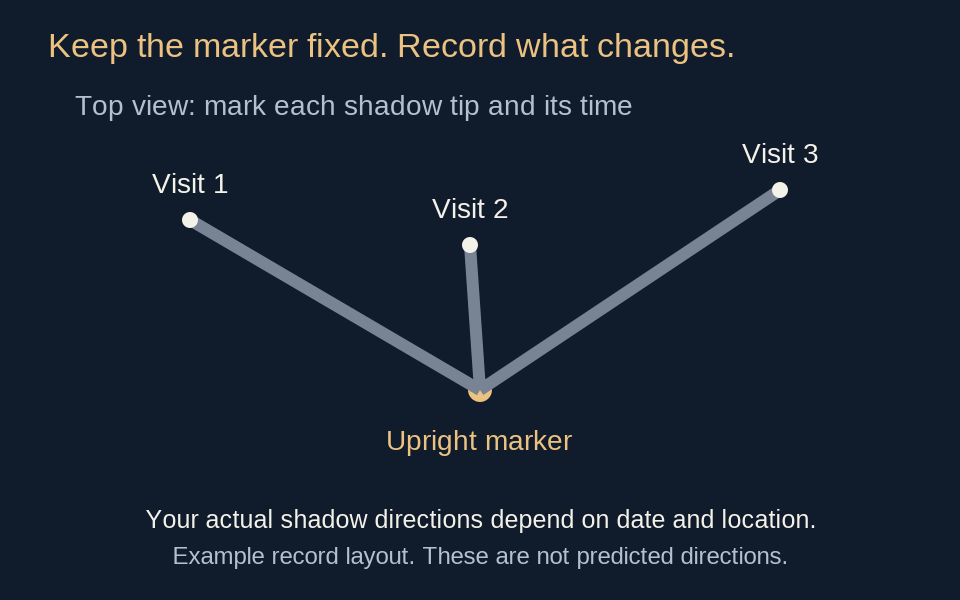
- 2. Mark the tip of its shadow, write the time and measure the straight distance from base to tip.
- 3. Return after about an hour and make a new mark without moving the paper or marker.
- 4. Repeat at three or more times across the day. Record cloud cover when the shadow is faint or absent.
- 5. Join successive tip marks lightly and create a table of time and shadow length.
Read the changing geometry
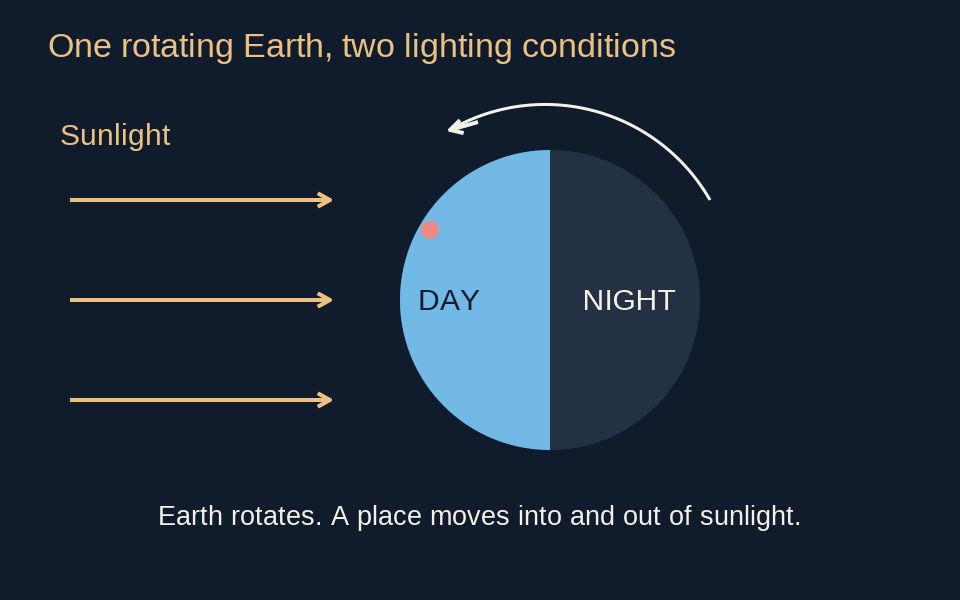
As Earth rotates, the Sun’s apparent position changes. The direction of a shadow is opposite the incoming horizontal direction of sunlight. When the Sun is higher in the sky, an upright object generally makes a shorter shadow; when it is lower, the shadow is longer.
The shortest shadow you sample need not occur at 12:00 on your clock. Civil time, longitude and the date affect the relationship between clock noon and local solar noon. In tropical locations such as coastal Karnataka, do not assume that the midday Sun and shadow always occupy the same north-south arrangement throughout the year.
Make a claim your data support
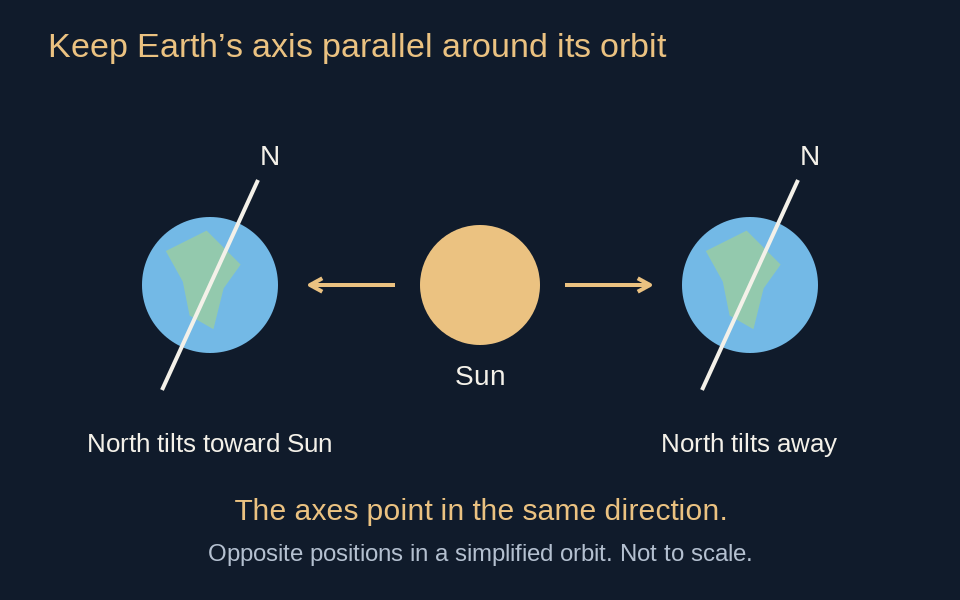
Write a sentence such as our marker’s shadow shortened between these two measured times. That is stronger than claiming every shadow always follows the same schedule. If wind shifted the marker, mark affected readings as unreliable. Repeat on a different date only if you can reproduce the setup, then discuss why both daily rotation and annual geometry may influence the new pattern.
PAUSE AND THINK
Why is moving the paper between readings a problem?
Explore the answer
It changes the reference position and direction. A shift in the drawing could then come from the paper rather than from the shadow.
RECORD YOUR OWN EVIDENCE
Your activity sheet
You need: Fixed upright marker, ruler, pencil and a safe ground-level space. Adult supervision.
Measure the same marker’s shadow without looking at the Sun.
Name or group: Date:
| Time (IST) | Length (cm) | Shadow direction | Conditions |
|---|---|---|---|
What changed during the day? Refer to your measurements.
Why does this record not prove that shortest shadow always occurs at 12:00?
Record what happened, including uncertain results. Use the answer guidance in this resource to discuss your explanation.