TRY IT YOURSELF
Astronomy unit converter
149,597,870.7 km = 1 AU. Choose units within the same group.
On this page
THE BIG IDEAS
- Distance and angle are different kinds of quantity.
- Unit conversion preserves a quantity rather than adding accuracy.
- A light-year and parsec are both distance units.
Choose a quantity before a unit
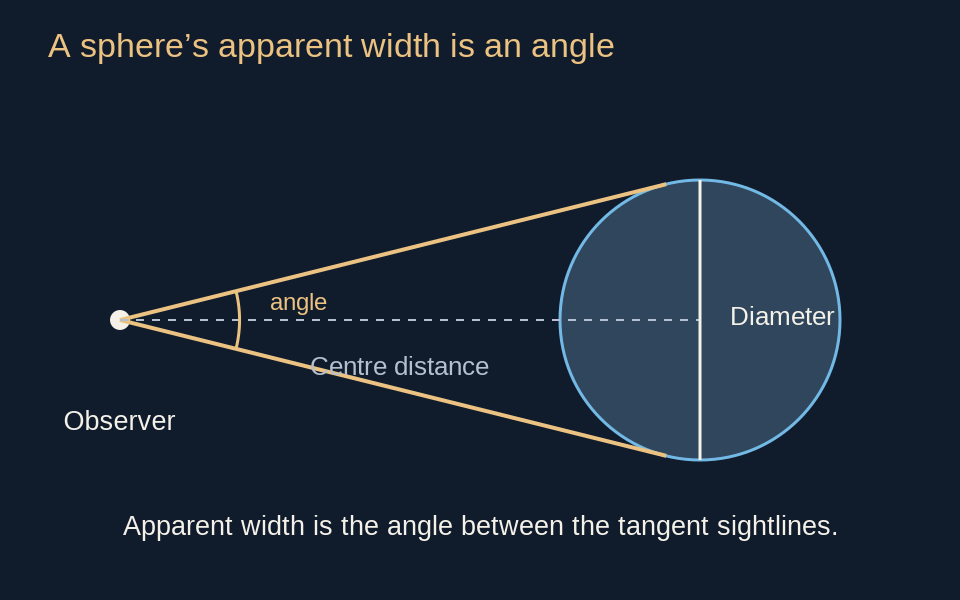
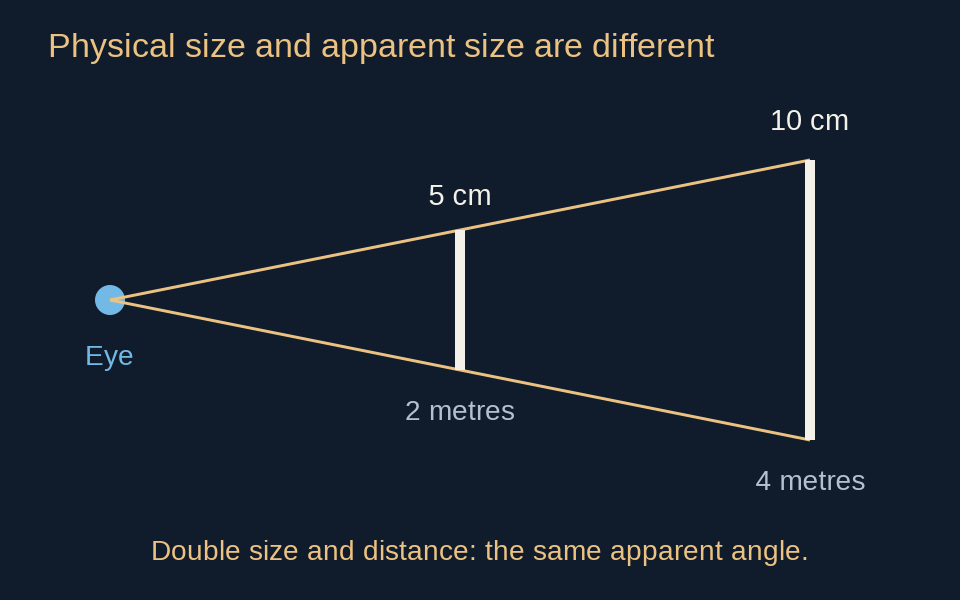
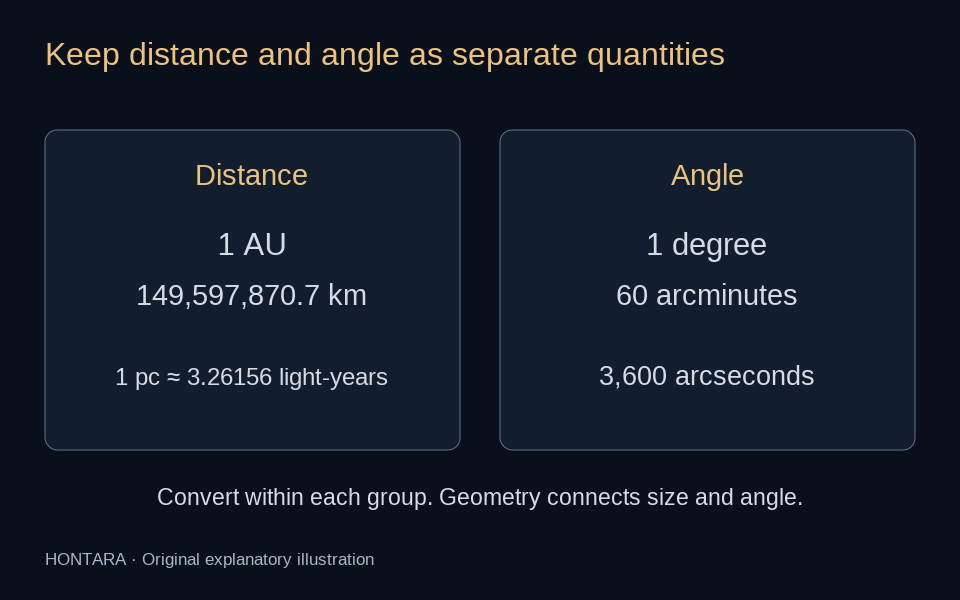
A distance describes physical separation. An angle describes a direction difference or apparent width. This tool converts within either group, but it cannot turn kilometres into degrees without additional geometry and distance information.
The distance choices are kilometres, astronomical units, light-years and parsecs. The angular choices are degrees, arcminutes, arcseconds and radians. Select the input and output units from the same group. Signed angles are allowed; a distance must be zero or positive.
Check familiar reference values
One astronomical unit is exactly 149,597,870.7 km. Enter that number in kilometres and choose astronomical units as the output: the result is 1 AU. A light-year is the distance light travels in a Julian year of 365.25 days, using the exact vacuum light speed.
The parsec conversion uses exactly 648,000 divided by pi astronomical units. A parsec is approximately 3.26156 light-years. The constants define the conversions; the number of decimal places in an actual measured astronomical distance depends on the observation.
Try an angular example
A full circle is 360 degrees. One degree equals 60 arcminutes and each arcminute equals 60 arcseconds. Enter 0.5 degrees to get 30 arcminutes or 1,800 arcseconds. This is a useful scale comparison for an illustrative lunar width, not a prediction of the Moon’s exact size tonight.
Radians describe the same angle with another unit. Pi radians equals 180 degrees. As a check, convert pi radians to degrees, then convert that answer back. Small differences in the final displayed decimals are rounding rather than a changed direction.
Keep your measurement honest
Write the original value and unit before converting. Round only the final reported result to a precision supported by the input. Changing units does not improve an uncertain measurement. Scientific notation is used when an ordinary decimal display would hide a tiny positive value.
For a short exercise, compare 2 AU with 300 million kilometres. The exact conversion of 2 AU is 299,195,741.4 km, so 300 million is a convenient rounded comparison. Explain why those two statements can both be useful without treating them as numerically identical.
PAUSE AND THINK
How many arcseconds are in 2.5 arcminutes?
Explore the answer
2.5 × 60 = 150 arcseconds. There is no physical-distance information in that answer.