On this page
THE BIG IDEAS
- Plan a comfortable route and an achievable target.
- Give visitors one clear task and time to find the view.
- Reference photographs and actual eyepiece views are different.
Plan one achievable view
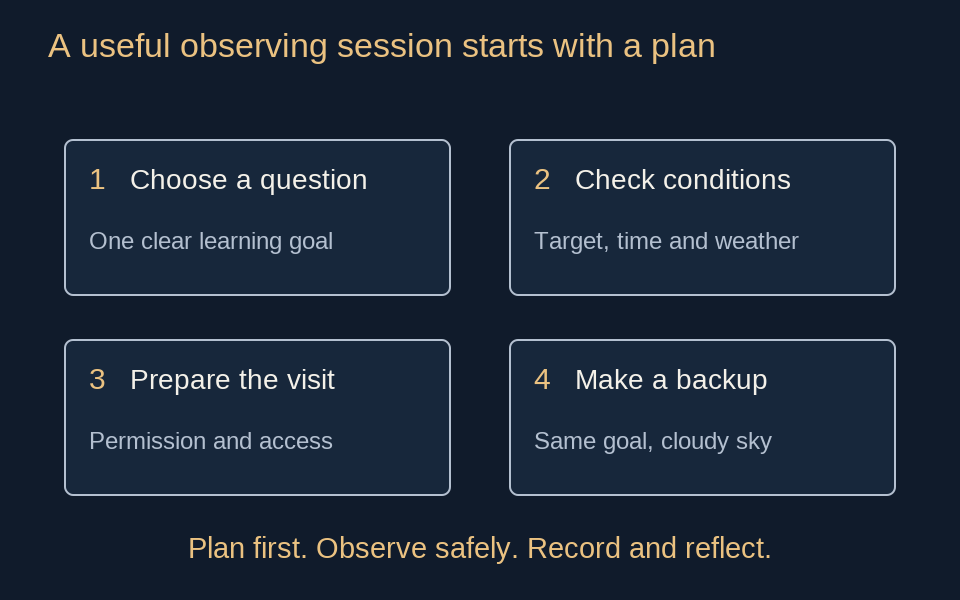
Choose a night-time target that the available telescope can show clearly and that remains well above local obstructions during the session. A small group looking carefully at one lunar feature can learn more than a hurried sequence of difficult targets. Prepare a short explanation and a weather alternative in advance.
Confirm access and permission for the site. Check the walking route, stable observing surface and the needs of visitors who may find standing or reaching difficult. Place the eyepiece at a comfortable height where possible and offer a suitable stable seat. Ask visitors what helps them rather than making assumptions about their needs.
Give the queue something useful to do
Separate the telescope operator from the person welcoming the next observer when enough helpers are available. Keep waiting people away from the mount and allow space for an observer to step back safely. Explain which part can be touched and which controls should be left to the operator.
While people wait, use a large target picture or simple sketch to explain what they are about to look for. Identify it as a reference image, since a processed spacecraft photograph differs from an eyepiece view. Offer one question, such as finding the boundary between lunar daylight and darkness, rather than a list of details to memorise.
Help the observer find the image
Before every turn, confirm that the target is centred and in focus. Describe where to place the eye without pressing it against the eyepiece. Let the visitor say whether they see a bright circle, a partial view or nothing. Adjust the eye position or focus patiently rather than treating difficulty as a failure.
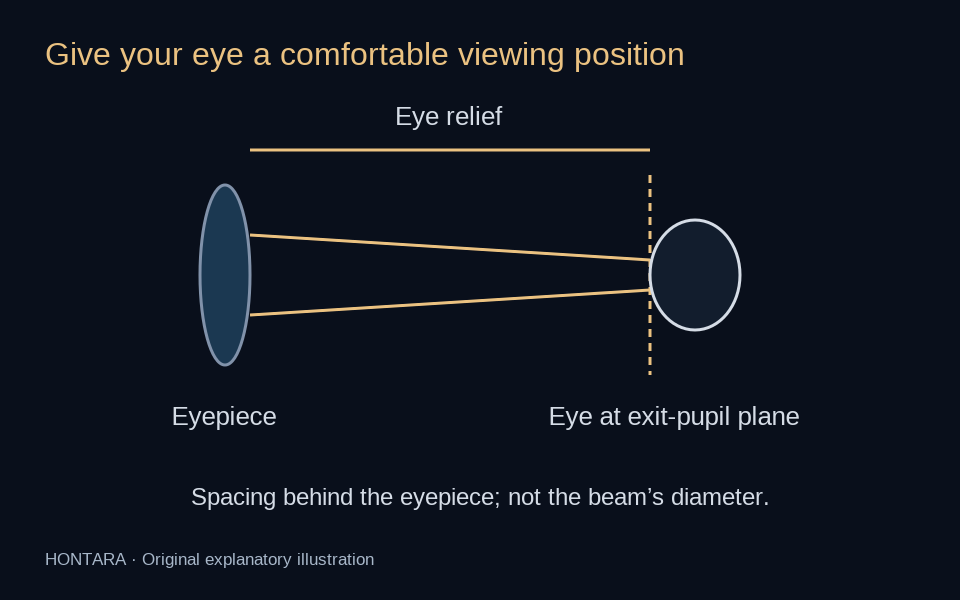
Ask what they notice before naming every feature. Neutral prompts leave room for an unexpected observation or an honest no. Visitors with glasses may have different eye-relief needs. Do not insist that everyone remove their glasses; discuss comfort and the actual eyepiece while keeping the instrument steady.
Make the handover repeatable
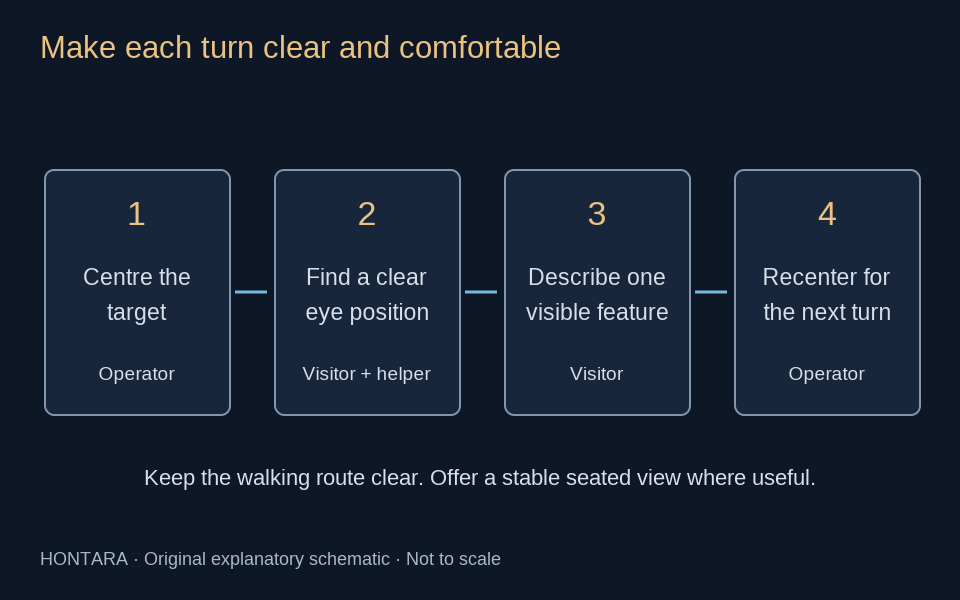
Use a simple sequence: centre the target, explain eye placement, give quiet viewing time, ask one question and recenter before the next turn. Estimate the number of turns that fits your actual time instead of promising an unlimited queue. A second educator can demonstrate the same idea with a diagram when clouds interrupt.
Invite a short anonymous comment or drawing if appropriate and voluntary. Keep a simple record of the activity, conditions and questions that visitors asked so you can improve the next session. For a visit to HONTARA, check current programme availability with the Foundation before arranging travel.
PAUSE AND THINK
Why should the operator check the target between visitors?
Explore the answer
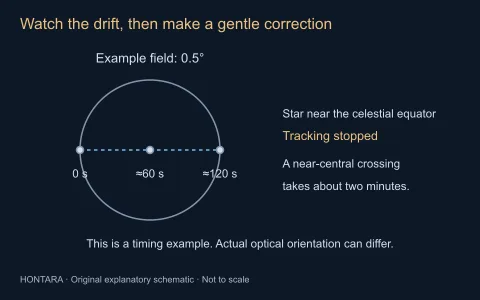
A target can drift while the next observer approaches or the mount can be disturbed. Recentring gives the next person a fair chance to find the view.