On this page
THE BIG IDEAS
- Use the intended movement controls and begin at low power.
- Observe drift before deciding how to correct it.
- A field-crossing estimate depends on declination and the path through the field.
Start with a wide field
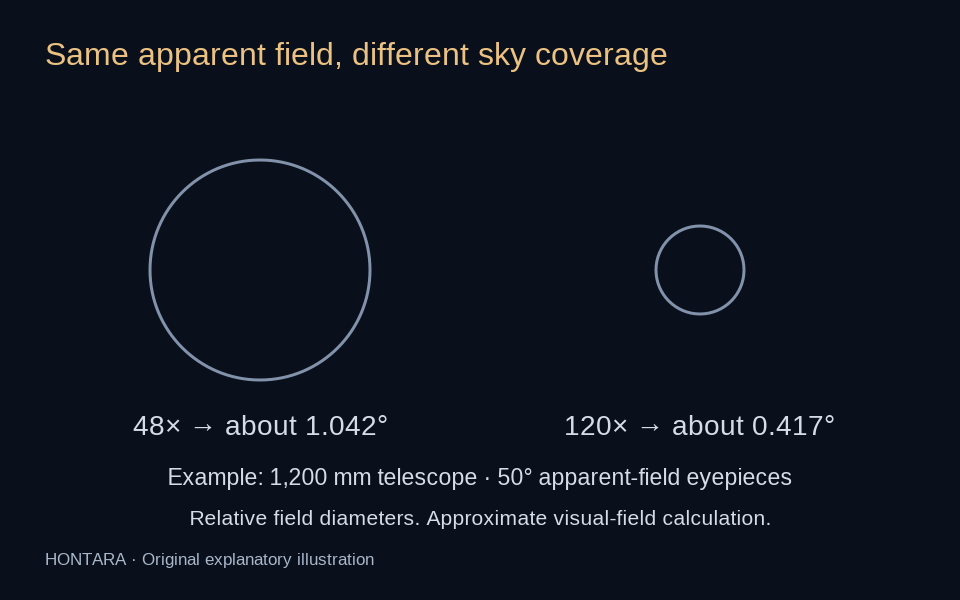
Choose an easily identified night-time target and begin with a low-power eyepiece. A wider true field gives you time to understand the apparent movement. Centre and focus the target before changing anything else. Have an experienced observer supervise if you have not used the instrument before.
Use the manufacturer’s intended handles or slow-motion controls. Do not loosen a clamp without understanding what it releases. Keep the tripod or base clear of bags and cables so that a small adjustment does not become a bump. A comfortable seated position can make gentle movements easier.
Let the sky show its drift
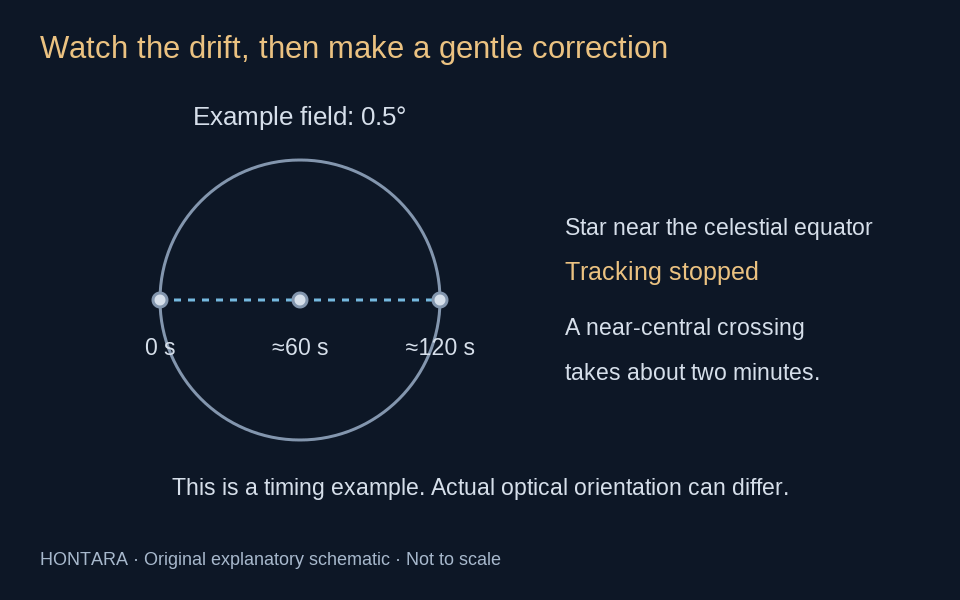
Stop adjusting for a short period and watch which way the target moves through the field. That apparent drift is caused mainly by Earth’s rotation. It identifies the westward direction in the actual optical view, even when mirrors or a diagonal rotate or reverse the image.
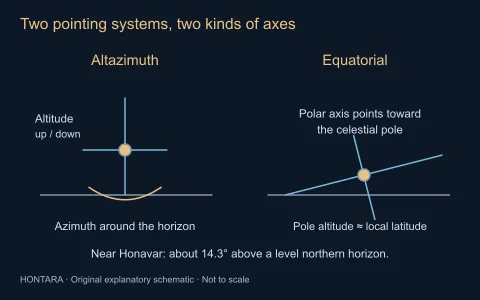
An altazimuth base generally needs small movements in both altitude and azimuth. A suitably polar-aligned equatorial mount follows stellar daily motion mainly with its right-ascension control. Work with the complete instrument in front of you; turning a control clockwise does not have one universal effect in every telescope view.
Estimate how much time you have
For a star near the celestial equator, a 0.5-degree true field takes roughly two minutes to cross along its diameter when tracking is stopped. The estimate comes from about 15 degrees of hour angle per hour. A star farther from the celestial equator crosses more slowly in angular distance.
This is a planning example, not a measured performance specification. A path missing the field centre is shorter than a diameter. Eyepiece distortion and uncertainty in true field also affect a timing exercise. Start the stopwatch at a clearly chosen boundary and describe the path before interpreting the result.
Use a short repeatable practice
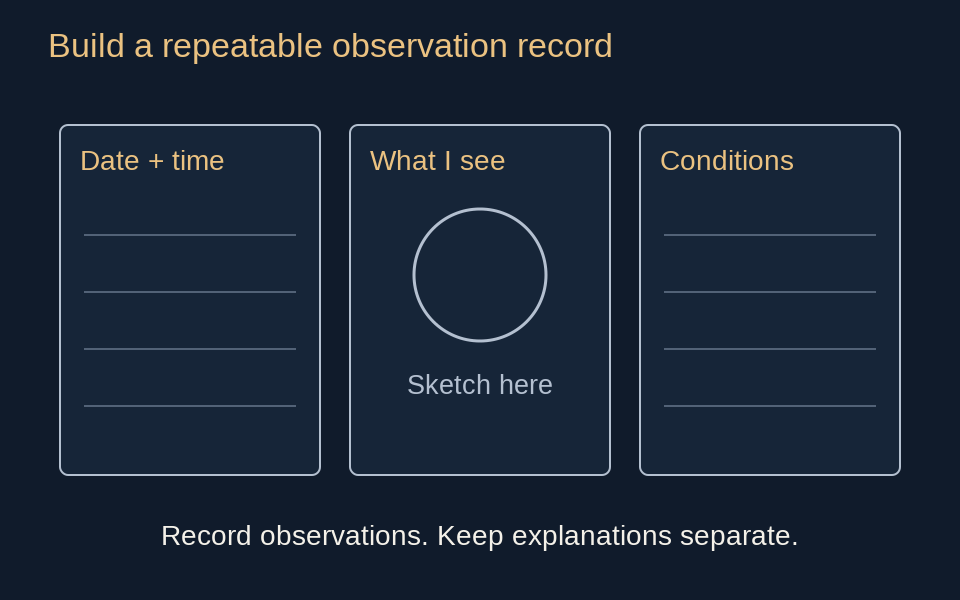
For a three-minute exercise, centre the target, watch its drift, then make one small correction and release the instrument. Wait for vibration to settle before deciding whether another correction is needed. Record the eyepiece, approximate magnification and whether you could keep the target comfortably inside the middle half.
Repeat at a modestly higher magnification only after the first attempt is controlled. A narrower field gives less recovery time. If you lose the target, return to the wider view and use the finder again. Tracking is a learnable skill and an honest record of losing the target is useful evidence.
PAUSE AND THINK
Why is a wider field helpful while learning manual tracking?
Explore the answer
It provides more time to recognise the drift and make a gentle correction before the target leaves the view.