On this page
THE BIG IDEAS
- Target and comparison-star identification come before estimation.
- Keep chart identity, references and time convention with the record.
- An isolated visual difference does not establish intrinsic variability.
Choose a target that fits the method
A variable star changes its brightness over time, but a useful observation begins with an unambiguous identification. Choose a suitable target using AAVSO guidance and obtain a current comparison chart. Its brightness range, field and rate of change should suit the observer’s equipment and available timing.
Do not treat every difference in how bright a star seems as intrinsic variability. Atmosphere, sky background, adaptation and comparison method can change the impression. The purpose of a comparison sequence is to attach the estimate to reference information that another observer can understand.
Preserve the chart and comparison identities
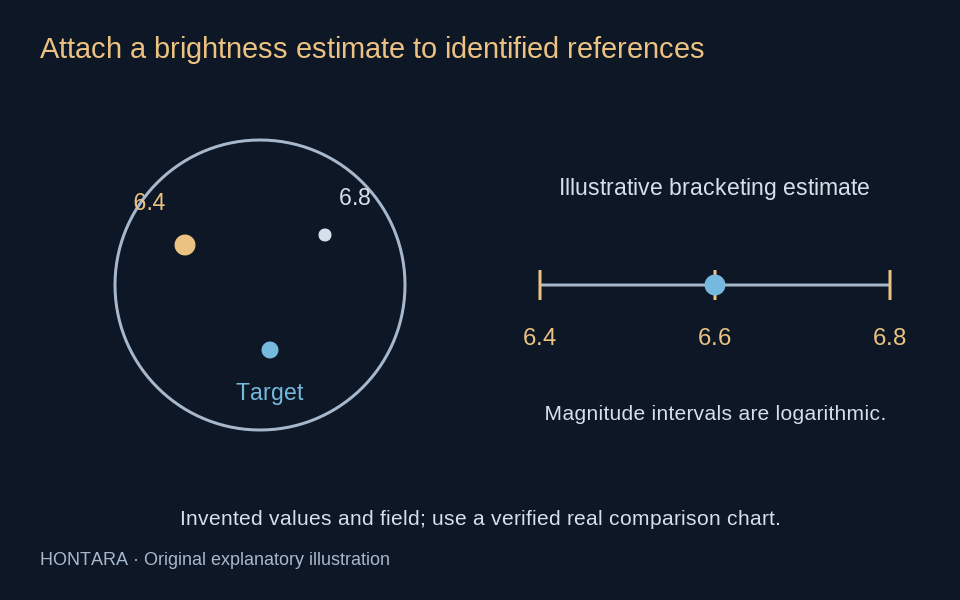
Use the chart’s labels and magnitude convention rather than guessing comparison values from a decorative star map. Record the chart identifier and the specific reference stars used. AAVSO charts commonly omit the decimal point from labels, so a label such as 65 can represent magnitude 6.5 under the chart convention.
Confirm the convention in the chart documentation before using it. A plotted dot size is not an independent brightness measurement. Some field stars may themselves be unsuitable comparisons and an attractive nearby star is not automatically part of a reliable reference sequence.
Bracket a visual estimate
Compare the variable with one suitable star judged brighter and another judged fainter. Keep the same viewing technique when comparing them. Observe in short repeated looks rather than allowing an expected published value to steer the estimate.
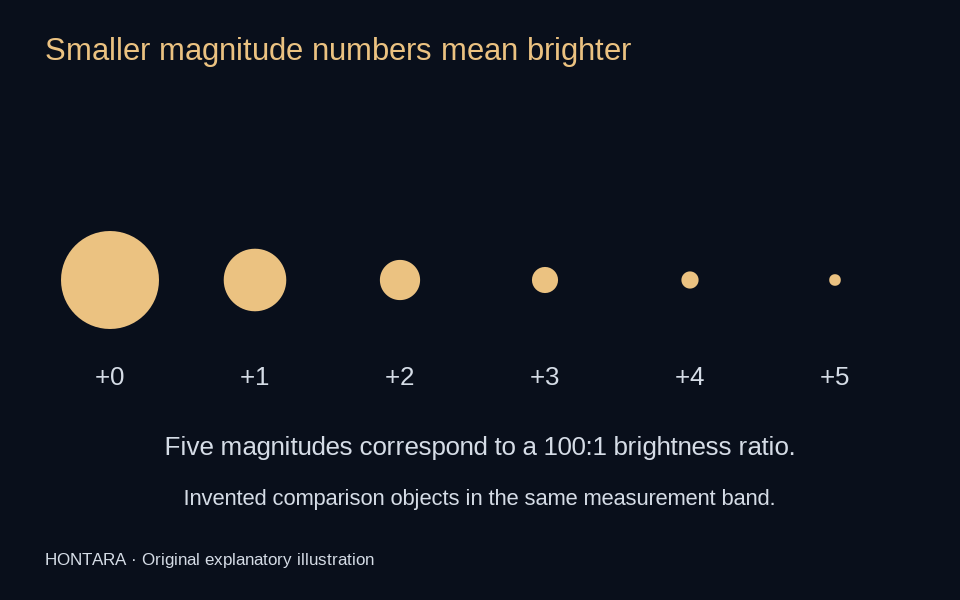
For a fictional exercise, references at 6.4 and 6.8 bracket the target. If it appears roughly midway in the magnitude interval, 6.6 is a model estimate. This is not a calibrated real observation and equal steps in magnitude do not mean equal linear steps in received light.
Record the conditions and uncertainty
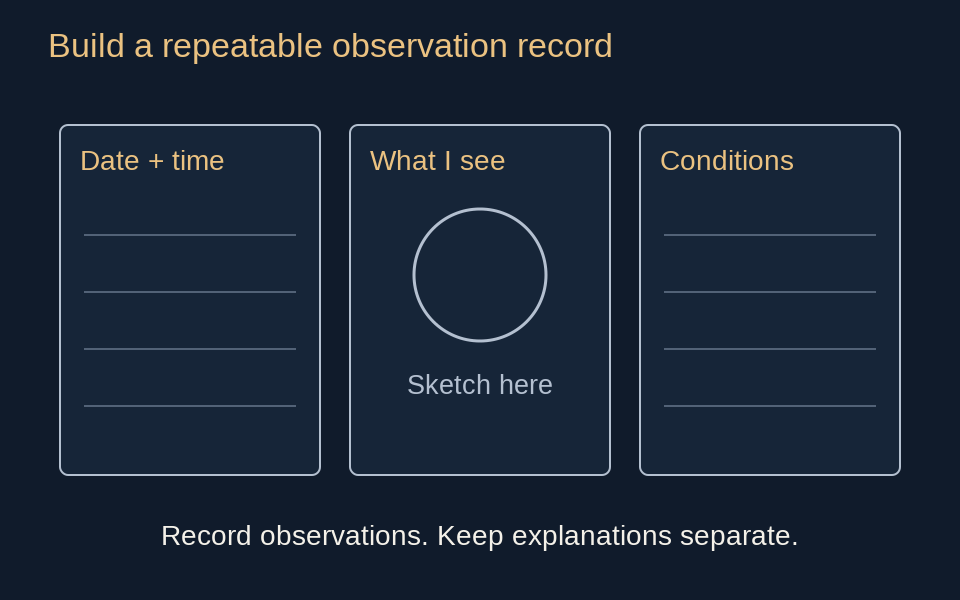
Write the date, time system, target identity, chart, comparison stars and estimate. Include equipment and any conditions affecting confidence. Do not report more decimal places than the method supports. A visual estimate should not be silently relabelled as a precision detector measurement.
If the target is uncertain or below a detection threshold, preserve that status using the reporting guidance for the chosen programme. A limit and a positive estimate are different kinds of evidence. Do not substitute an expected catalogue brightness simply to avoid an empty-looking record.
Look for change through comparable records
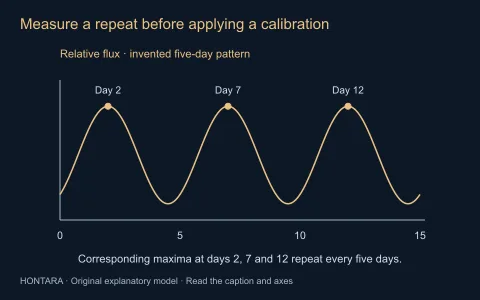
Compare estimates only after checking that the fields, references and methods are compatible. A claimed small change may be comparable to observational uncertainty or a difference between observers. Repeated independent records provide a stronger basis for interpreting a light curve than one isolated impression.
Before submitting to a scientific programme, read its current instructions and quality requirements. A useful educational record can remain private while a beginner practises identification and comparison. The important skill is to document exactly what supports the estimate and which limitations would matter in a later variability claim.
PAUSE AND THINK
If a comparison chart uses 65 for a magnitude label, should it be read as magnitude sixty-five?
Explore the answer
No. Under the usual AAVSO chart convention it represents 6.5. Always check the chart’s own labelling instructions and record the actual reference identity.