On this page
THE BIG IDEAS
- Plan several meaningful routes into the same learning question.
- Check access with the actual route and equipment arrangement.
- Ask about useful arrangements rather than assuming individual needs.
Define participation beyond one eyepiece
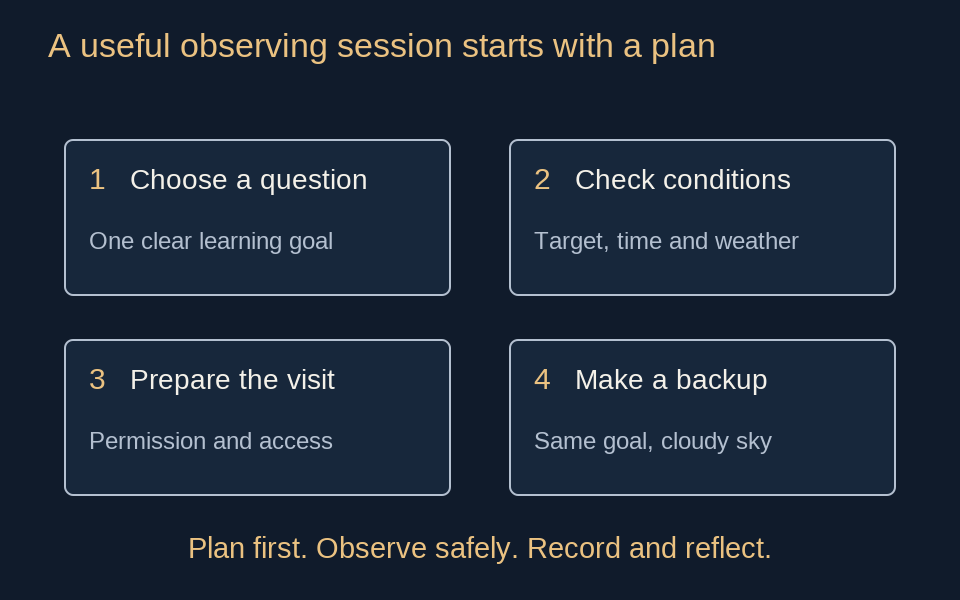
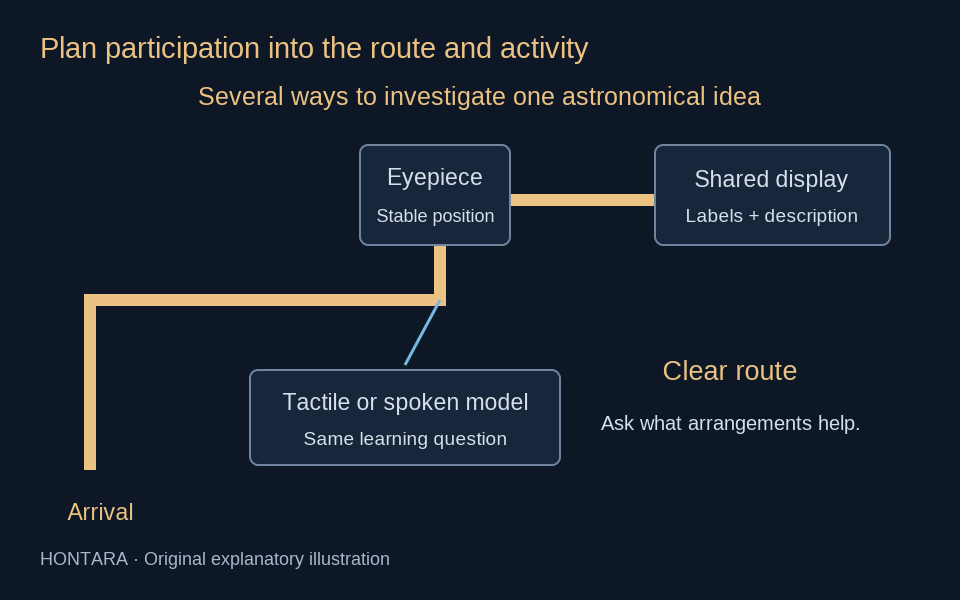
An observing session can involve identifying a field, discussing a light path, comparing a shared image, making a tactile model or describing a measured pattern. Looking through one telescope is one route into astronomy, not the only meaningful contribution. Start with a learning question that can be explored through several forms of participation.
Ask participants which arrangements would help them use the session comfortably. Focus on practical requirements rather than requesting diagnoses or assuming that one adaptation suits everyone with a broad disability label. Confirm what can actually be provided before presenting an access feature as available.
Check the route and observing position
Inspect the arrival route, surface, lighting and space around equipment. Consider how a seated observer, a person using a mobility aid or someone needing assistance will reach and leave the station. A clear path should remain clear after bags, cables and a queue are added.
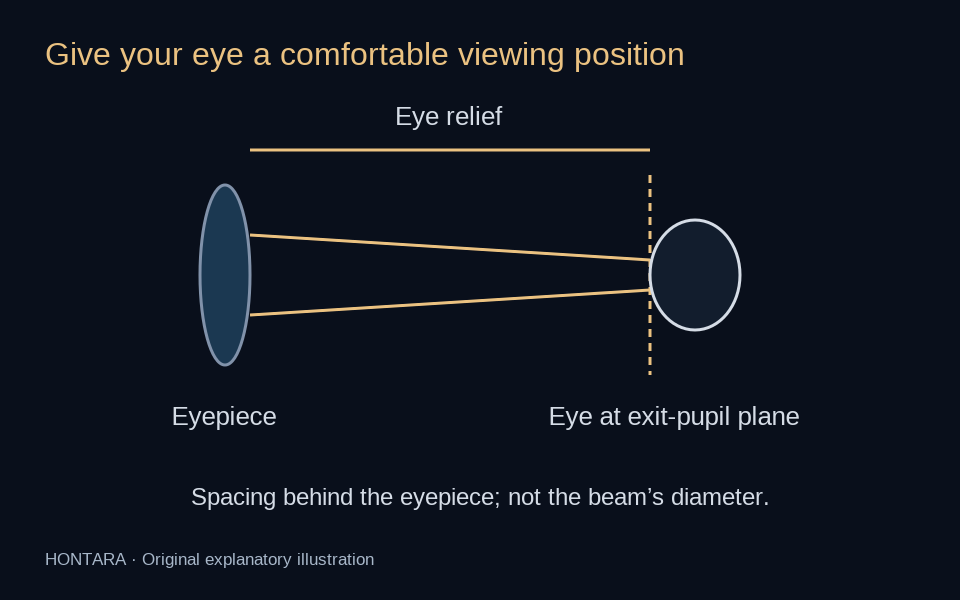
Check the eyepiece position over the telescope’s intended range of pointing. A comfortable height for one target may become awkward for another. Offer a stable seated or alternative viewing arrangement where appropriate and avoid expecting participants to balance on an improvised support to reach the instrument.
Prepare complementary representations
Have a verbal description and a high-contrast or large-print explanation ready for the main target. Where suitable, use a tactile diagram or a shared digital view. Describe which parts represent measurements and which are models, keeping the same scientific question across the different formats.
For an illustrative Moon task, participants could compare a light-path model, listen to a description of the terminator or inspect a magnified display. A person contributing a spoken observation or model explanation should not be treated as waiting for the real activity to begin.
Make the handover predictable
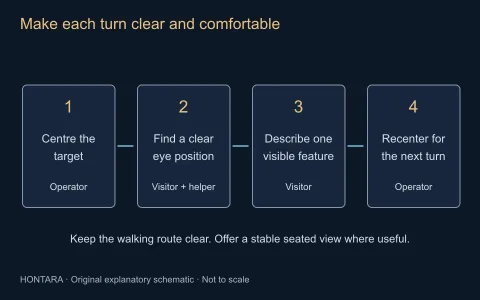
Explain where to stand, who controls the telescope and when equipment may be touched. Ask before physically guiding a participant or moving a mobility aid. Give a description of the next step and leave time for questions instead of assuming silence means that the arrangement works.
Offer breaks and alternative roles during long waits. A helper can record a spoken description, check a chart or describe the field while another person operates the telescope. Keep these roles flexible so a support arrangement does not automatically take control away from the participant.
Review what the plan actually delivered
Before the session, test the intended route and materials with the specific equipment setup. Afterwards invite feedback about barriers and useful changes. A checklist can guide preparation but does not certify that every access need has been met or replace a participant’s own account.
When communicating a real event, state confirmed arrangements plainly and provide a way to discuss requirements. Trust grows when the invitation matches the practical experience that the organiser can genuinely support.
PAUSE AND THINK
Why is an access checklist insufficient as the only test of whether a session worked well?
Explore the answer
A checklist cannot anticipate every participant or changing setup. Testing the actual arrangement and listening to participants’ feedback reveal barriers that generic checks can miss.