On this page
THE BIG IDEAS
- Use the same field and method for useful comparisons.
- Field altitude, moonlight and adaptation affect the result.
- A visibility check is not automatically a calibrated extinction measurement.
Choose a comparison you can repeat
Transparency concerns how effectively the atmosphere transmits astronomical light. A useful practical check compares the visibility of selected reference stars under documented conditions. This is different from judging how steadily an image holds its shape, which concerns seeing.
Choose a small well-charted field with stars spanning a manageable brightness range. Use the same optical setup or unaided-eye method each time. Record the chart source and field identification so another observer can understand which stars you meant rather than interpreting an unlabelled statement that the sky looked clear.
Control geometry before comparing nights
A field low over the horizon is viewed through more atmosphere than the same field high in the sky. Horizon obstruction, local glare and nearby haze can therefore affect the comparison. Similar clock times on different dates do not necessarily give the same stellar altitude.
Keep the comparison near a similar field altitude where possible and note the direction, height and any Moon contribution. For a coarse repeatability exercise, record high, medium or low rather than inventing a precise angle. A quantitative extinction study would need a more carefully defined geometry and photometric method.
Separate detection from expectation
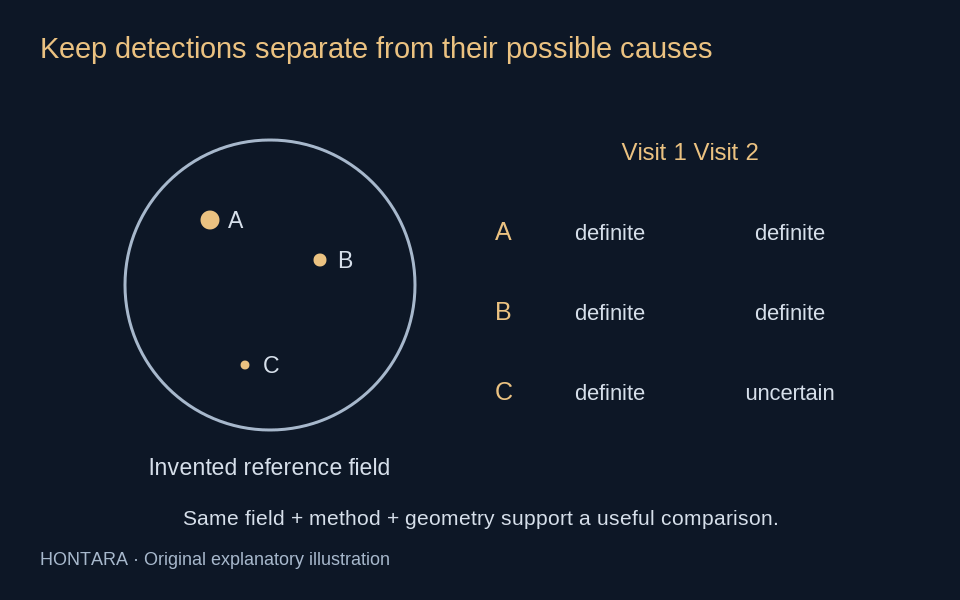
Identify several reference stars from the chart before making a visibility record. Mark each definite, uncertain or not detected. Averted vision can be recorded as a separate method rather than mixed invisibly with direct vision. Avoid upgrading an uncertain detection merely because the chart says a star should be present.
For a fictional example, three reference stars are definite on one visit but the faintest becomes uncertain on another. That is evidence of a changed observing result. It does not alone isolate whether haze, sky brightness, adaptation, eyesight or another condition caused the difference.
Keep the record specific
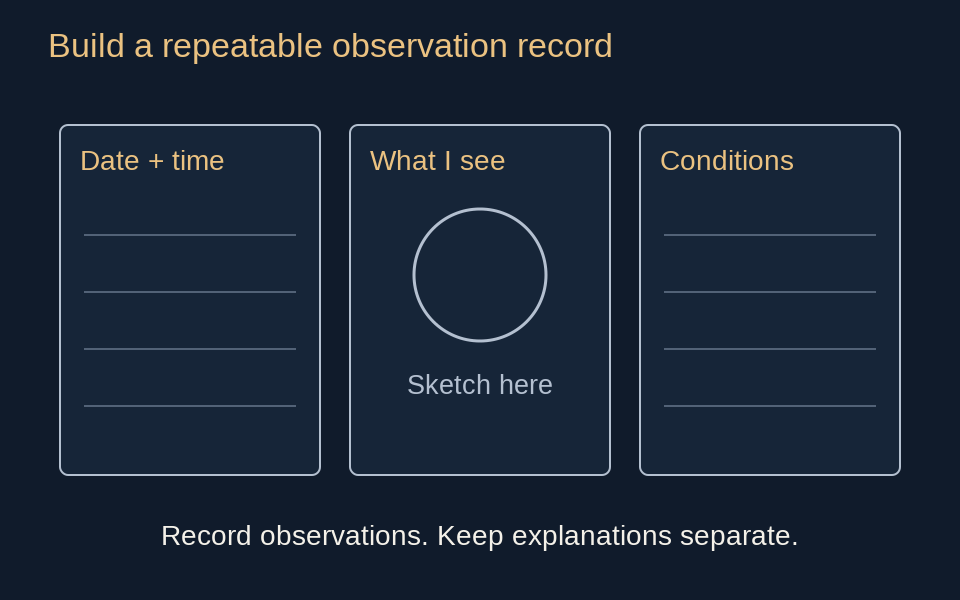
Write the date, time, method, optical setup and field location in the sky. Note clouds, moonlight, direct glare and the time allowed for dark adaptation. If the field is partly hidden by a thin cloud, record that event rather than treating its limiting-star result as a stable property of the entire night.
Comparisons made by different observers can also differ because detection thresholds and experience vary. This need not make either record dishonest. Preserve the observer and method context, then compare repeatable patterns rather than declaring a single universal limiting magnitude for everyone at the site.
Use the result to choose an observing task
A practical transparency check can guide whether to attempt a faint diffuse target or concentrate on a brighter object. It is useful even when it does not deliver a calibrated extinction coefficient. Choose a target whose required contrast matches the conditions actually recorded.
Do not convert a reference-star note directly into a sky-brightness measurement or a claim that the atmosphere transmitted a known percentage of light. Those are related but different quantities. The strongest conclusion names the field, method and observed change, then states which physical cause remains uncertain.
PAUSE AND THINK
If the faintest reference star disappears, has transparency definitely worsened?
Explore the answer
Not necessarily. Sky brightness, clouds, adaptation, field altitude and the observer’s detection method can also change visibility. Preserve those conditions before assigning a cause.