On this page
THE BIG IDEAS
- Taurus includes the Hyades and Pleiades clusters.
- Aldebaran is a foreground star in the apparent Hyades pattern.
- Broad star patterns favour wide fields.
Find a broad shape first
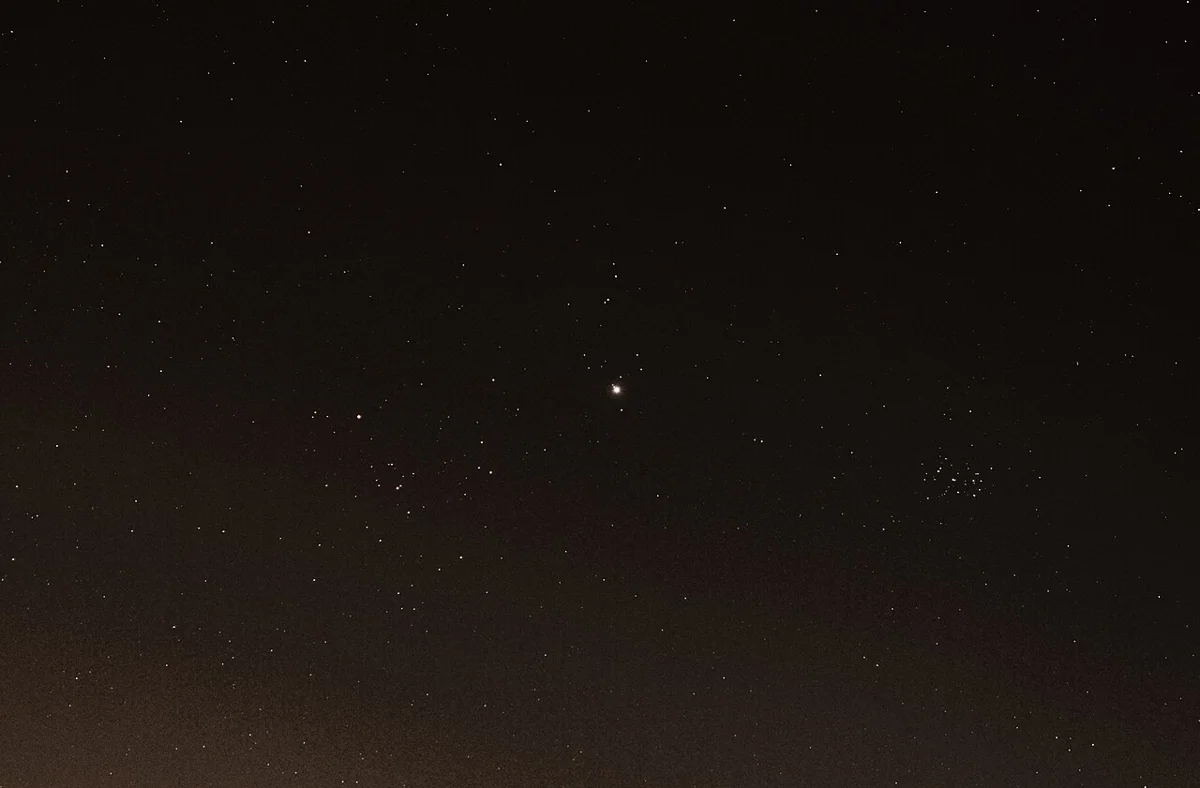
Taurus is a rewarding constellation because it contains several different kinds of observing target. The broad V-shaped face of the bull is associated with the Hyades star cluster. Bright orange-looking Aldebaran appears near one side of this pattern. The Pleiades forms a smaller separate cluster elsewhere in the constellation.
Use a chart rather than trying to recognise an illustrated bull. Constellation art is an interpretation; the arrangement of stars is the practical map. Start with the V and then compare its position with nearby Orion.
Plan for a suitable evening
Taurus is prominent during northern winter evenings. Set your planetarium to the date, local time and location before deciding which direction to face. A chart for midnight is not a reliable guide to the horizon just after sunset.
Wait for the pattern to rise clear of trees or haze when possible. Coastal humidity and nearby lighting can hide fainter Hyades stars even if Aldebaran remains obvious. Choose a safe stationary viewing place instead of walking while looking through binoculars.
Aldebaran is a perspective lesson
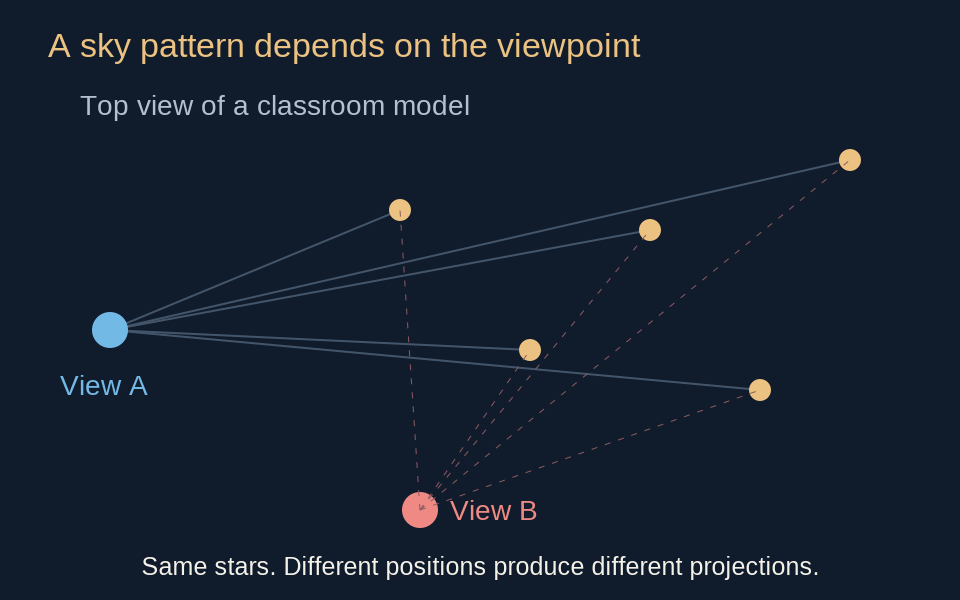
Aldebaran appears to sit among the Hyades but is a foreground star rather than a member of that cluster. This is a useful example of why apparent closeness on the sky does not establish physical closeness in space. A photograph flattens depth just as a constellation sketch does.
Compare its colour with a blue-white star in Orion on the same evening. Describe your own impression in ordinary words. Near the horizon, atmosphere can redden or distort star colours, so avoid treating a casual colour comparison as a precise temperature measurement.
Use a wide optical field
The Hyades covers a large patch of sky. Binoculars can reveal fainter members while keeping more of the V in view. A high-power telescope often gives too narrow a field for the whole pattern. The Pleiades is more compact but also benefits from an overview.
Support your elbows or use a suitable mount if hand movement makes stars hard to separate. Adjust the binoculars to your eyes before trying to count anything. A double image indicates setup or alignment trouble, not a pair of duplicate constellations.
Make a two-cluster comparison
Draw the Hyades and Pleiades in separate circles representing the same approximate binocular field. Note which group looks more spread out and which stars dominate it. Label Aldebaran as foreground after completing the observational sketch. The exercise compares apparent size and brightness; it does not by itself measure each cluster’s true size, distance or total population.
PAUSE AND THINK
Does Aldebaran’s position in the V prove it belongs to the Hyades?
Explore the answer
No. A foreground star can align with a more distant cluster along our line of sight.